

 設置イメージを確認
 送る
送る シェア
シェア
 詳細情報
詳細情報 ガイドを表示

 画像をダウンロード
 似ている作品
 X線調査
X線調査 スライドショー
 統計情報
統計情報Battle by the Windmill
 Oil On Canvas
- WallArt
- Baroque
 Early Modern
 38.0 x 63.0 cm
 エルミタージュ美術館
 続きを読む
続きを読む
手描き油彩複製画
当社のアーティストが、お客様のご希望のサイズと額縁に合わせて、キャンバスに手描きで制作する油彩画です。 ( プリント版に切り替え デジタル画像販売へ切り替え)




P118B $10

P118H $10

P118W $10

P438Z $10

P508JH $12

P508YH $12

P805H $10

P805Z $10

P919BZ $10

P919G $10

P919XJ $10

P959ZH $10

P968JZ $12

W106C $8

W218G $10

W218JH $8

W218Y $10

W307PJ $10

W316G $10

W316PJ $8

W316Y $10

W398PJ $8

W4111J $10

W500HY $15

W500JH $15

W692G $12

W849H $8

W940BG $15

W953PJ $8




作品のオリジナル比率に合わせた、当店の規定サイズからお選びください。

特定のフレームやスペースに合わせて、ご希望のサイズをご入力いただけます。選択されたサイズが元の画像の比率と異なる場合、アートワークをトリミングするか、手描きで要素を追加して絵画を拡張いたします。デジタルモックアップ を制作し、制作開始前にご確認(承認)をいただきます。
画面上のプレビューは、実際のトリミングや拡張を正確に反映しているものではありません。最終的な構図は、モックアップによってのみ正確にご確認いただけます。
カスタムサイズもご利用いただけますが、元の比率を維持するためには、あらかじめ用意されたリストからサイズを選択することをお勧めいたします。
ご注文後、OriginalUniqueArt.com チームより詳細な指示をお送りするとともに、仕上がりイメージ(モックアップ)をご提供いたします。


 ガラスオプションは、110cm未満のサイズでのみご利用いただけます。

Battle by the Windmill
再現技法
複製画サイズ一覧
-


合計金額
$ 300
Battle by the Windmill: A Baroque Masterpiece of Conflict and Resilience
Joseph Parrocel’s “Battle by the Windmill” stands as a testament to the turbulent spirit of the French Baroque era, capturing not merely a military skirmish but also the profound psychological drama inherent in moments of decisive confrontation. Painted circa 1680-1704, this monumental canvas embodies the grandeur and dynamism championed by Louis XIV’s court, reflecting his ambition to solidify royal authority through spectacular displays of power and artistry. The artwork's commission stemmed from a desire to commemorate a pivotal victory – the Battle of Windmill Point – securing Canada’s independence from British rule during the Upper Canada Rebellion.- Subject Matter: The painting depicts a chaotic battlefield scene centered around Windmill Point, a strategic location overlooking the St. Lawrence River. Figures engaged in hand-to-hand combat dominate the foreground, showcasing both mounted warriors and infantry soldiers wielding swords, spears, and shields with ferocious determination.
- Style & Technique: Parrocel’s masterful execution exemplifies Baroque realism, prioritizing dramatic composition and expressive brushwork over idealized beauty. He employs a bold chiaroscuro technique—the interplay of light and shadow—to heighten the sense of tension and immediacy, immersing viewers in the visceral experience of battle. Thick impasto strokes contribute to textural richness, conveying the physicality of movement and exertion.
- Historical Context: The Battle of Windmill Point was a crucial moment in Canadian history, marking the culmination of a rebellion fueled by aspirations for republican liberty. Parrocel’s depiction reflects the anxieties surrounding royal rule and the fervent desire for self-governance prevalent throughout Europe at the time. It aligns with broader artistic trends celebrating military heroism and commemorating triumphs against formidable adversaries.
- Symbolism: The prominent windmill serves as a powerful visual symbol—representing resilience, steadfastness, and the enduring spirit of resistance. Its towering presence anchors the composition, emphasizing the importance of defense and unwavering resolve amidst adversity. The figures’ postures convey courage and determination, embodying the ideals of nobility and martial prowess.
- Emotional Impact: “Battle by the Windmill” transcends mere visual representation; it evokes a profound emotional response in the viewer. The painting captures the terror and exhilaration of combat, conveying the psychological strain endured by soldiers facing imminent danger. Yet, simultaneously, it celebrates victory—affirming faith in human fortitude and commemorating triumph over oppression.
アーティストについて
A Life Forged in Battle and Brushstrokes
Joseph Parrocel, a name resonating with the dynamism of the French Baroque, was more than just a painter of battles; he was a chronicler of an era defined by military grandeur and regal ambition. Born in 1646 in Brignoles, France, into a family steeped in artistic tradition – a lineage boasting fourteen painters across six generations – Parrocel’s destiny seemed preordained. His grandfather, Georges Parrocel, and father, Barthélemy Parrocel, both wielded brushes before him, though few examples of their work survive today, leaving Joseph to build his own formidable legacy. The early loss of his father in 1660 thrust the young artist into the care of his elder brother, Louis, already an established painter in Languedoc. This initial tutelage was short-lived; a restless spirit led thirteen-year-old Joseph to flee to Marseille, where his talent quickly garnered attention and secured him commissions for scenes depicting the life of Saint Anthony of Padua.From Italy to Versailles: A Refinement of Style
Parrocel’s artistic journey was one of constant seeking and refinement. After a brief return to Provence, he ventured to Paris, spending four years honing his skills before embarking on an eight-year sojourn in Italy. It was in Rome that he found mentorship under Jacques Courtois, known as “le Bourguignon” or “il Borgognone,” a master of battle scenes himself. This apprenticeship proved pivotal, shaping Parrocel’s understanding of dramatic composition and the depiction of military conflict. He also absorbed the influence of Salvator Rosa, an artist whose proto-Romantic sensibilities added a layer of emotional intensity to his work. Traveling through Italy, he eventually reached Venice, but a harrowing attempted murder on the Rialto Bridge prompted a swift return to France in 1675. This experience, though traumatic, did not diminish his artistic vision; rather, it seemed to fuel a determination to establish himself as a leading painter in Paris.Royal Commissions and Artistic Recognition
Parrocel’s arrival in Paris marked the beginning of his ascent to prominence. His talent was quickly recognized by the Académie Royale de Peinture et de Sculpture, where he was elected a member in 1676 and formally admitted as an academician later that same year with his compelling depiction of the “Siege of Maastricht.” This acceptance opened doors to prestigious royal commissions, though not without navigating the complex politics of the French court. While Charles Le Brun, head of the Academy, initially resisted Parrocel’s involvement in tapestry designs for the Gobelins manufactory, the Marquis de Louvois, Secretary of State for War, recognized his exceptional talent and entrusted him with decorating a dining hall at Les Invalides with scenes celebrating Louis XIV's conquests. This commission proved to be a turning point, leading to further opportunities to adorn the Château de Marly and, most notably, the Palace of Versailles.A Brush with Controversy and Lasting Influence
Parrocel’s career wasn’t without its challenges. A dispute over unpaid commissions led to an audacious act – obtaining a warrant for the arrest of Mansart, the king's chief architect, while he was traveling in his coach. Though this bold move initially caused friction, Parrocel ultimately triumphed when Louis XIV, captivated by his painting “Crossing of the Rhine,” ordered it displayed prominently in the "Grand Salon du Conseil" at Versailles. Despite participating in only one official Salon exhibition in 1699, showcasing twelve paintings, Parrocel’s impact was substantial. He wasn't solely a painter of battles; he also explored landscapes, historical subjects, and religious themes, including “The Temptation of St. Peter in the Desert.” Notably, his "The Fair at Bezons" (1700) foreshadowed the *fêtes galantes* style later perfected by Antoine Watteau, and he was among the first to dedicate himself to hunting scenes. His approach differed from that of Adam Frans van der Meulen, a contemporary academician, through a more original and vivid execution characterized by broad, energetic brushstrokes and intense colors. Parrocel’s legacy extended within his family; he mentored his sons Jean Joseph and Charles, both of whom became artists, as well as his nephews Jacques-Ignace and Pierre. His prolific output included over ninety prints and engravings, many now housed in the Louvre, ensuring that his dynamic vision continues to inspire awe centuries later.
Joseph Parrocel
1646 - 1704 , France
アーティスト情報
- Artistic Movement Or Style: Baroque
- Artists Or Movements Influenced By This Artist: ['Antoine Watteau']
- Artists Who Influenced This Artist:
- Jacques Courtois
- Salvator Rosa
- Date Of Birth: 1646
- Date Of Death: 1704
- Full Name: Joseph Parrocel
- Nationality: French
- Notable Artworks:
- Battle Scene
- Charge De Cavalerie
- Alexander the Great
- Place Of Birth: Brignoles, France
関連記事

ロマン派ランドスケープ:時代を彩る巨匠の10選|アートとインテリアの世界
ロマン派絵画の時代を彩る10選。巨匠たちの風景が織りなす感動の世界へ。ターナー、ルーベンスなど、名作の裏話と高精細複製でアートをお部屋に。OriginalUniqueArt.comで至福のアート体験を。

Simon Vouet: A Baroque Master's Journey from Italian Influence to French Classicism
Explore the life & art of Simon Vouet, a pivotal French Baroque painter who introduced Italian styles to France. Discover his masterpieces and lasting influence on 17th-century art.
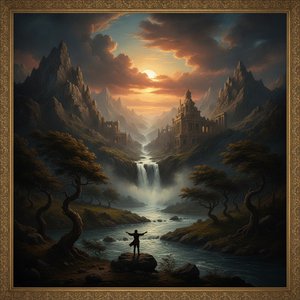
Epic Drama & Dark Vibes: The Ultimate Collector's Guide to Baroque Landscapes
Master the art of drama with our ultimate guide to Baroque landscapes. Discover the power of chiaroscuro, explore legendary masters, and learn how to curate epic, dark-vibe masterpieces for your collection with expert insights from OriginalUniqueArt.

Evocations of Place: A Historical Journey Through Landscape Art
Explore the rich history of landscape art with OriginalUniqueArt. Discover renowned artists, movements like Impressionism & Romanticism, and expert guidance for collecting timeless pieces. Find your perfect serene escape today!

Drama in Nature: The Captivating Grandeur of Baroque Landscapes and the Art of Emotional Spectacle
Explore the breathtaking drama of Baroque landscapes. From Rubens's grand vistas to the mastery of chiaroscuro, discover how 17th-century artists transformed nature into a theatrical stage of emotion and light. A deep dive for true art enthusiasts.