プリント版に切り替え
 詳細を表示
詳細を表示







































 いずれかの辺が105 cm(約41インチ)を超えるアートワークまたは複製画の場合、フレームは分解されたキットの状態でお届けいたします。この方法は、輸送中の破損を防ぎ、安全に配送するために採用しております。


A Descent into Myth: Waterhouse's "The Danaides"
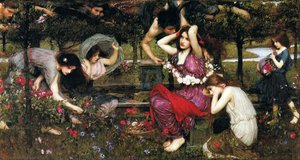
John William Waterhouse’s “The Danaides,” completed in 1906, is more than just a depiction of a gruesome episode from Greek mythology; it’s an exquisitely rendered meditation on sorrow, duty, and the tragic consequences of unchecked emotion. Painted during his most mature Pre-Raphaelite period, this oil on canvas captures the chilling scene of the fifty daughters of Danaus as they fulfill their horrifying command – to pour water into a large vase, effectively drowning themselves and their husbands on their wedding nights. The painting’s power resides not just in its subject matter but in Waterhouse's masterful manipulation of light, color, and composition, elements that elevate it beyond a simple illustration and firmly establish it as a cornerstone of the Pre-Raphaelite aesthetic.
The Weight of Antiquity: Style and Technique
- Pre-Raphaelite Influence: Waterhouse’s work is deeply rooted in the Pre-Raphaelite Brotherhood's rejection of idealized, Romanized art. He sought a return to the clarity, detail, and emotional intensity of early Italian painting – evident in the meticulous rendering of fabrics, the almost photographic realism of the figures, and the dramatic use of light.
- Oil on Canvas: The medium itself contributes significantly to the work’s impact. Waterhouse expertly employs oil paint to achieve a rich, luminous texture, allowing for subtle gradations of color and creating an illusion of depth that draws the viewer into the scene.
- Compositional Drama: The arrangement of figures – some standing, others seated, all gazing with varying degrees of despair – creates a dynamic tension within the frame. The repetition of vases, both large and small, reinforces the cyclical nature of the tragedy and adds to the painting’s unsettling atmosphere.
Symbolism and Narrative Depth
The central image—the women pouring water into a vase—is laden with symbolic weight. The vase itself represents both life and death, fertility and destruction. Water, traditionally associated with purity and cleansing, is here used to enact a horrific act of self-annihilation. The figures’ expressions – ranging from quiet resignation to outright anguish – convey the profound emotional toll of their fate. The scene speaks to themes of familial duty, betrayal, and the destructive power of jealousy, all central concerns within Greek tragedy.
A Legacy of Beauty and Melancholy
"The Danaides" remains a powerfully evocative work, demonstrating Waterhouse’s exceptional skill in translating complex mythological narratives into visually arresting paintings. Its enduring appeal lies not only in its technical brilliance but also in its ability to tap into universal themes of sorrow, loss, and the inescapable consequences of human action. This painting is a testament to Waterhouse's profound understanding of beauty, tragedy, and the timeless power of myth – qualities that continue to resonate with audiences today.
Q&A
ジョン・ウィリアム・ウォーターハウス作「The Danaides」の解説ページはありますか?
「The Danaides」のガイドは、作品の解説資料ページです。このページは印刷可能なファクトシートとなっており、作品のキャプション、クレジット、および詳細情報(作家名、制作年、技法、原寸大、所蔵)をまとめてご確認いただけます。
ジョン・ウィリアム・ウォーターハウスには、他にどのような別名や通称がありますか?
ジョン・ウィリアム・ウォーターハウスは、J.W.ウォーターハウス, ジョン・ウィリアム・ウォーターハウス (完全な名前), ウォーターハウスという名でも知られています。
ジョン・ウィリアム・ウォーターハウス作「The Danaides」は、どのようにしてPre-Raphaelite Revivalをアーティストの母国と結びつけているのでしょうか?
Pre-Raphaelite Revivalの作品「The Danaides」は、イタリア出身のアーティストによって制作されました。
この絵画の詳細を見る
 設置イメージを表示
 シェアする
シェアする シェアする
シェアする
 詳細を見る
詳細を見る ガイドを表示

 ダウンロード
 似ている作品
 X線調査
X線調査 スライドショーを表示
 Q&A
Q&A 統計情報
統計情報