

 プレビュー
プレビュー
 シェアする
シェアする シェアする
シェアする
 詳細を見る
詳細を見る

 ダウンロード
 似ている作品
 X線調査
X線調査 スライドショー
Veterans
 1916
1916 15.0 x 10.0 cm
 詳細を見る
詳細を見る
ジークレー/アートプリント
迅速な制作と多彩な仕上げオプションを備えた、ミュージアムクオリティのジークレーまたはキャンバスプリント。 ( 手描きの絵画を購入 画像を購入)




































作品のオリジナル比率に合わせた、当店の規定サイズからお選びください。

特定のフレームやスペースに合わせて、ご自身でサイズを指定することも可能です。選択されたサイズが元の画像の比率と一致しない場合、作品をトリミングするか、鏡面反射または単色での塗りつぶしによって画像を拡張いたします。制作を開始する前に、ご確認用のデジタルモックアップをお送りいたします。
画面上のプレビューには、実際のトリミングや拡張は反映されませんのでご注意ください。最終的な構図を正確に確認できるのは、モックアップのみとなります。
カスタムサイズも承っておりますが、元の比率を維持するためには、あらかじめ用意されたリストからサイズを選択することをお勧めいたします。


 ガラスオプションは、110cm未満のサイズでのみご利用いただけます。

Veterans
ジークレー/アートプリント
複製画のサイズ
-


合計金額
$ 80
作品詳細説明
The Artist and His Craft
John Taylor Arms was born in 1887 in Washington, D.C., and his journey into the world of etching began after serving as an officer in the United States Navy during World War I. He devoted himself full-time to etching, publishing his first original works in 1919. Arms' technique involved using sewing needles and magnifying glasses to achieve a fine level of detail, setting him apart from his contemporaries. Key aspects of John Taylor Arms' work include:- His use of etching as a medium to capture architectural details and landscapes.
- His focus on medieval subjects, particularly Gothic churches and cathedrals in France and Italy.
- His ability to convey the essence of his subjects through meticulous detail and composition.
The "Veterans" Etching
The Veterans etching, measuring 15 x 10 cm, is housed at the Smithsonian American Art Museum in the United States. Created in 1916, it showcases Arms' early interest in architectural subjects and his ability to evoke a sense of history and nostalgia. The piece is a black and white etching featuring a building with a sign that reads "Jean Paix," along with two birds flying in the sky above and three people visible in the scene. For those interested in exploring more of John Taylor Arms' work or learning about other artists, Blanche Grambs' "Miners" and Sir George Clausen's "Youth Mourning" are notable examples of etching and oil painting, respectively. Additionally, the National Gallery of Art provides extensive resources on American art, including works by John Taylor Arms.The legacy of John Taylor Arms continues to inspire artists and art enthusiasts alike, with his work remaining a significant part of American art history. For more information on John Taylor Arms and his contributions to the world of etching, visit John Taylor Arms' page on OriginalUniqueArt or explore the Smithsonian American Art Museum's collection.
アーティストの略歴
The Architect of the Etched Line
John Taylor Arms was far more than a mere printmaker; he was an architect of light and shadow, a man who used the needle to resurrect the grandeur of a bygone era. Born in Washington, D.C., on April 19, 1887, his early life was marked by a rigorous intellectual pursuit that would later define the precision of his art. Before he ever touched an etching plate, Arms navigated the demanding corridors of Princeton University, studying law, before pivoting toward the structural complexities of architecture at the Massachusetts Institute of Technology. This foundational training in architectural drafting provided him with a unique ocular discipline, allowing him to perceive the world not just as a collection of shapes, but as a sophisticated interplay of weight, balance, and historical narrative.
The turbulence of the early twentieth century left an indelible mark on his spirit. Serving as an officer in the United States Navy during World War I, Arms experienced a world in flux, yet it was this very period of service that seemed to crystallize his dedication to craftsmanship. Upon returning to civilian life, he turned his focus toward the graphic arts, publishing his first original etchings in 1919. His initial subject matter—the soaring, industrial majesty of the Brooklyn Bridge—demonstrated an early mastery of perspective and tonal gradation, proving that his architectural eye could find beauty in both the ancient and the modern.
A Devotion to Gothic Grandeur
As his career matured throughout the 1920s and 30s, Arms’ artistic gaze drifted from the steel spans of New York toward the hallowed, stone-carved sanctuaries of Europe. He became a preeminent interpreter of Gothic architecture, particularly the magnificent cathedrals of France and Italy. While many of his contemporaries were swept up in the fluid, emotive strokes of Impressionism, Arms remained steadfast in his commitment to an almost scientific accuracy. To him, every flying buttress, every intricate finial, and every delicate rose window held a spiritual and historical weight that demanded absolute fidelity.
His technical process was nothing short of legendary among printmaking circles. To achieve the microscopic detail required to render medieval stone carvings, Arms employed unconventional tools, such as sewing needles, to etch hairline precision into his plates. Working under the scrutiny of magnifying glasses, he painstakingly built layers of texture and depth, creating works that felt less like prints and more like windows into the past. This meticulousness allowed him to capture the soul of the architecture; through his lines, one could almost feel the cool dampness of a cathedral nave or the weight of centuries-old masonry.
Legacy in Ink and Iron
The significance of John Taylor Arms lies in his ability to bridge the gap between technical documentation and fine art. His oeuvre serves as a vital graphic record of architectural splendor, preserving the intricate details of medieval structures with a clarity that photography of the era could not replicate. His work was celebrated by numerous printmaking societies, and he became a prominent figure in the American graphic arts scene, blending humanist sensibilities with his structural expertise.
Throughout his life, Arms’ contributions to the medium can be summarized by several defining characteristics:
- Architectural Precision: A unique ability to translate complex structural engineering into delicate, expressive line work.
- Historical Preservation: The use of etching as a tool to document and venerate the Gothic and medieval heritage of Europe.
- Technical Innovation: The mastery of specialized tools and extreme detail that pushed the boundaries of traditional printmaking.
- Tonal Mastery: An exceptional command over light and shadow, creating atmospheric depth within monochromatic compositions.
When he passed away in 1953, Arms left behind a legacy etched into the very fabric of American printmaking history. His works, now held in prestigious institutions such as the Smithsonian American Art Museum, continue to inspire awe, reminding us that true beauty is often found in the most minute and meticulously crafted details.
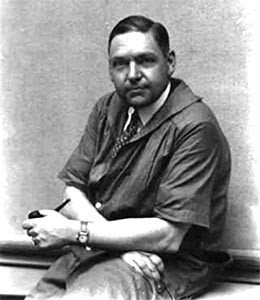
John Taylor Arms
1887 - 1953
基本情報
- Artistic Movement Or Style: Gothic Architecture Series
- Date Of Birth: 1887
- Date Of Death: 1953
- Full Name: John Taylor Arms
- Nationality: American
- Notable Artworks:
- Medieval Pageantry
- Somewhere in France
- French Lace
- Place Of Birth: Washington, DC

