

 設置イメージを確認
 送る
送る シェア
シェア
 詳細情報
詳細情報 ガイドを表示

 画像をダウンロード
 似ている作品
 X線調査
X線調査 スライドショー
 統計情報
統計情報Stoddard Carpet Mural
 154.0 x 307.0 cm
 続きを読む
続きを読む
このページに掲載されている作品は著作権法によって保護されており、当社の許可なく同一の複製物を制作または販売することは法律で禁じられています。この保護は、以下のような国際条約に基づき執行されます。 ベルヌ条約 および、以下の条項に定められたものを含む各国の法律により、 米国著作権法 第17編。
この手法は、著作権で保護された作品の複製や複写を伴わないため、著作権法に完全に準拠しています。これは単なる模倣ではなく、創造的な再解釈です。元の作品からインスピレーションを受けつつも、それとは異なる、全く新しい絵画を生み出すものです。
ジークレー/アートプリント
スピーディーな制作と多彩な仕上げオプションが魅力の、ミュージアムクオリティなジークレー・キャンバスプリント。 ( 手描きの複製画を注文する デジタル画像販売へ切り替え)




































作品のオリジナル比率に合わせた、当店の規定サイズからお選びください。

額縁や壁のスペースに合わせて、ご希望の幅と高さを入力してください。プリントはカットすることは可能ですが、元の画像より大きくすることはできないため、異なる比率のサイズを選択された場合は、画像の一部が欠けることになります。印刷を開始する前に、内容を確認していただくためのデジタルモックアップをお送りいたします。このページに表示されている画像は、実際のカット後の状態を示すものではありません。実際の仕上がりはモックアップにてご確認ください。


 ガラスオプションは、110cm未満のサイズでのみご利用いただけます。

Stoddard Carpet Mural
ジークレー/アートプリント
複製画サイズ一覧
-


合計金額
¥ 12604
アーティストについて
John Byrne: A Life Forged in Paisley’s Crucible
John Patrick Byrne, born in 1940 and still actively creating today, is a singular figure in Scottish art and theatre – a playwright who became a painter, a designer whose vision permeated the stage, and an artist grappling with deeply personal revelations. His story isn't one of conventional artistic ascent; it’s rooted in the stark realities of working-class life in Paisley, a town he would both fiercely celebrate and unflinchingly critique through his work. Growing up in the Ferguslie Park housing scheme, Byrne experienced firsthand the hardships and resilience of communities often overlooked by mainstream narratives. This formative environment profoundly shaped his artistic sensibility, informing his commitment to portraying authentic voices and challenging societal assumptions. His early years were marked by a complex family history – a revelation in 2017 that irrevocably altered his understanding of his lineage: he was the biological son of his mother, Alice McShane, and his grandfather, Patrick McShane, an incestuous relationship concealed for decades. This shocking truth became a central, though often unspoken, element of his life and work, adding layers of melancholy and introspection to his art.The Slab Boys Trilogy and Theatrical Innovation
Byrne’s breakthrough came with the publication of *The Slab Boys* trilogy in 1976 – a series of plays that captured the spirit and struggles of working-class life in Paisley during the post-war era. These weren't sentimental portrayals; they were gritty, unflinching examinations of poverty, unemployment, alcoholism, and domestic violence, rendered with remarkable honesty and poetic language. The trilogy quickly gained critical acclaim and established Byrne as a leading voice in Scottish theatre. His work wasn’t simply about depicting hardship, however. He employed innovative theatrical techniques – utilizing stark stage designs, minimal props, and a deliberately unpolished aesthetic – to create an immersive experience for the audience, drawing them directly into the lives of his characters. This approach was further exemplified by his design for *The Cheviot, the Stag, and the Black Black Oil*, a visually arresting pop-up book set piece for 7:84 that remains on display at the Victoria and Albert Museum in London, a testament to his imaginative power and technical skill. His designs weren’t just decorative; they were integral to the storytelling, amplifying the play's themes of industrial decline and social alienation.From Carpet Design to Portraiture: A Shifting Artistic Palette
Before achieving prominence as a playwright, Byrne worked as a carpet designer for A.F., a role that provided him with valuable experience in colour theory and pattern design – skills he later incorporated into his paintings. His early artistic output was characterized by a distinctive style of portraiture, often employing bold colours and expressive brushstrokes to capture the essence of his subjects. Initially, Byrne employed a clever deception, presenting his work as being created by his father, Patrick Byrne, a self-taught painter who had never exhibited publicly. This audacious tactic gained him attention in London’s art scene, highlighting his willingness to challenge conventions and push boundaries. Later in his career, he began to explore more abstract forms, reflecting the complexities of his personal life and the social issues that preoccupied him. His portraits evolved from straightforward representations to emotionally charged explorations of identity and memory.Beyond the Stage: Television, Album Art, and a Legacy of Influence
Byrne’s creative output extended far beyond the theatre stage. He was a prolific television writer, contributing significantly to dramas like *Tutti Frutti* and *Your Cheatin' Heart*, showcasing his ability to craft compelling narratives and develop memorable characters. He also designed album covers for prominent musicians, including Gerry Rafferty and Stealers Wheel, demonstrating his versatility as a visual artist. His work on The Beatles’ 1968 album cover – a deceptively simple image of a young boy – is particularly noteworthy, showcasing his ability to imbue seemingly ordinary subjects with profound meaning. Throughout his career, Byrne received numerous accolades, including honorary doctorates from several Scottish universities and membership in the Royal Scottish Academy, recognizing his significant contributions to both art and literature. His influence can be seen in the work of countless artists and writers who have followed in his footsteps, cementing his place as a pivotal figure in contemporary Scottish culture.A Continuing Artist: Portraits and Personal Reflections
Even in his later years, John Byrne remained an active and engaged artist. His paintings continued to explore themes of identity, memory, and social commentary, often infused with a sense of melancholy and introspection. His self-portraits, in particular, offer a poignant glimpse into the complexities of his life – a testament to his resilience, his artistic vision, and his enduring connection to the communities he depicted throughout his career. His final retrospective, held in 2023, showcased over forty portraits, revealing a lifetime of observation and creative exploration. John Byrne’s legacy extends beyond his individual works; it resides in his willingness to confront difficult truths, challenge conventional narratives, and use art as a means of social commentary and personal reflection – a testament to the power of an artist shaped by both privilege and profound adversity.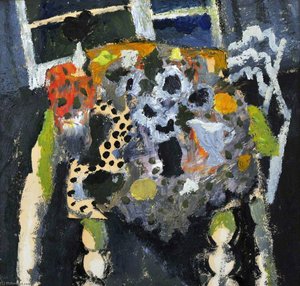
John Byrne
1940 -
アーティスト情報
- Artistic Movement Or Style: Postmodernist playwright
- Artists Or Movements Influenced By This Artist: ['Contemporary theatre']
- Artists Who Influenced This Artist:
- Samuel Beckett
- Bertolt Brecht
- Date Of Birth: 1940
- Date Of Death: 2023
- Full Name: John Patrick Byrne
- Nationality: Scottish
- Notable Artworks:
- The Slab Boys Trilogy
- Tutti Frutti
- Album cover art
- Place Of Birth: Paisley, Scotland