

 設置イメージを確認
 送る
送る シェア
シェア
 詳細情報
詳細情報 ガイドを表示

 画像をダウンロード
 似ている作品
 X線調査
X線調査 スライドショー
 統計情報
統計情報That fermate
 続きを読む
続きを読む
オンラインプレビューをはるかに凌ぐ、高解像度で鮮明なデジタル画像をご購入いただけます。
各ファイルは、社内の専門家が高度なツールと熟練した手作業によるレタッチを駆使し、細心の注意を払って仕上げています。すべての画像において、卓越した鮮明度、正確な色彩再現性、そして繊細なディテールをお約束いたします。
最終ファイルは、プロフェッショナルな編集・印刷環境ですぐにご利用いただけるよう最適化された状態で、72時間以内にメールにてお届けいたします。これは、一流のデザインスタジオ、出版社、ギャラリーから信頼されているものと同等の品質です。
デジタル画像
個人での鑑賞、印刷、クリエイティブなプロジェクトにご利用いただける高解像度ファイルをダウンロードできます。 ( プリント版に切り替え 手描きの複製画を注文する)
デジタル画像のご注文に付随する特典
プロフェッショナルなデジタル配信を、確かな品質で。
OriginalUniqueArt.com を選ぶことは、単に画像を手に入れることではありません。プロの手によって精密に仕上げられ、満足保証が付いた高品質なデジタルアートワークを受け取ることを意味します。ご注文いただいた際に自動的に付随する内容は、以下の通りです:

メールですぐにお届け
ご注文から72時間以内に、高解像度のデジタル画像ファイルをメールでお送りいたします。お手元に届き次第、すぐにご利用いただけます。

AI技術で最適化されたデジタルファイル
お客様の作品は、高度なAI技術と専門家による手作業を組み合わせてプロフェッショナルに最適化されており、細部のディテール、鮮明さ、そして正確な色再現性を最大限に引き出しています。

一生涯無料の再送サービス
ファイルを誤って削除したり、紛失してしまったりしましたか?ご安心ください。いつでも無料で再送いたします。

輸入手数料は、いつでも一切かかりません
関税や手数料、配送料を気にすることなく、お気に入りのアートワークをすぐにお楽しみいただけます。デジタルダウンロードは常に免税です。

正確な色彩の保証
プロ仕様のツールとカラーマネジメント技術を用いることで、デジタル画像が元の色を最大限に忠実に再現することを保証いたします。

100日間満足保証
ご購入いただいたデジタル画像にご満足いただけない場合は、100日以内であれば、理由を問わず修正または100%の返金対応をさせていただきます。

100% 返金保証
ご満足いただけない場合は、デジタルファイルを受け取ってから100日以内であれば、理由を問わず全額返金いたします。

まとめ買い割引
3枚購入で10%OFF、5枚購入で15%OFF、10枚以上のご購入で20%OFF。クリエイティブなプロジェクトやギャラリー、エージェンシーに最適です。
アーティスト・プロフィール
Johann Erdmann Hummel: The Architect of Perception
Johann Erdmann Hummel (1769-1852) stands as a singular figure in 18th and early 19th-century German art, renowned not for grand narratives or dramatic scenes, but for his meticulous rendering of the world through an almost scientific lens. Born in Kassel, Germany, Hummel’s artistic journey was shaped by rigorous study at the Kunsthochschule Kassel, followed by a transformative period in Rome where he encountered and subtly diverged from the prevailing classical style championed by Anton Raphael Mengs. Unlike many of his contemporaries who embraced the idealized forms and theatrical compositions favored during that era, Hummel developed a distinct approach—one deeply rooted in observation, perspective, and an unwavering commitment to accuracy.
Hummel’s early works, primarily created during his Roman sojourn, reveal a fascination with mythology. However, it was not the mythological subject matter itself but the *way* he depicted these stories that set him apart. He eschewed the overly dramatic poses and idealized figures common in classical art, instead favoring a more restrained and realistic style. This shift can be attributed to his exposure to Dutch masters of the 17th century, particularly their meticulous attention to detail and atmospheric effects. He sought to capture not just the appearance of a scene but also its underlying structure—the way light interacted with surfaces, the precise alignment of objects, and the subtle nuances of perspective.
Upon his return to Germany in 1799, Hummel established himself in Berlin, where he would spend the remainder of his life. This period marked a significant evolution in his artistic practice. While mythological themes continued to appear, they were increasingly interwoven with landscapes and genre scenes—often depicting everyday activities like chess games or gatherings in parks. His work during this time is characterized by an almost obsessive concern with accuracy, particularly in his treatment of perspective. He became known as “Perspective-Hummel” due to his mastery of linear perspective and his ability to create incredibly convincing illusions of depth on a flat surface.
The Professor of Perspective
In 1809, Hummel’s expertise in optics and architectural drawing led to an appointment as professor at the Prussian Academy of Arts in Berlin. This role provided him with a unique opportunity to disseminate his knowledge and influence a new generation of artists. His lectures focused on fundamental principles such as perspective, optics, and architecture—subjects he approached with a rigorous scientific methodology. He didn’t merely teach theoretical concepts; he demonstrated them through meticulous drawings and diagrams, emphasizing the importance of observation and careful measurement.
Hummel's pedagogical approach was remarkably innovative for his time. He believed that artists should understand not just *how* to represent a scene but also *why* it appeared as it did—the underlying mathematical principles governing spatial relationships. This emphasis on scientific understanding profoundly shaped the work of his students, contributing to the development of a more realistic and technically proficient style within German art.
A Craftsman’s Eye: Technique and Style
Hummel's artistic style is immediately recognizable by its remarkable precision and attention to detail. He employed a meticulous technique, often working on a scale that demanded painstaking observation and execution. His landscapes are not romanticized visions but carefully constructed representations of reality—filled with accurately rendered objects, meticulously placed trees, and precisely calculated lighting effects. He utilized a subtle palette, favoring muted earth tones and delicate gradations of color to create a sense of atmospheric depth.
Crucially, Hummel’s work is defined by his mastery of perspective. He didn't simply apply the rules of linear perspective; he seemed to *feel* it—to intuitively understand how light and shadow would interact in three-dimensional space. His paintings possess a remarkable sense of spatial coherence, creating illusions of depth that are both convincing and subtly unsettling. This dedication to accuracy extended beyond mere visual representation; it reflected a deeper engagement with the underlying structure of the world.
Legacy and Significance
While Hummel’s work may not be as widely celebrated as some of his contemporaries, its influence on German art is undeniable. He played a pivotal role in shaping the development of Biedermeier painting—a style characterized by its realism, intimacy, and focus on everyday life. His emphasis on observation, perspective, and technical skill provided a foundation for subsequent generations of artists who sought to capture the beauty and complexity of the natural world.
Furthermore, Hummel’s scientific approach to art—his belief that artistic representation should be grounded in understanding—represented a significant departure from traditional notions of artistic creativity. He demonstrated that art could be both aesthetically pleasing and intellectually stimulating, paving the way for a more nuanced and sophisticated appreciation of visual culture. His legacy endures not only through his paintings but also through his contributions to the education and development of German art.
Johann Erdmann Hummel
1769 - 1852 , Germany
略歴
- Artistic Movement Or Style: Perspective Painting
- Artists Or Movements Influenced By This Artist: ['Biedermeier art']
- Artists Who Influenced This Artist: ['Anton Raphael Mengs']
- Date Of Birth: September 11, 1769
- Date Of Death: October 26, 1852
- Full Name: Johann Erdmann Hummel
- Nationality: German
- Notable Artworks:
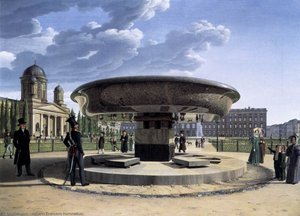
- Granite Bowl in Berlin
- Chess Players
- Schloss Wilhelmshöhe
- Place Of Birth: Kassel, Germany