
 設置イメージを確認
 送る
送る シェア
シェア
 詳細情報
詳細情報 ガイドを表示

 画像をダウンロード
 似ている作品
 X線調査
X線調査 スライドショー
 統計情報
統計情報Running along the beach


 続きを読む
続きを読む
オンラインプレビューをはるかに凌ぐ、高解像度で鮮明なデジタル画像をご購入いただけます。
各ファイルは、社内の専門家が高度なツールと熟練した手作業によるレタッチを駆使し、細心の注意を払って仕上げています。すべての画像において、卓越した鮮明度、正確な色彩再現性、そして繊細なディテールをお約束いたします。
最終ファイルは、プロフェッショナルな編集・印刷環境ですぐにご利用いただけるよう最適化された状態で、72時間以内にメールにてお届けいたします。これは、一流のデザインスタジオ、出版社、ギャラリーから信頼されているものと同等の品質です。
デジタル画像
個人での鑑賞、印刷、クリエイティブなプロジェクトにご利用いただける高解像度ファイルをダウンロードできます。 ( プリント版に切り替え 手描きの複製画を注文する)
デジタル画像のご注文に付随する特典
プロフェッショナルなデジタル配信を、確かな品質で。
OriginalUniqueArt.com を選ぶことは、単に画像を手に入れることではありません。プロの手によって精密に仕上げられ、満足保証が付いた高品質なデジタルアートワークを受け取ることを意味します。ご注文いただいた際に自動的に付随する内容は、以下の通りです:

メールですぐにお届け
ご注文から72時間以内に、高解像度のデジタル画像ファイルをメールでお送りいたします。お手元に届き次第、すぐにご利用いただけます。

AI技術で最適化されたデジタルファイル
お客様の作品は、高度なAI技術と専門家による手作業を組み合わせてプロフェッショナルに最適化されており、細部のディテール、鮮明さ、そして正確な色再現性を最大限に引き出しています。

一生涯無料の再送サービス
ファイルを誤って削除したり、紛失してしまったりしましたか?ご安心ください。いつでも無料で再送いたします。

輸入手数料は、いつでも一切かかりません
関税や手数料、配送料を気にすることなく、お気に入りのアートワークをすぐにお楽しみいただけます。デジタルダウンロードは常に免税です。

正確な色彩の保証
プロ仕様のツールとカラーマネジメント技術を用いることで、デジタル画像が元の色を最大限に忠実に再現することを保証いたします。

100日間満足保証
ご購入いただいたデジタル画像にご満足いただけない場合は、100日以内であれば、理由を問わず修正または100%の返金対応をさせていただきます。

100% 返金保証
ご満足いただけない場合は、デジタルファイルを受け取ってから100日以内であれば、理由を問わず全額返金いたします。

まとめ買い割引
3枚購入で10%OFF、5枚購入で15%OFF、10枚以上のご購入で20%OFF。クリエイティブなプロジェクトやギャラリー、エージェンシーに最適です。
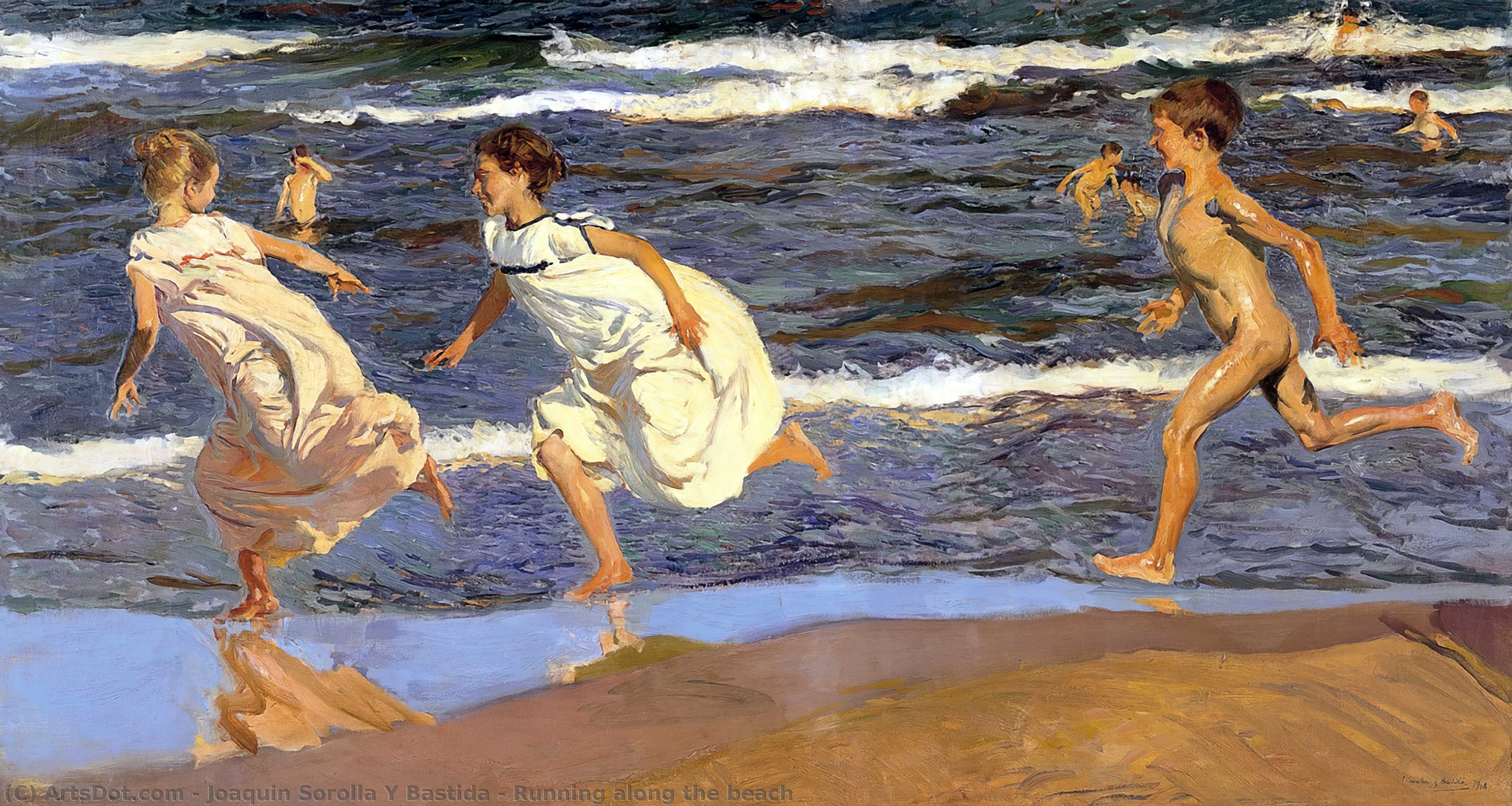
A Moment of Sunlit Joy: Exploring Sorolla’s “Running along the beach”
Joaquín Sorolla y Bastida's "Running along the beach," painted in 1908, is more than just a picturesque depiction of seaside leisure; it’s a masterful distillation of light, movement, and the very essence of Spanish summer. This vibrant canvas captures a fleeting moment of unadulterated joy – individuals immersed in the simple pleasure of running along the shoreline, their figures dissolving into the shimmering heat haze. The painting immediately draws the viewer into its energetic scene, inviting contemplation of the relationship between humanity and nature, a central theme throughout Sorolla’s oeuvre.
- Subject Matter: The subject is deceptively straightforward – a group of people enjoying a day at the beach. However, Sorolla elevates this commonplace scene through his meticulous attention to detail and his extraordinary ability to convey movement and atmosphere.
- Style & Technique: Sorolla was a leading figure in the *luminista* movement, renowned for its emphasis on capturing natural light and color with remarkable accuracy. “Running along the beach” exemplifies this style perfectly. The brushstrokes are loose and expressive, creating a sense of immediacy and dynamism. He employs broken colour techniques – layering translucent glazes – to build up luminous effects, particularly evident in the shimmering water and the sun-drenched figures.
- Historical Context: Painted during a period of significant artistic innovation in Spain, Sorolla’s work reflects the burgeoning interest in plein air painting and the desire to capture contemporary life with realism and optimism. The late 19th and early 20th centuries witnessed a shift away from academic traditions, and Sorolla was at the forefront of this movement, embracing a more accessible and emotionally resonant style.
The Language of Light: Sorolla’s Luminist Vision
Sorolla's genius lay in his ability to translate light into paint. He meticulously studied the effects of sunlight on surfaces – the way it reflected off water, bounced off sand, and illuminated human forms – and then painstakingly recreated these observations on canvas. The painting is dominated by a brilliant, almost blinding, white light that seems to emanate from every surface. This isn't merely a representation of sunshine; it’s an embodiment of *luz*, the Spanish word for light, which carries connotations of joy, vitality, and spiritual illumination. Notice how he uses variations in tone – from the pale blues and greens of the water to the warm ochres and yellows of the sand – to create depth and dimension. The figures themselves are rendered with a remarkable sense of volume, their forms subtly distorted by the heat haze, further enhancing the feeling of movement.
Symbolism and Emotional Resonance
Beyond its technical brilliance, “Running along the beach” possesses a profound emotional resonance. The scene evokes a sense of carefree abandon, suggesting a temporary escape from the pressures of daily life. The figures’ joyful expressions and energetic movements convey a feeling of liberation and connection with nature. Considering Sorolla's own early life marked by loss – the death of his parents at a young age – it is possible to interpret the painting as an affirmation of life, a celebration of beauty, and a poignant reminder of the preciousness of fleeting moments. The act of running itself can be seen as symbolic of progress, renewal, and the pursuit of happiness.
A Legacy of Light: Owning a Sorolla Reproduction
This hand-painted reproduction captures the essence of Sorolla’s masterpiece with exceptional fidelity. Each brushstroke is meticulously recreated, ensuring that you experience the same luminous beauty and emotional impact as the original. Whether adorning your living room wall or serving as a striking accent piece in a coastal-themed interior, this reproduction offers a tangible connection to one of Spain's most beloved artists. It’s an investment not just in art, but in a timeless expression of joy, light, and the enduring power of nature.
アーティスト・プロフィール
Joaquín Sorolla y Bastida - A Life Bathed in Light
Joaquín Sorolla y Bastida, a name synonymous with the radiant light and vibrant energy of Spain, was more than just a painter; he was a chronicler of his nation’s soul. Born in Valencia in 1863, Sorolla's early life was marked by tragedy. Orphaned at the tender age of two following a cholera epidemic that claimed both parents, young Joaquín and his sister were raised by their maternal aunt and uncle. This early experience with loss perhaps instilled within him a profound appreciation for the fleeting beauty of life – a sentiment that would permeate his art. Though hardship shadowed his beginnings, it did not dim the spark of artistic talent that quickly became apparent. He received initial instruction in Valencia, demonstrating an aptitude that led to studies under established artists like Cayetano Capuz and José Benlliure, eventually culminating in a four-year grant to study in Rome. It was there, amidst the classical grandeur of Italy, that Sorolla began to forge his unique artistic path, absorbing influences while simultaneously developing a style distinctly his own.Early Life and Influences
Joaquín Sorolla y Bastida was born on February 27, 1863, in Valencia, Spain – the eldest child of Joaquín Sorolla, a tradesman, and Concepción Bastida. His sister, Concha, arrived a year later. The devastating cholera epidemic that swept through Valencia in 1865 tragically claimed the lives of his parents, leaving him and his sister orphaned at just two years old. They were subsequently cared for by their maternal aunt and uncle, fostering an early awareness of vulnerability and loss—themes that would subtly inform Sorolla’s artistic vision throughout his career. His formative education took place in Valencia, where he honed his skills under the tutelage of Cayetano Capuz and José Benlliure, artists who championed realism and celebrated Valencian culture. Recognizing his exceptional talent, Sorolla secured a prestigious scholarship to study at the Accademia di Belle Arti di Roma (Roman Academy), propelling him toward artistic maturity amidst the intellectual ferment of Italy’s Belle Époque. Here, he encountered the monumental canvases of Francisco Pradilla Ortiz, director of the Spanish Academy in Rome, who instilled in him a deep respect for classical tradition and established a stylistic benchmark that would guide his future endeavors. Furthermore, Sorolla immersed himself in the burgeoning Impressionist movement, captivated by exhibitions showcasing Jules Bastien-Lepage and Adolf von Menzel—artists whose innovative techniques challenged academic conventions and championed capturing fleeting moments of light and color. These influences coalesced into Sorolla’s distinctive artistic voice – a harmonious blend of realism and Impressionistic luminosity that would become his hallmark.From Historical Narratives to Sun-Drenched Realism
Sorolla's initial artistic explorations leaned toward historical painting, mirroring the prevailing trends of his time—large-scale depictions of mythological and biblical scenes intended to inspire awe and reverence. However, a pivotal transformation occurred upon his return to Spain, where he discovered an irresistible fascination with the everyday lives of his countrymen – particularly those inhabiting the picturesque Valencian coast. The intense Mediterranean sunlight, shimmering sea breezes, and vibrant energy of coastal communities became Sorolla’s primary subjects—a deliberate rejection of formal grandeur in favor of capturing the immediacy and beauty of ordinary existence. This stylistic shift wasn't abrupt; Sorolla continued to engage with social realism, exemplified by his poignant portrayal of polio sufferers bathing in the sea – Sad Inheritance (1899)—a painting that garnered considerable acclaim but also revealed a compassionate sensitivity to human suffering. The exhibition of this artwork at the Paris Salon solidified Sorolla’s reputation as a leading voice in Spanish art and underscored his commitment to portraying the realities of contemporary life with honesty and empathy. Sorolla's technique—characterized by bold brushstrokes, loose compositions, and an unwavering dedication to *plein air* painting—became instantly recognizable. He prioritized capturing the ephemeral effects of sunlight on surfaces – skin, water, sand – striving not merely to represent what he saw but to convey its essence—its warmth, vibrancy, and transformative power. This approach distinguished him from many of his contemporaries who adhered to stricter academic standards, establishing Sorolla as a pioneer of Luminism—a style that sought to illuminate the human experience through radiant light. His canvases pulsated with life, infused with an unparalleled sense of spontaneity and dynamism—a testament to his mastery of artistic expression.Major Achievements & Legacy
Sorolla’s prolific output spanned decades, encompassing portraits, landscapes, monumental murals, and numerous genre scenes—each imbued with a distinctive blend of observation and imagination. He achieved international renown through exhibitions in Munich, Paris, Chicago, Vienna, Venice, Buenos Aires, and countless others—receiving accolades from critics and collectors alike. His artistic success was particularly evident in 1892 when he secured the gold medal at the National Exhibition in Madrid for his painting *Another Marguerite*, marking a pivotal moment in his career. He cemented his position as one of Spain’s foremost artists by winning first prize at the Chicago International Exposition in 1893—a triumph that underscored his ability to captivate audiences with evocative imagery and masterful technique. Sorolla's magnum opus, *Vision of Spain*, commissioned by the Hispanic Society of America, represents an extraordinary undertaking—a series of fourteen colossal canvases depicting the regional costumes and customs of Spain’s provinces. Completed posthumously in 1928, this ambitious project stands as a testament to Sorolla’s artistic vision and technical prowess—a monumental achievement that continues to inspire admiration for its grandeur and beauty. Today, Sorolla's paintings reside in prestigious museums worldwide—including the Museo Sorolla in Madrid—where they serve as enduring symbols of Spanish art history and exemplify the transformative power of capturing light and emotion on canvas. His legacy extends beyond his artistic accomplishments; Sorolla remains a beacon of Luminism—a painter whose work continues to resonate with audiences across generations, reminding us that true beauty lies in embracing spontaneity and conveying the profound essence of human experience.
ジョアキン・ソローラ イ バスティダ
1863 - 1923 , スペイン
略歴
- Artistic Movement Or Style: Impressionisme en Luminisme
- Artists Or Movements Influenced By This Artist: ['Monet']
- Artists Who Influenced This Artist:
- Francisco Pradilla
- Jules Bastien-Lepage
- Date Of Birth: 27 Februari 1863
- Date Of Death: 10 Agustus 1923
- Full Name: Joaquín Sorolla y Bastida
- Nationality: Spaanse kunstenaar
- Notable Artworks:
- Marguerite
- Het terugkomen van het vissen
- Zwaarlijvige meisje
- Kinderen op het strand
- Place Of Birth: Valencia, Spanien