プリント版に切り替え
 続きを読む
続きを読む







































 いずれかの辺が105 cm(約41インチ)を超えるアートワークまたは複製画の場合、フレームは分解されたキットの状態でお届けいたします。この方法は、輸送中の破損を防ぎ、安全に配送するために採用しております。


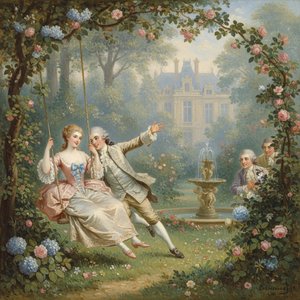
A Dance of Delight: Exploring Jean-Honoré Fragonard’s “Blind Man’s Buff”
The painting "Blind Man's Buff," completed in 1752 by Jean-Honoré Fragonard, transcends mere depiction; it embodies the very essence of Rococo artistry – a celebration of sensual pleasure and fleeting romance. More than just a charming pastoral scene, this artwork speaks volumes about the social conventions and artistic sensibilities of eighteenth-century France, offering a captivating glimpse into the courtship rituals of its aristocratic patrons.- Subject Matter: At its core lies an intimate tableau capturing a playful moment between lovers in a sunlit garden. A woman playfully engages with her infant child while another man observes, creating a dynamic interplay of gestures and glances that underscores the central theme – the deceptive allure of appearances.
- Style & Technique: Fragonard’s signature style is characterized by its airy lightness and exquisite delicacy. Employing pastel hues—primarily pinks, greens, and yellows—he achieves a luminous effect that captures the vibrancy of springtime blossoms. The brushstrokes are loose and fluid, prioritizing expressive movement over meticulous detail, reflecting the Rococo penchant for illusionistic textures and shimmering surfaces.
Historical Context: Courtly Love and Artistic Patronage
“Blind Man’s Buff” emerged during a period defined by opulent aristocratic life and an obsession with idealized beauty. The game itself served as a metaphor for courtship, where deception and flirtation were considered acceptable strategies to win affection. Fragonard's painting directly addresses this cultural preoccupation, mirroring the tastes of Louis XV’s court who favored scenes depicting pastoral idylls brimming with romantic symbolism. Boucher’s influence is palpable in the composition’s graceful forms and harmonious color palette—a testament to the artistic standards upheld during that era.- Symbolism: The artwork is replete with symbolic gestures designed to heighten its emotional impact. The playful tickling of the woman's cheek by a straw symbolizes flirtation and distraction, while Cupid’s infant brushing her hand represents divine intervention guiding affections. Even the woman’s attire—elaborate gowns adorned with opulent bows—represents the extravagance and sophistication valued within aristocratic circles.
- Emotional Impact: Fragonard masterfully captures the ephemeral nature of youthful passion. The subtle gaze exchanged between lovers hints at unspoken desires and vulnerabilities, inviting viewers to contemplate the complexities of human relationships. Ultimately, “Blind Man’s Buff” evokes a feeling of carefree joy mingled with wistful longing—a timeless portrayal of love's captivating power.
A Reproduction Worth Admiring
A high-quality reproduction of "Blind Man’s Buff" offers an exceptional opportunity to bring this masterpiece into your home. OriginalUniqueArt.com’s meticulous printing process ensures that the painting's luminous colors and delicate brushstrokes are faithfully reproduced, allowing you to appreciate Fragonard’s artistic vision with stunning clarity. Consider framing it in a neutral tone to complement its ethereal beauty—a beautiful addition to any interior space.よくあるご質問
ジャン=オノレ・フラゴナール作「Blind-Mans Buff」はパブリックドメインですか?
ジャン=オノレ・フラゴナール作「Blind-Mans Buff」 の著作権について:本作品はパブリックドメイン(著作権消滅)です。これにより、画像の複製が自由に行えるかどうかが決まります。
ジャン=オノレ・フラゴナール作「Blind-Mans Buff」は、どのような感情を伝えていますか?
ジャン=オノレ・フラゴナール作「Blind-Mans Buff」に記録された情緒的なトーンはRomanticです。これは、作品が表現している感情を要約したものです。
ジャン=オノレ・フラゴナール作「Blind-Mans Buff」のプリントには、どのようなサイズと向きがおすすめですか?
ジャン=オノレ・フラゴナール作「Blind-Mans Buff」のプリントは、Portraitの向きでLargeのサイズに印刷することをお勧めします。
More about this painting
 設置イメージを確認
 送る
送る シェア
シェア
 詳細情報
詳細情報 ガイドを表示

 画像をダウンロード
 似ている作品
 X線調査
X線調査 スライドショー
 Q&A
Q&A 統計情報
統計情報