

 送る
送る シェア
シェア
 詳細情報
詳細情報 ガイドを表示

 画像をダウンロード
 似ている作品
 スライドショー
 統計情報
統計情報Alou with Talons


 続きを読む
続きを読む
このページに掲載されている作品は著作権法によって保護されており、当社の許可なく同一の複製物を制作または販売することは法律で禁じられています。この保護は、以下のような国際条約に基づき執行されます。 ベルヌ条約 および、以下の条項に定められたものを含む各国の法律により、 米国著作権法 第17編。
敬意を払った法的な代替手段として、私たちはオリジナルにインスピレーションを与えられた、カスタムの手描きアートワークを提供しています。私たちの熟練したプロのアーティストは、元の作品が持つスタイル、情緒、そして芸術的なエッセンスを注意深く研究し、独自の創作物でありながら、同じ感性を呼び起こすような、新しくユニークな作品を作り上げます。
この手法は、著作権で保護された作品の複製や複写を伴わないため、著作権法に完全に準拠しています。これは単なる模倣ではなく、創造的な再解釈です。元の作品からインスピレーションを受けつつも、それとは異なる、全く新しい絵画を生み出すものです。
手描き油彩複製画
当社のアーティストが、お客様のご希望のサイズと額縁に合わせて、キャンバスに手描きで制作する油彩画です。 ( プリント版に切り替え デジタル画像販売へ切り替え)




































作品のオリジナル比率に合わせた、当店の規定サイズからお選びください。

フレームや壁のスペースに合わせて、ご希望の幅と高さを入力してください。本作品は手描きのため、異なる比率のサイズをご希望の場合、絵画の周囲を少し広げて描くか、あるいは端を少しカットして調整することが可能です。お客様のご要望に合わせます。制作を開始する前に、仕上がりを確認するためのデジタルモックアップをお送りいたします。このページに表示されている画像は完成品の実物ではなく、あくまでモックアップによるイメージです。
ご注文後、OriginalUniqueArt.com チームより詳細な指示をお送りするとともに、仕上がりイメージ(モックアップ)をご提供いたします。


 ガラスオプションは、110cm未満のサイズでのみご利用いただけます。

Alou with Talons
再現技法
複製画サイズ一覧
-


合計金額
¥ 47606
The Genesis of a Biomorphic Masterpiece
Jean Arp’s “Alou with Talons,” created in 1942 during the tumultuous years of World War II, is more than just a sculpture; it's a distilled embodiment of the artist’s lifelong exploration of form, chance, and the inherent beauty of abstraction. Born Hans Peter Wilhelm Arp in Strasbourg, a city perpetually caught between French and German identities, his early life instilled within him a profound sense of displacement – a feeling that would become a defining characteristic of his artistic vision. This duality, coupled with his exposure to both European avant-garde movements like Dadaism and the burgeoning Surrealist currents, shaped an artist who consistently challenged conventional notions of representation and sought to capture essence rather than mimic reality.
The sculpture itself is strikingly simple in its composition: a roughly ovoid form, reminiscent of a stylized bird or perhaps a fetal shape, emerges from a dark, almost monolithic base. Yet, within this apparent minimalism lies a complex interplay of textures and surfaces. Arp employed bronze, a material he favored for its durability and ability to capture subtle nuances of light and shadow, lending the piece an inherent gravitas. The surface is deliberately left unpolished in many areas, revealing the marks of the casting process – deliberate imperfections that contribute to the sculpture’s raw, almost primal energy. The “talons,” sharp, angular protrusions extending from the ovoid, add a layer of tension and visual interest, hinting at both aggression and protection.
Dadaist Roots and the Embrace of Chance
Arp's artistic journey is inextricably linked to the Dada movement, which emerged in Zurich during World War I as a defiant reaction against the horrors of conflict and the perceived irrationality of bourgeois society. Dada artists rejected traditional aesthetic values, embracing chance, absurdity, and the fragmentation of form. Arp’s early work reflects this spirit, particularly his collages – works where he would tear pieces of paper from magazines and newspapers and arrange them on a canvas, allowing chance to dictate the final composition. “Alou with Talons” can be seen as an evolution of this approach, retaining the core principle of relinquishing control to the unpredictable forces of creation.
The title itself, "Alou," is derived from a Berber word meaning "bird." This connection to avian imagery reinforces the sculpture’s potential symbolism – perhaps representing vulnerability, freedom, or even the cyclical nature of life and death. The “talons,” however, introduce an element of ambiguity, suggesting a struggle for survival or a protective instinct. Arp famously described his artistic process as “cutting out” forms from reality, a metaphor that perfectly encapsulates the sculpture’s creation: he essentially ‘cut’ the form from the bronze itself, trusting in the inherent potential of the material to reveal its own shape.
A Bridge Between Movements and a Legacy of Abstraction
While firmly rooted in Dadaism, Arp's work gradually moved beyond the movement's initial shock tactics. He developed his own distinct style characterized by biomorphic forms, a fascination with geometry, and an exploration of space. “Alou with Talons” exemplifies this evolution – it’s a mature work that demonstrates Arp’s mastery of form and texture while retaining a sense of spontaneity and emotional depth. The sculpture's influence extends beyond the realm of sculpture; its principles have resonated throughout 20th-century art, informing movements such as Surrealism and Abstract Expressionism.
Today, “Alou with Talons” stands as a testament to Arp’s innovative spirit and his ability to distill complex ideas into simple, powerful forms. It invites viewers to contemplate the relationship between chance and control, form and space, and ultimately, the enduring beauty of abstraction. Reproductions of this piece offer a remarkable opportunity to bring this evocative work into any setting, adding a touch of intellectual depth and artistic sophistication.
よくあるご質問
ジャン・アルプ作「Alou with Talons」の色彩構成はどのように構築されていますか?
「Alou with Talons」では、Sereneな対比とStrong Color Unityな調和が共存しています。
ジャン・アルプ作「Alou with Talons」は、どのような空間に飾るのがおすすめですか?
ジャン・アルプ作「Alou with Talons」にふさわしい空間はLiving Roomです。もちろん、お客様のインテリアに合わせて調整していただくことも可能です。
ジャン・アルプ作「Alou with Talons」のプリントサイズと向きは、どのような設定がおすすめですか?
Medium サイズ、Portrait 方向:こちらは ジャン・アルプ作「Alou with Talons」 に推奨されるプリント設定です。
アーティストについて
生誕と初期:境界を越える芸術家の萌芽
1886年、フランスとドイツの国境線上に位置するストラスブールに、ハンス・ペーター・ヴィルヘルム・アルプとして生まれたジャン・アルプは、その出自からして二重性を内包していました。この地理的、文化的な曖昧さは彼の芸術的ビジョンを深く形作り、固定された境界線を問い続ける姿勢を生涯を通して貫くことになります。フランス人の母とドイツ人の父を持つという背景は、カテゴライズされることを拒む芸術家の基礎を無意識のうちに築き上げました。ストラスブールのÉcole des Arts et Métiersやドイツのワイマール美術学校での初期の学習は、彼に確かな芸術的基盤を与えましたが、風景画家であった叔父カール・アルプの励ましが、彼の情熱を真に燃え上がらせるきっかけとなりました。1908年のパリ移住とアカデミー・ジュリアンへの入学は、アヴァンギャルドの活気に満ちた潮流に彼を触れさせました。しかし、ストラスブールは常に強烈な記憶として残され、歴史と象徴的な重みを持つ都市が、彼の芸術的感性に永遠の影響を与え続けました。この初期の時期は単なる技術習得の過程ではなく、アイデンティティと帰属意識という複雑さを吸収し、そのテーマが人生と作品全体を通して響き続ける時代でした。混沌への傾倒:ダダイスムと生体形態の誕生
第一次世界大戦の勃発はアルプにとって転換点となりました。無意味な暴力と理性の崩壊に幻滅した彼は、1915年頃から芽生え始めたダダイスム運動へと傾倒していきます。これは単なる美的選択ではなく、確立された規範への根本的な拒絶であり、混沌とした世界に対する反抗としての混沌の積極的な受け入れでした。アルプは中立地帯のスイスで、ユーゴー・ボール、トリスタン・ツァラ、マルセル・ヤンコといった芸術家や知識人たちと出会い、伝統的な芸術的慣習を解体しようと試みました。彼はModerne Bundという初期の現代美術同盟体の展覧会に積極的に参加し、1920年にはマックス・エルストやアルフレッド・グルンヴァルトと共にケルン・ダダイスムグループを共同設立しました。この時期から、彼は芸術的コントロールを拒否する技法として偶然性の操作を実験し始めます。紙片を表面に落とし、それが落ちた場所に接着するという彼の「チャンス・コラージュ」は、意識的なデザインの放棄であり、予測不可能な結果への委ねでした。同時に、彼は有機的な生命体と類似した抽象的な形である生体形態を探求し始めました。これは単なる抽象的なデザインではなく、隠されたエネルギー、存在の基本的な構成要素、そして潜在意識レベルでの自然とのつながめを暗示していました。この探求は、彼が1922年に結婚したソフィー・テューバー=アルプとの深遠な芸術的パートナーシップによって大きく影響を受けました。二人の共同プロジェクトは革新的で互いに刺激し合い、それぞれの実践の境界線を押し広げました。シュルレアリスムの幻影と彫刻探求
ダダイスムが衰退し始めると、アルプの芸術的軌跡はシュルレアリスムへと向かいました。彼の作品は1925年のパリ、ギャラリー・ピエールでの最初のシュルレアリスム展に出品され、夢と潜在意識を探求するこの運動とのつながりを確固たるものにしました。しかし、アルプは単にシュルレアリスムを取り入れたわけではありませんでした。彼は独自の感性を注入し、独自の解釈を加えました。彼はレリーフ彫刻から立体作品へと重要な移行を開始し、有機的な抽象を自立した形として探求しました。この時期に登場した「Human Concretion」シリーズは、滑らかで丸みを帯びた彫刻であり、人間の形態と自然なオブジェクトの両方に対する曖昧な言及を喚起しました。アルプの素材探求もまた重要でした。彼は大理石、青銅、ガラス、木材など様々な媒体を実験し、それぞれの媒体が異なる質感と効果を提供し、彼の有機的な抽象のビジョンをさらに洗練することを可能にしました。彼の生体形態はシュルレアリスムの発展に深く影響を与え、特にその自動主義への関心と潜在意識のイメージに対する魅力に貢献しました。アルプは認識可能なオブジェクトを描写することに関心がなく、生命の本質、その成長、流動性、そして内在する神秘を捉えようとしました。遺産と永続的な影響
ジャン・アルプが20世紀の芸術に与えた影響は否定できません。有機的な抽象への先駆的な役割、偶然性の受け入れ、生体形態の探求は、彼をアヴァンギャルドの重要な人物として確固たる地位づけました。*Trousse d'un dada*、*Dada Heads*シリーズ、*Human Concretion without Oval Bowl*、*Le Soleil recerclé*、*The Three Graces*などの傑作は、その優雅なシンプルさと深遠な象徴性で今もなお観客を魅了し続けています。第二次世界大戦後の時代にますます評価が高まり、1954年のヴェネツィア・ビエンナーレでの彫刻グランプリ受賞、そしてニューヨーク近代美術館(1958年)やパリ国立現代美術館(1962年)での主要な回顧展がその頂点となりました。ハーバード大学院センターのために彼が制作したレリーフ彫刻は、彼の永続的な遺産を証明しています。アルプの有機的な形態への重点は、抽象表現主義などの後世の芸術家たちに共鳴し、偶然性と従来の創造方法を取り入れた人々にインスピレーションを与え続けています。ソフィー・テューバー=アルプとの共同作業は、ダダイスム運動への最も重要な貢献の一つとして認識されています。ジャン・アルプの革新的なアプローチ、慣習に挑戦する意欲、そして生命の基本的な力を探求することへの揺るぎないコミットメントは、彼の芸術が今後何世代にもわたって人々にインスピレーションを与え続けることを保証します。
ジャン・アルプ
1886 - 1966 , ドイツ
アーティスト情報
- Artistic Movement Or Style: ダダイズム、シュルレアリスム
- Artists Or Movements Influenced By This Artist:
- シュルレアリスム
- 抽象芸術
- Artists Who Influenced This Artist: ['ワシリー・カンディンスキー']
- Date Of Birth: 1886年9月16日
- Date Of Death: 1966年6月7日
- Full Name: ジャン・アルプ
- Nationality: ドイツ・フランス
- Notable Artworks (List Of Titles):
- Trousse d'un dada
- Human Concretion
- Le Soleil recerclé
- Place Of Birth (City And Country): ストラスブール、フランス
関連記事
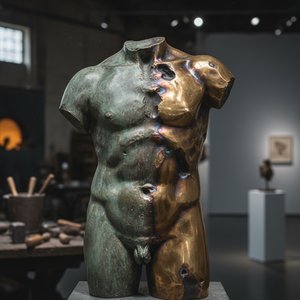
青銅彫刻の永続的遺産:歴史、技法、そして現代における解釈
青銅彫刻の歴史、技法、現代における解釈を専門家が解説。古代から現代までの貴重な作品群を深く理解し、コレクションや投資に役立つ情報を提供します。美術品鑑定、修復についてもご紹介。

The Enduring Form: Sculpture Across History, Technique & Emotional Resonance
Explore the rich history of sculpture with OriginalUniqueArt. Discover key techniques, influential artists & investment potential for discerning collectors. Expert insights into valuing and collecting timeless masterpieces.

Bronze Sculptures That Defined Art History | OriginalUniqueArt
Journey through art history with our Top 10 bronze sculptures! Explore masterpieces by Rodin, Michelangelo & more. Discover stories behind iconic statues and find museum-quality reproductions for your home decor at OriginalUniqueArt.com.

Bronze Age to Modern Masters: 10 Sculptures That Redefined Art | OriginalUniqueArt
Journey through art history with 10 legendary bronze sculptures – from Michelangelo's David to Rodin’s Thinker. Explore the stories, techniques & timeless beauty of these masterpieces. Find museum-quality reproductions & elevate your home decor on OriginalUniqueArt.com.

The Enduring Form: Exploring Themes & Techniques in Sculpture Across Historical Periods
Explore the rich history of sculpture from ancient masterpieces to contemporary innovations. Discover key techniques, influential artists & investment potential for discerning art collectors.
