
 設置イメージを表示
 シェアする
シェアする シェアする
シェアする
 詳細を見る
詳細を見る ガイドを表示

 ダウンロード
 似ている作品
 X線調査
X線調査 スライドショーを表示
 Q&A
Q&A 統計情報
統計情報Fruit Still-Life

- 50.0 x 42.0 cm


 詳細を表示
詳細を表示
ジークレー/アートプリント
スピーディーな制作と多彩な仕上げオプションが魅力の、ミュージアムクオリティなジークレー・キャンバスプリント。 ( 手描き複製画を注文する デジタル画像販売へ切り替え)




P118B ¥10

P118H ¥10

P118W ¥10

P438Z ¥10

P508JH ¥12

P508YH ¥12

P805H ¥10

P805Z ¥10

P919BZ ¥10

P919G ¥10

P919XJ ¥10

P959ZH ¥10

P968JZ ¥12

W106C ¥8

W218G ¥10

W218JH ¥8

W218Y ¥10

W307PJ ¥10

W316G ¥10

W316PJ ¥8

W316Y ¥10

W398PJ ¥8

W4111J ¥10

W500HY ¥15

W500JH ¥15

W692G ¥12

W849H ¥8

W940BG ¥15

W953PJ ¥8




作品のオリジナル比率に合わせた、当店の規定サイズからお選びください。

額縁や壁のスペースに合わせて、ご希望の幅と高さを入力してください。プリントはカットすることは可能ですが、元の画像より大きくすることはできないため、異なる比率のサイズを選択された場合は、画像の一部が欠けることになります。印刷を開始する前に、内容を確認していただくためのデジタルモックアップをお送りいたします。このページに表示されている画像は、実際のカット後の状態を示すものではありません。実際の仕上がりはモックアップにてご確認ください。


 ガラスオプションは、110cm未満のサイズでのみご利用いただけます。

Fruit Still-Life
ジークレー/アートプリント
複製画サイズ一覧
-


合計金額
¥ 12819
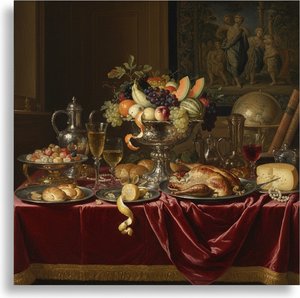
A Symphony of Color and Light: Jan van Huysum’s “Fruit Still-Life”
Jan van Huysum's "Fruit Still-Life," painted around 1728, isn’t merely a depiction of produce; it’s an immersive experience. This remarkable work, housed within the Rijksmuseum in Amsterdam, exemplifies the pinnacle of Dutch Golden Age still life painting – a genre where meticulous observation and masterful illusionism converged to create breathtakingly realistic and emotionally resonant scenes. More than just a collection of fruits and flowers, it's a testament to van Huysum’s extraordinary ability to capture not only their appearance but also their inherent vitality and the play of light upon them.
The painting immediately draws the eye with its profusion of color – deep ruby reds of ripe cherries and apples, the vibrant yellows of peaches and apricots, and the cool greens of grapes and leafy vines. These aren’t simply painted colors; they possess a remarkable luminosity, achieved through van Huysum's innovative use of oil paint on copper. This technique allowed for an unparalleled level of detail and brilliance, mimicking the way light would naturally interact with these textures. The background, rendered in a warm, earthy brown, serves as a sophisticated foil, intensifying the impact of the vibrant foreground elements.
The Master’s Technique: Illusion and Detail
Van Huysum was renowned for his technical virtuosity, a skill honed under the tutelage of his father, Justus van Huysum the Elder – another accomplished flower painter. This lineage instilled in him not only an understanding of botanical accuracy but also a deep appreciation for the art of illusion. He didn’t simply paint what he saw; he painted what he *felt* was there, creating a sense of depth and volume that transcends the two-dimensional surface. Notice how the individual petals appear to curl and unfold, the droplets of moisture clinging to the fruit, and the delicate veins running through the leaves – all rendered with astonishing precision.
The use of chiaroscuro—the dramatic contrast between light and shadow—is particularly noteworthy. Van Huysum masterfully employs this technique to sculpt the forms, creating a sense of three-dimensionality that makes the still life feel almost tangible. The shafts of light, seemingly originating from an unseen source, illuminate specific areas, drawing the viewer’s eye across the composition and highlighting the textures and colors of each element.
Symbolism and Context: A Dutch Golden Age Masterpiece
"Fruit Still-Life" is deeply rooted in the artistic conventions of its time. During the Dutch Golden Age (roughly 1600-1700), still life painting gained prominence as a genre, often imbued with symbolic meaning. Fruits and flowers weren’t just decorative elements; they frequently represented virtues, vices, or even religious concepts. While the precise symbolism within this particular piece may be open to interpretation, it's likely that van Huysum incorporated elements of abundance, fertility, and the fleeting beauty of nature – themes central to Dutch culture at the time.
Furthermore, the inclusion of a landscape element in the background—a subtle suggestion of architecture or a distant vista—adds another layer of complexity. This technique, common in Dutch still life painting, served to create a sense of space and depth, grounding the composition within a broader context. It’s a reminder that even in a seemingly simple depiction of fruit and flowers, van Huysum was engaging with complex artistic traditions and philosophical ideas.
A Legacy of Blossoms: Van Huysum's Enduring Appeal
Jan van Huysum’s legacy extends far beyond his technical skill. He elevated still life painting to a new level of artistry, capturing not just the appearance but also the essence of the natural world. His works continue to captivate viewers with their vibrant colors, exquisite detail, and profound sense of beauty. Reproductions like those offered by OriginalUniqueArt.com allow us to appreciate this remarkable artist’s genius and bring his luminous floral arrangements into our homes, offering a timeless connection to the artistic richness of the Dutch Golden Age.
Q&A
「Fruit Still-Life」において、コントラストと調和はどのように組み合わさっているのでしょうか?
ヤン・ファン・ホイスム作「Fruit Still-Life」の色彩構成は、BalancedなコントラストとBalanced Harmonyな調和を併せ持っています。
「Fruit Still-Life」の主題は、ヤン・ファン・ホイスムが普段扱うテーマとどのように関連していますか?
ヤン・ファン・ホイスムの代表的なテーマであるfloral abundance, dutch golden age, symbolic fruit, classical elements, van huysum’s signature style”, “detailed realism, baroque precision”, family legacyにおいて、「Fruit Still-Life」はfruit, flowers, composition, copper, van huysum, baroque, dutch golden age, detailに独自の焦点を当てています。
「Fruit Still-Life」は、ヤン・ファン・ホイスムの代表作の一つでしょうか?
ヤン・ファン・ホイスム作「Fruit Still-Life」 の人気度は Iconic です。この分類は、その作品がどの程度広く知られているかを表しています。
作家プロフィール
生涯と芸術への目覚め
ヤン・ファン・ハイスム(Jan van Huysum、1682年4月15日 - 1749年2月8日)は、オランダ黄金時代の傑出した静物画家です。アムステルダムに生まれ、彼は単なる花の絵描きではありませんでした。花びらや水滴を息をのむほど写実的に表現し、鑑賞者がまるで香りを嗅ぎ取れるかのような錯覚を与える、幻影の達人だったのです。ハイスムは芸術一家に育ちました。父であるユストゥス・ファン・ハイスム(Justus van Huysum the Elder)も尊敬される花の画家であり、兄弟のヤコブとミヒールもまた絵筆を執りました。彼の道は予め定められたようでしたが、当初から花卉画に惹かれたわけではありませんでした。キャリア初期には、「伝統的で牧歌的な」風景画を手がけていましたが、繊細な静物画の世界こそが彼の真の才能が開花する場所だったのです。
ハイスムの芸術教育の基礎は父によって築かれました。それは単なる技術習得にとどまらず、美術市場への理解を深める貴重な経験となりました。この時代のオランダ、特にアムステルダムは商業と文化の中心地として繁栄し、豪華で装飾的な絵画、とりわけ華麗な花卉アレンジメントを描いた作品に対する需要が高まっていました。このような環境がハイスムのアプローチを形成しました。彼は単に自然を模倣するのではなく、人々の心を魅了し、感嘆させることを目的とした理想化された美のビジョンを創造したのです。1717年に制作され、現在ルーブル美術館に所蔵されている彼の初期作品は、すでに卓越した成熟度と細部へのこだわりを示しており、これから訪れるであろう傑作を予感させます。
技巧と様式:ディテールの魔術
ハイスムを際立たせるのは、比類なき技巧です。彼は滑らかで光沢のある筆致を用い、絵の層を重ねてエナメルのような表面を作り出し、色彩の豊かさと鮮やかさを高めました。しかし、それは単に色に関するものではありませんでした。光が花びらに当たり、葉についた水滴を照らし、奥行きと立体感を生み出す様子を描くことにも重点が置かれました。彼は並外れた観察眼を持ち、すべての花、果物、葉の質感を驚くほど正確に捉えました。ハイスムはアリや露のしずくのような細部まで写実的に描き出せるという逸話が残されています。それは彼の献身と技術力の証です。
ハイスムの構図は洗練された優雅さとバランスを特徴としています。同時代の画家の中には、混雑した花盛りを描くことを好む人もいましたが、彼は常に不均衡や過剰な構成を避けていました。彼の晩年の作品はより複雑になりましたが、調和と気品を保ちました。彼はしばしば幻想的な要素を作品に取り入れ、特に古典的な建築様式や静止した木々が描かれた想像上の風景を取り入れています。それらは地形の正確な描写ではなく、花の美しさを際立たせるために設計された喚起的な背景でした。
栄光と遺産:主要作品と後世への影響
ヤン・ファン・ハイスムは生前、多大な称賛と経済的成功を収めました。彼の絵画はコレクターから高く評価され、高値で取引されました。今日、彼の傑作はルーブル美術館(パリ)、ナショナル・ギャラリー(ロンドン)、ベルリンやアムステルダムのコレクションなど、世界中の著名な美術館に所蔵されています。彼の最も有名な作品には、『テラコッタの花瓶と果物』、色彩と質感の素晴らしい表現;『花と果物』、彼の構図の巧みさを示す作品;そして『壺に入った花のブーケ』、自然の儚い美しさを捉える能力を証明する作品があります。
ハイスムの影響は彼自身の時代を超え、世代を超えて多くの芸術家たちにインスピレーションを与えました。ヤン・ファン・オスやヨハネス・デ・ボッシュなどの画家たちは、彼の影響を明確に示しています。彼はオランダ黄金時代の花卉静物画の頂点を代表し、自然の綿密な観察と美の祝典によって定義された時代です。彼の遺産は彼が制作した数多くの絵画だけでなく、彼のスタイル—今日でも芸術家たちを魅了し、観客を魅了し続けるスタイル—にもあります。彼の作品は、自然のつかの間の美しさを時代を超えて不朽の名作に変えるために必要な芸術性と技術力を力強く思い出させてくれます。
家族関係と芸術的血統
- ユストゥス・ファン・ハイスム(Justus van Huysum the Elder、1659–1716): ヤンの父。花卉作品や装飾的な構図を多数制作した画家です。
- ヤコブ・ファン・ハイスム(Jacob van Huysum、1688–1740): ヤンの兄弟。植物のイラストレーションを専門とする著名な芸術家でもありました。
- ユストゥス・ファン・ハイスム(Justus van Huysum the Younger、1685-1707): 若くして亡くなったヤンのもう一人の兄弟で、絵画を追求しました。
- ミヒール・ファン・ハイスム(Michiel van Huysum、1703–1777): ヤンの異母兄弟。花卉画家でした。
- フランシナ・マルガレタ・ファン・ハイスム: ヤンの娘で、彼の作品を助け、自身も熟練した花の画家でした。
ファン・ハイスム家は、オランダ黄金時代の豊かな絵画のタペストリーに大きく貢献する素晴らしい芸術的血統です。しかし、ヤンはその中でも最も著名な人物として、彼の絶妙で時代を超越した花卉傑作によって美術史に消えない足跡を残しました。

ヤン・ファン・ホイスム
1682 - 1749 , オランダ
プロフィール概要
- Artistic Movement Or Style: オランダ黄金時代、静物画
- Artists Or Movements Influenced By This Artist:
- ヤン・ファン・オス
- ヨハネス・デ・ボッシュ
- Artists Who Influenced This Artist: ['ユストゥス・ファン・ハイスム']
- Date Of Birth: 1682年4月15日
- Date Of Death: 1749年2月8日
- Full Name: ヤン・ファン・ハイスム
- Nationality: オランダ人
- Notable Artworks (List Of Titles):
- テラコッタの花瓶
- 花と果実
- 壺の中の花束
- Place Of Birth (City And Country): アムステルダム、オランダ
関連記事

黄金世紀の巨匠たち:バロック絵画が彩る10選|OriginalUniqueArt
オランダ黄金時代の10大傑作を紐解く!レンブラント、フェルメール…バロック絵画の魅力と時代背景を深く探求。OriginalUniqueArtで、至高のアートコレクションと空間演出のヒントを見つけよう。高品質なアートプリントで、お部屋を華やかに。
Abraham Hendricksz van Beyeren: Pioneering Dutch Still Life & the Banquet Tradition
Explore the captivating world of Dutch Golden Age still life with Abraham van Beyeren. Discover his innovative techniques, symbolic banquet scenes & lasting influence on art history. Learn about collecting these masterpieces.

Golden Light & Dutch Skies: The Timeless Magic of Dutch Golden Age Landscapes
Discover the breathtaking beauty of Dutch Golden Age landscapes. Explore the mastery of light, chiaroscuro, and 17th-century realism through an expert art history lens, celebrating the enduring legacy of the Dutch Masters for discerning collectors and art lovers.

Jan Jansz Wijnants: A Study in Dutch Golden Age Still Life & Floral Transience
Explore the captivating world of Jan Wijnants and Dutch Golden Age still life painting. Discover symbolism, masterful techniques & lasting influence on floral art history. Learn more!

レンブラント傑作25選:光と影の巨匠、魂を揺さぶる名画の世界 | OriginalUniqueArt
レンブラントの傑作25選。光と影の魔術師が描いた魂を揺さぶる名画の世界へ。美術史に残る自画像、夜警、宗教画…OriginalUniqueArtで高品質なアートプリントやインテリアアートをお楽しみください。コレクションはこちら→