メニュー
無料アート相談
プリントを購入 プリントを購入画像を 購入する 画像を 購入する シェアするシェアする
詳細を見る詳細を見る お気に入りに追加 お気に入りに追加 ダウンロードダウンロード 似ている作品似ている作品 X線調査X線調査 スライドショースライドショー

The Assembly

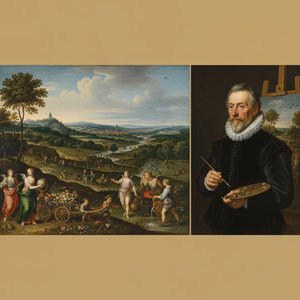
Admire Jan Miel’s ‘The Assembly,’ depicting a lavish banquet scene within the Hall of Diana at La Venaria Royal Palace. Explore Flemish realism blended with Baroque grandeur, showcasing Duke Charles Emmanuel II.

Jan Miel (1599-1664) was a Flemish painter active in Italy, known for his 'bamboccianti' genre scenes of Roman life & later classicizing history paintings. Court artist to Charles Emanuel II, Duke of Savoy.

手描き油彩複製画

当社のアーティストが、お客様のご希望のサイズと額縁に合わせて、キャンバスに手描きで制作する油彩画です。

P118B $10
P118H $10
P118W $10
P438Z $10
P508JH $12
P508YH $12
P805H $10
P805Z $10
P919BZ $10
P919G $10
P919XJ $10
P959ZH $10
P968JZ $12
W106C $8
W218G $10
W218JH $8
W218Y $10
W307PJ $10
W316G $10
W316PJ $8
W316Y $10
W398PJ $8
W4111J $10
W500HY $15
W500JH $15
W692G $12
W849H $8
W940BG $15
W953PJ $8

Standard
custom
CM
INCH

作品のオリジナル比率に合わせた、当店の規定サイズからお選びください。

高さ

特定のフレームやスペースに合わせて、ご希望のサイズをご入力いただけます。選択されたサイズが元の画像の比率と異なる場合、アートワークをトリミングするか、手描きで要素を追加して絵画を拡張いたします。デジタルモックアップ を制作し、制作開始前にご確認(承認)をいただきます。
画面上のプレビューは、実際のトリミングや拡張を正確に反映しているものではありません。最終的な構図は、モックアップによってのみ正確にご確認いただけます。
カスタムサイズもご利用いただけますが、元の比率を維持するためには、あらかじめ用意されたリストからサイズを選択することをお勧めいたします。

カスタマイズの例:顔をお客様の写真に置き換える、ペットを追加する(例:猫を犬に変更)、背景に隠れたメッセージを入れる、背景の風景や要素を変更するなど。
ご注文後、OriginalUniqueArt.com チームより詳細な指示をお送りするとともに、仕上がりイメージ(モックアップ)をご提供いたします。

世界中への配送()は、通常の5週間ではなく、3〜4週間でお届けいたします。(19 7月)。品質には一切妥協いたしません。

why_choose_icon
世界中へ無料エクスプレス配送
why_choose_icon
高品質なリネンキャンバス
why_choose_icon
配送時完全保険付
why_choose_icon
関税・輸入税の払い戻し保証
why_choose_icon
忠実な色彩再現保証
why_choose_icon
60日間返品保証(製造上の欠陥のみ)
why_choose_icon
100% 全額返金保証
why_choose_icon
まとめ買い割引のご案内

合計金額

-

reproduction

The Assembly

複製技法

複製画のサイズ

-

合計金額

-

作品詳細

  • Subject or theme: Hunting Ritual
  • Influences: Anthony van Dyck
  • Movement: Baroque
  • Notable elements or techniques: Detailed depiction of a banquet scene.
  • Year: 1660
  • Title: The Assembly
  • Medium: Oil on Canvas

アート・クイズ

各質問の正解は1つだけです。

問題 1:
What is the primary subject matter depicted in Jan Miel’s ‘The Assembly’?
問題 2:
The painting showcases a scene from which historical period?
問題 3:
What artistic style is predominantly evident in Jan Miel’s technique, influenced by artists like Anthony van Dyck?
問題 4:
Based on the image description, what is prominent about the composition of ‘The Assembly’?
問題 5:
Where was Jan Miel primarily active during his artistic career?

作品解説

The Assembly: A Window into Savoy’s Renaissance Court

Jan Miel's “The Assembly” stands as a remarkable testament to the artistic fervor of the Baroque era, specifically capturing a pivotal moment in the reign of Duke Charles Emmanuel II of Savoy. Painted around 1658-1660, this monumental canvas—likely commissioned for the Hall of Diana at La Venaria Reale—offers more than just a depiction of a banquet; it’s an immersive glimpse into the social and cultural landscape of Savoy during its golden age. The artwork's monochrome palette – predominantly shades of grey – lends itself to a solemn grandeur, mirroring the seriousness of the occasion depicted: a formal gathering intended to solidify political alliances and celebrate royal prestige.
  • Subject Matter: The scene portrays a lavish banquet hosted by Duke Charles Emmanuel II amidst a group of prominent nobles and dignitaries. It’s not merely a portrait of individuals but an elaborate tableau vivant, striving to convey the atmosphere of aristocratic society.
  • Style & Technique: Miel skillfully employs chiaroscuro—the dramatic interplay between light and shadow—a hallmark of Baroque painting. This technique emphasizes textures and contours, creating depth and realism within the monochrome composition. The artist’s meticulous attention to detail is evident in every aspect of the scene, from the folds of clothing to the expressions on the faces of the attendees.
  • Historical Context: Savoy under Charles Emmanuel II was experiencing a period of significant artistic patronage, fueled by ambitious ambitions for consolidating power and elevating its cultural standing. The Hall of Diana itself served as a symbol of royal authority and sophistication, and Miel’s depiction aligns perfectly with this overarching aesthetic ideal.
Further Research: The painting's influence extends beyond its immediate setting; it reflects broader trends in European art during the mid-seventeenth century—particularly the fascination with portraying aristocratic life and celebrating humanist ideals. Scholars debate whether Miel’s work directly benefited from Anthony van Dyck’s mentorship, though stylistic similarities undeniably point to a shared artistic lineage. Examining comparable works by Flemish artists of the period reveals a common preoccupation with capturing psychological nuance alongside formal elegance.

Symbolism & Emotional Impact

Beyond its visual splendor, “The Assembly” resonates with deeper symbolic meanings. The banquet itself represents not just sustenance but also social cohesion and political negotiation—essential elements for maintaining stability within the Duchy of Savoy. The positioning of figures—particularly Charles Emmanuel II—suggests a deliberate assertion of royal dominance and prestige. Moreover, the solemn mood conveyed by Miel’s masterful use of chiaroscuro evokes contemplation and underscores the importance of ritual and ceremony in shaping political discourse.

Contemporary Comparisons

Comparing “The Assembly” to other monumental banquet scenes from rival European courts—such as those produced by Rembrandt and Rubens—highlights Miel's contribution to a broader artistic dialogue. While Rembrandt’s canvases often convey profound emotional depth, Rubens’ works prioritize grandeur and spectacle. Miel occupies a unique position between these two stylistic poles, achieving remarkable realism while maintaining an undeniable sense of formality.

Reproductions & Interior Design Considerations

A high-quality reproduction of “The Assembly” can transform any interior space into a sophisticated reflection of Savoy’s Renaissance heritage. Its monochrome palette lends itself beautifully to minimalist schemes, creating a calming yet intellectually stimulating environment. Consider framing the artwork in a neutral tone—perhaps linen or matte black—to maximize its impact and preserve its artistic integrity.

アーティストの略歴

Jan Miel: Bridging Dutch Realism and Baroque Grandeur

Jan Miel (1599–1663) stands as a pivotal figure in the artistic landscape of the seventeenth century, embodying the fascinating confluence of Flemish tradition and Italian innovation. Born in Beveren, Belgium—though Antwerp and ‘s-Hertogenbosch remain contenders for his birthplace—Miel’s early life remains shrouded in relative obscurity, leaving biographical details sparse. However, what emerges from scholarly research is a remarkable artistic journey marked by stylistic evolution and collaborative endeavors that cemented his place within the vibrant cultural milieu of Rome and Turin.

His formative years were spent honing his craft primarily in Antwerp, where he absorbed the influences of prominent Flemish masters like Anthony van Dyck. While the precise scope of his training remains elusive, it undoubtedly instilled within him an appreciation for meticulous observation and refined technique—qualities that would characterize much of his subsequent oeuvre. This foundational grounding in classical draughtsmanship and portraiture provided the essential toolkit for a career that would eventually transcend regional boundaries.

The Roman Transformation and the Bamboccianti Spirit

Miel’s arrival in Rome around 1636 signaled a transformative moment in his artistic trajectory. He swiftly joined the Bentvueghels, an influential association of Dutch and Flemish artists residing in the Eternal City. Within this brotherhood, he adopted the memorable moniker ‘bieco’, a nickname reflecting his distinctive squinting gaze—a characteristic that would become synonymous with his artistic persona. This affiliation fostered deep connections within a broader artistic community deeply impacted by Pieter van Laert’s Bamboccianti style.

This movement was dedicated to depicting scenes of everyday life amongst the lower classes in Rome and its environs, eschewing the idealized grandeur of High Renaissance art for something far more visceral and immediate. Miel embraced this trend wholeheartedly, producing captivating genre paintings that captured the spirit of urban existence with remarkable realism and sensitivity. His works often featured:

  • Lively street scenes populated by travelers, merchants, and laborers.
  • A masterful use of light to evoke the dusty, sun-drenched atmosphere of Roman alleys.
  • The subtle interplay of human emotion within crowded, chaotic settings.
  • A meticulous attention to the textures of fabric, stone, and earth.

Evolution Toward Classicism and Courtly Grandeur

As his career progressed, Miel’s artistic vision underwent a significant metamorphosis. While he remained a master of the genre scene, he began to move away from the gritty realism of the Bamboccianti toward more classicizing history paintings. This shift reflected a broader trend in European art, where the raw energy of the Baroque was increasingly tempered by a desire for order, nobility, and classical allegory.

This evolution eventually led him to prestigious appointments, most notably serving as a court artist to Charles Emanuel II, Duke of Savoy. In the service of the Turin court, Miel’s work took on a more formal and magnificent character. The intimacy of his earlier Roman scenes gave way to compositions of greater scale and complexity, designed to reflect the power and prestige of his royal patron. This period represents the pinnacle of his professional achievement, where his Flemish roots in detail met the grand, sweeping narratives required by the European aristocracy.

The historical significance of Jan Miel lies in his ability to navigate these disparate worlds. He was an artist who could find beauty in the humble struggles of a Roman street urchin and dignity in the epic tales of antiquity. By bridging the gap between the meticulous realism of the North and the dramatic classicism of the South, Miel left an indelible mark on the seventeenth-century canon, ensuring his legacy as a true cosmopolitan of the Baroque era.

Jan Miel

Jan Miel

1599 - 1663 , Belgium

基本情報

  • Artistic Movement Or Style: Bamboccianti, Classicising
  • Artists Or Movements Influenced By This Artist: ['Pieter van Laer']
  • Artists Who Influenced This Artist: ['Anthony van Dyck']
  • Date Of Birth: 1599 Beveren Belgium
  • Date Of Death: 1663
  • Full Name: Jan Miel
  • Nationality: Flemish
  • Notable Artworks:
    • Landscape with a Battle between Two Rams
    • Roman Lime Kiln with Peasants Gambling
  • Place Of Birth: Beveren Belgium