
 設置イメージを表示
 シェアする
シェアする シェアする
シェアする
 詳細を見る
詳細を見る ガイドを表示

 ダウンロード
 似ている作品
 X線調査
X線調査 スライドショーを表示
 Q&A
Q&A 統計情報
統計情報Vanitas Still-life

 詳細を表示
詳細を表示
ジークレー/アートプリント
スピーディーな制作と多彩な仕上げオプションが魅力の、ミュージアムクオリティなジークレー・キャンバスプリント。 ( 手描き複製画を注文する デジタル画像販売へ切り替え)




































作品のオリジナル比率に合わせた、当店の規定サイズからお選びください。

額縁や壁のスペースに合わせて、ご希望の幅と高さを入力してください。プリントはカットすることは可能ですが、元の画像より大きくすることはできないため、異なる比率のサイズを選択された場合は、画像の一部が欠けることになります。印刷を開始する前に、内容を確認していただくためのデジタルモックアップをお送りいたします。このページに表示されている画像は、実際のカット後の状態を示すものではありません。実際の仕上がりはモックアップにてご確認ください。


 ガラスオプションは、110cm未満のサイズでのみご利用いただけます。

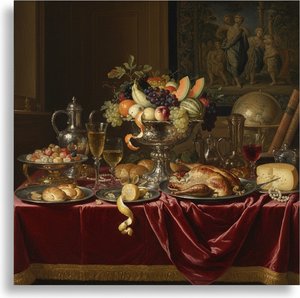
Vanitas Still-life
ジークレー/アートプリント
複製画サイズ一覧
-


合計金額
¥ 12801
作家プロフィール
Jan Jansz. Treck: A Master of Subtle Mortality
Born in Amsterdam around 1606 and tragically passing away in 1652, Jan Jansz. Treck remains a quietly significant figure within the Dutch Golden Age’s pantheon of still-life painters. While not as widely celebrated as contemporaries like Pieter Claesz or Willem Kalf, Treck’s work possesses a unique depth and understated elegance, characterized by economical compositions, meticulous detail, and a profound exploration of *vanitas* themes – reminders of mortality and the transience of earthly pleasures.
Treck's early artistic training was unconventional. He began his apprenticeship with Jan den Uyl, his brother-in-law, a connection that profoundly shaped his style. Den Uyl’s sudden death in 1640 proved pivotal; Treck subsequently assumed the role of guardian for the young children and executor of the estate, a responsibility that demanded both practicality and artistic skill. This period saw him not only managing the family's affairs but also absorbing and adapting Den Uyl’s techniques – a style marked by its careful observation of objects and a subtle use of light and shadow.
His apprenticeship with Abraham Jansz. for four guilders a week, though seemingly modest, reveals a dedication to his craft. Notably, Treck faced financial difficulties, requiring funds to construct a window that enhanced the lighting in his studio – a testament to his belief that adequate illumination was crucial for achieving the desired effects in his paintings. The fact that he had to pay for this window while struggling financially underscores the demanding nature of his profession and his commitment to artistic excellence.
Treck’s early signed and dated works, emerging around 1641 after Den Uyl's death, provide valuable insights into his development. There is even speculation that he may have completed some of Den Uyl’s unfinished paintings, a testament to the close relationship between the two artists. His work frequently featured objects associated with wealth and status – luxurious fabrics, exotic fruits, musical instruments, and scientific instruments – all arranged within carefully constructed still-life compositions. However, these symbols were always imbued with a sense of melancholy, prompting viewers to contemplate their fleeting nature.
The Influence of Pieter Claesz and Willem Kalf
Treck’s style demonstrates clear influences from two prominent Dutch still-life painters: Pieter Claesz and Willem Kalf. Like Claesz, Treck possessed an exceptional eye for detail and a mastery of light and shadow, creating remarkably realistic depictions of objects. However, unlike Kalf's often brightly lit and dramatically staged compositions, Treck’s works tend to be more subdued and contemplative, reflecting a deeper engagement with the *vanitas* theme.
Furthermore, Treck was influenced by Willem Kalf, particularly in his use of perspective and his ability to create a sense of depth within a relatively small format. However, Treck’s compositions are generally more restrained than Kalf's, emphasizing the objects themselves rather than creating elaborate theatrical arrangements.
A Legacy of Subtle Symbolism
Treck’s paintings are not merely decorative; they are imbued with symbolic meaning. The *vanitas* still-life genre, which flourished during the Dutch Golden Age, served as a moralistic reminder of human mortality and the futility of worldly pursuits. Treck skillfully employed objects such as decaying fruit, wilting flowers, extinguished candles, and hourglasses to convey this message. His arrangements are not overtly didactic but rather invite viewers to reflect on their own lives and contemplate the inevitability of death.
The fact that Simon Luttichuys, a renowned painter in his own right, was commissioned to repaint one of Treck’s *vanitas* paintings in 1661 speaks volumes about the quality and impact of his work. This commission suggests that Treck's compositions were not merely aesthetically pleasing but also intellectually stimulating, prompting viewers to engage with profound philosophical questions.
Personal Life and Artistic Inheritance
Beyond his artistic achievements, Treck’s personal life offers a glimpse into the realities of 17th-century Amsterdam. He was involved in managing his family's affairs, including selling his brother-in-law’s house on Singel. Following Abraham Jansz.’s death, he purchased his friend’s equipment – paint, brushes, and an easel – demonstrating a commitment to preserving his artistic practice. Upon his own demise in 1652, Treck's estate was divided among his brother, sister, nieces, and nephews, encompassing a modest house, furniture, clothing, coins, jewelry, prints, and paintings—a tangible representation of a life dedicated to art.
Treck’s influence can be seen in the work of later painters such as Pieter van Anraedt and Willem Kalf, suggesting that his subtle approach to still-life painting resonated with subsequent generations of artists. While he may not command the same level of recognition as some of his contemporaries, Jan Jansz. Treck remains a compelling figure in Dutch Golden Age art—a master of understated elegance and a poignant observer of human mortality.

Jan Jansz. Treck
1606 - 1652 , Netherlands
プロフィール概要
- Artistic Movement Or Style: Dutch Golden Age
- Artists Or Movements Influenced By This Artist:
- Pieter van Anraedt
- Willem Kalf
- Artists Who Influenced This Artist:
- Jan den Uyl
- Pieter Claesz
- Willem Kalf
- Full Name: Jan Jansz. Treck
- Place Of Birth: Amsterdam, Netherlands
- Date Of Birth: 1606
- Date Of Death: 1652
関連記事

Dutch Baroque Masters: 10 Paintings That Shaped an Era | OriginalUniqueArt
Journey through the Golden Age with our guide to the Top 10 Dutch Baroque masterpieces! Explore iconic paintings by Rembrandt, Vermeer & Frans Hals. Find museum-quality art reproductions and elevate your home decor at OriginalUniqueArt.com.

Golden Age Reflections: Dutch Baroque Painting & Cultural Innovation
Explore the Dutch Golden Age of painting! Discover key artists like Vermeer & ter Borch, their innovative techniques, and the rich cultural context behind these Baroque masterpieces. Learn about collecting & appreciating this iconic art period.

黄金世紀の巨匠たち:バロック絵画が彩る10選|OriginalUniqueArt
オランダ黄金時代の10大傑作を紐解く!レンブラント、フェルメール…バロック絵画の魅力と時代背景を深く探求。OriginalUniqueArtで、至高のアートコレクションと空間演出のヒントを見つけよう。高品質なアートプリントで、お部屋を華やかに。
Abraham Hendricksz van Beyeren: Pioneering Dutch Still Life & the Banquet Tradition
Explore the captivating world of Dutch Golden Age still life with Abraham van Beyeren. Discover his innovative techniques, symbolic banquet scenes & lasting influence on art history. Learn about collecting these masterpieces.

Golden Light & Dutch Skies: The Timeless Magic of Dutch Golden Age Landscapes
Discover the breathtaking beauty of Dutch Golden Age landscapes. Explore the mastery of light, chiaroscuro, and 17th-century realism through an expert art history lens, celebrating the enduring legacy of the Dutch Masters for discerning collectors and art lovers.