Text size

() ·

A painting made for you, by hand

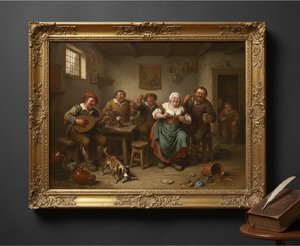
Bacchanal with Silenus

手描き油彩複製画

当社のアーティストが、お客様のご希望のサイズと額縁に合わせて、キャンバスに手描きで制作する油彩画です。 ( プリント版に切り替え デジタル画像販売へ切り替え)

コレクション詳細

Jan Gerritsz van Bronchorst’s Bacchanal with Silenus captures a lavish 17th-century Dutch family reveling in a Bacchus celebration, showcasing Mannerist style and opulent detail. Explore this dynamic scene and bring home a unique piece of art history.

アーティストプロフィール

Jan Gerritsz van Bronckhorst (1603-1661) was a Dutch Golden Age painter of the Utrecht Caravaggisti movement. Known for lively 'merry company' scenes, allegorical works & stained glass designs blending Baroque drama with sensuality. Explore his paint

from ·

Chapter 1

How large should it be?

Slide to change the size; the picture on the left shows the frame at its real width. The proportions of the original are kept.

標準サイズ
カスタムサイズ
CM
INCH

作品のオリジナル比率に合わせた、当店の規定サイズからお選びください。

横幅
高さ

フレームや壁のスペースに合わせて、ご希望の幅と高さを入力してください。本作品は手描きのため、異なる比率のサイズをご希望の場合、絵画の周囲を少し広げて描くか、あるいは端を少しカットして調整することが可能です。お客様のご要望に合わせます。制作を開始する前に、仕上がりを確認するためのデジタルモックアップをお送りいたします。このページに表示されている画像は完成品の実物ではなく、あくまでモックアップによるイメージです。

Chapter 2

How should it arrive?

Choose the edges of the stretched canvas

Choose your frame

Corner sample of the WhiteWrap canvas edge finish, stretched on 天然木 bars
White ¥1
Corner sample of the BlurSideWrap canvas edge finish, stretched on 天然木 bars
Blurside ¥1
Corner sample of the ExtendedWrap canvas edge finish, stretched on 天然木 bars
Extended ¥1
Corner sample of the P118B picture frame: 成型ポリスチレン, 5 cm wide and 3 cm thick
P118B ¥10
Corner sample of the P118H picture frame: 成型ポリスチレン, 5 cm wide and 3 cm thick
P118H ¥10
Corner sample of the P118W picture frame: 成型ポリスチレン, 5 cm wide and 3 cm thick
P118W ¥10
Corner sample of the P438Z picture frame: 成型ポリスチレン, 5.5 cm wide and 3.5 cm thick
P438Z ¥10
Corner sample of the P508JH picture frame: 成型ポリスチレン, 7 cm wide and 3.5 cm thick
P508JH ¥12
Corner sample of the P508YH picture frame: 成型ポリスチレン, 7 cm wide and 3.5 cm thick
P508YH ¥12
Corner sample of the P805H picture frame: 成型ポリスチレン, 5 cm wide and 3.5 cm thick
P805H ¥10
Corner sample of the P805Z picture frame: 成型ポリスチレン, 5 cm wide and 3.5 cm thick
P805Z ¥10
Corner sample of the P919BZ picture frame: 成型ポリスチレン, 7 cm wide and 3.5 cm thick
P919BZ ¥10
Corner sample of the P919G picture frame: 成型ポリスチレン, 7 cm wide and 3.5 cm thick
P919G ¥10
Corner sample of the P919XJ picture frame: 成型ポリスチレン, 7 cm wide and 3.5 cm thick
P919XJ ¥10
Corner sample of the P959ZH picture frame: 成型ポリスチレン, 5 cm wide and 3 cm thick
P959ZH ¥10
Corner sample of the P968JZ picture frame: 成型ポリスチレン, 6 cm wide and 4 cm thick
P968JZ ¥12
Corner sample of the W106C picture frame: 天然木, 5 cm wide and 3 cm thick
W106C ¥8
Corner sample of the W218G picture frame: 天然木, 5 cm wide and 3 cm thick
W218G ¥10
Corner sample of the W218JH picture frame: 天然木, 5 cm wide and 3 cm thick
W218JH ¥8
Corner sample of the W218Y picture frame: 天然木, 5 cm wide and 3 cm thick
W218Y ¥10
Corner sample of the W307PJ picture frame: 天然木, 6 cm wide and 3 cm thick
W307PJ ¥10
Corner sample of the W316G picture frame: 天然木, 6 cm wide and 3 cm thick
W316G ¥10
Corner sample of the W316PJ picture frame: 天然木, 6 cm wide and 3 cm thick
W316PJ ¥8
Corner sample of the W316Y picture frame: 天然木, 6 cm wide and 3 cm thick
W316Y ¥10
Corner sample of the W398PJ picture frame: 天然木, 5 cm wide and 3 cm thick
W398PJ ¥8
Corner sample of the W4111J picture frame: 天然木, 6.5 cm wide and 3.5 cm thick
W4111J ¥10
Corner sample of the W500HY picture frame: 天然木, 7 cm wide and 5 cm thick
W500HY ¥15
Corner sample of the W500JH picture frame: 天然木, 7 cm wide and 5 cm thick
W500JH ¥15
Corner sample of the W692G picture frame: 天然木, 8 cm wide and 4 cm thick
W692G ¥12
Corner sample of the W849H picture frame: 天然木, 5 cm wide and 3 cm thick
W849H ¥8
Corner sample of the W940BG picture frame: 天然木, 7.5 cm wide and 4.5 cm thick
W940BG ¥15
Corner sample of the W953PJ picture frame: 天然木, 6 cm wide and 3.5 cm thick
W953PJ ¥8
Corner sample of the H24-GOLD picture frame: ジェッソ仕上げの木彫, 10 cm wide and 6 cm thick
H24-GOLD ¥30
Corner sample of the H24-SILVER picture frame: ジェッソ仕上げの木彫, 10 cm wide and 6 cm thick
H24-SILVER ¥30
Corner sample of the H36-GOLD picture frame: ジェッソ仕上げの木彫, 15 cm wide and 6.5 cm thick
H36-GOLD ¥45
Corner sample of the H36-SILVER picture frame: ジェッソ仕上げの木彫, 15 cm wide and 6.5 cm thick
H36-SILVER ¥45
額縁プレビュー
額装済み

Moulding: . Overall size with the frame: .

Chapter 3

Who paints it, and should anything change?

Examples of what can be changed: Replace face with customer photo; Add pet (e.g., replace cat with dog); Include hidden message in background; Change background landscape or elements.
After order, OriginalUniqueArt.com team will email client for instructions and provide a mockup preview

世界中への配送()は、通常の5週間ではなく、3〜4週間でお届けいたします。(31 10月)。品質には一切妥協いたしません。

Chapter 4

The finishing touches

A nameplate, as in a museum?

刻印入りブロンズプレートの詳細

This elegant plaque features the artist's name and the title of the artwork, finely engraved for a timeless presentation.

It is made from bronze with a refined, elegant finish. The text is precisely laser-engraved for a sharp and permanent result. Measuring 9x2 cm, the plaque is compact yet easy to read. It's built to be durable and scratch-resistant, offering a professional, museum-quality look. Mounting is simple thanks to the included adhesive backing.

透明アクリル銘板の詳細

The plaque includes essential engraved details such as the artist's name, the title of the artwork, the date it was created, the type of media used-like oil on canvas or watercolor-a brief description of the piece, and a QR code that links to the complete artwork information.

It is crafted from clear acrylic, offering a sleek, modern appearance. The text is UV-engraved in black to ensure strong visual contrast. With a size of 10x15 cm, it ensures optimal readability. It comes equipped with two metal hooks for secure wall mounting. The plaque is designed to be weather-resistant, making it suitable for various environments, and it includes interactive features that work seamlessly with smartphone scanning.

黒アクリル製銘板の詳細

This elegant plaque includes engraved information such as the artist's name, the title of the artwork, the date it was created, the type of media used (like oil on canvas or watercolor), a short description of the artwork, and a QR code for quick access to more information.

The plaque itself is made from refined black acrylic with a premium finish. The text is laser-engraved in white for high contrast and readability. Its size is 10x15 cm, designed to be easy to read. It comes with two metal hooks for professional mounting. The design is sleek and fits any interior style. It is also weather-resistant and durable, with built-in digital integration for mobile compatibility.

A protective varnish?

When do you need it?

Chapter 5

Your painting, as you ordered it

Bacchanal with Silenus

再現技法

複製画サイズ一覧

-

厳選された熟練アーティスト

より細部までこだわった表現、洗練された技術、そして十分な制作時間

-

複製画用額装

-

-

いずれかの辺が105 cm(約41インチ)を超えるアートワークまたは複製画の場合、フレームは分解されたキットの状態でお届けいたします。この方法は、輸送中の破損を防ぎ、安全に配送するために採用しております。

組み立てには専門知識が必要です(DIY用製品ではありません)。
本キットは、経験豊富なプロの額装師が、木工用ボンド(別売)、キャンバス用プライヤー、およびボンドの乾燥時に桟を直角に保持するためのクランプを使用して、組み立ておよびキャンバスの張り作業を行う必要があります。不適切な組み立てやキャンバスの張りの不均一は、作品に永久的な損傷を与える恐れがあり、弊社の保証対象外となります。

  • すべての無垢材のパーツが含まれており、組み立てに最適なサイズに正確にカットされています。

  • 付属のネジを使用し、角の接合部には別途木工用ボンドをご用意ください(ボンドは付属しておりません)。ボンドは額装業者様にてご手配をお願いいたします。

  • プロ仕様の道具が必要ですが、キットには含まれていません:キャンバス用ストレッチングプライヤー(テンショナー)、および接着剤が乾燥するまで木枠を直角に固定するためのクランプ。

重要:
コーナーの接合部には木工用ボンドが必要です。また、ボンドが完全に乾くまでクランプでバーを固定しておく必要があり、組み立てたフレームにキャンバスを張るにはキャンバス用ストレッチングプライヤーが必要となります。これらの道具はキットに含まれておりません。このサイズをご注文される前に、経験豊富なプロの額装師(フライマー)の手配をお願いいたします。

銘板

-

-

保護用ワニス

光沢ワニス(色彩を鮮やかに引き立て、光や湿気から保護します)

-

作品をカスタマイズ

カスタマイズの例:顔をお客様の写真に差し替える、ペットを追加する(例:猫を犬に変更)、背景に隠しメッセージを入れる、背景の風景や要素を変更する。

-

お急ぎ便

世界中への配送()は、通常の5週間ではなく、3〜4週間でお届けいたします。(31 10月)。品質には一切の妥協を許しません。

-

お急ぎ便

世界中への配送()は、5週間ほどでお届けします。(7 11月)。

送料込

合計金額

¥ 47340

合計金額 ¥ 47340

ガラスオプションは、110cm未満のサイズでのみご利用いただけます。

Included with every order

  • 世界中へ無料エクスプレス配送
  • 高品質なリネンキャンバス
  • 配送時完全保険付
  • 関税・輸入税の払い戻し保証
  • 忠実な色彩再現の保証
  • 100日間返品保証(製造上の欠陥がある場合のみ)
  • 100% 全額返金保証
  • まとめ買い割引のご案内

A Dutch Bacchanal: Jan Gerritsz van Bronchorst’s *Bacchanal with Silenus*

Jan Gerritsz van Bronchorst's 1600 painting, *Bacchanal with Silenus*, is a captivating window into the opulent tastes and burgeoning artistic spirit of 17th-century Netherlands. This large-scale oil on canvas depicts a lavish scene – a family transformed into figures from the mythology of Bacchus, the god of wine – offering a potent blend of religious allegory, social commentary, and masterful technical execution. The painting’s immediate impact lies in its vibrant energy and the sheer indulgence of its subject matter; it's a celebration of wealth, pleasure, and the intoxicating power of the senses.

The composition is dominated by a group of twelve figures gathered around the patriarch, likely a successful wine merchant, who embodies Silenus, Bacchus’s perpetually drunken companion. His posture – leaning heavily on his supporter, raising a cup for more wine – immediately establishes the painting's central theme: unrestrained indulgence and the pursuit of sensory delight. The women surrounding him are equally striking, rendered with a sensual realism that reflects the artistic trends of the period while simultaneously hinting at the potential anxieties surrounding female sexuality within a conservative society.

Style and Technique: Bridging Mannerism and Baroque

Bronchorst’s style exemplifies a fascinating transitional moment in art history. Born in Utrecht in 1603, he emerged during a time of intense stylistic debate between the lingering influence of Mannerism and the ascendant naturalism of the Baroque. *Bacchanal with Silenus* showcases elements of both. The figures possess a certain elongated grace characteristic of Mannerist painting – particularly evident in the poses and drapery – yet Bronchorst skillfully employs light and shadow to create a palpable sense of volume and movement, anticipating the dramatic effects favored by Baroque artists.

The artist’s technique is characterized by meticulous detail and a rich palette. The use of impasto—thickly applied paint—adds texture and depth to the scene, particularly noticeable in the tambourine held by one of the women, suggesting a lively musical accompaniment to the revelry. Bronchorst's masterful handling of color – deep reds, golds, and blues – contributes significantly to the painting’s overall dramatic impact. The canvas itself, measuring 164 x 221 cm, allows for a grand scale that further enhances the immersive quality of the scene.

Symbolism and Context: Wealth, Status, and Religious Allegory

The choice of depicting a mythological scene within a domestic setting was not uncommon in Dutch portraiture during this era. It served as a means of demonstrating wealth, status, and familial piety – often subtly interwoven with religious symbolism. The inclusion of Silenus, a figure associated with intoxication and excess, could be interpreted as a veiled critique of societal vices or perhaps a celebration of the joys of earthly life.

  • Bacchus: Represents abundance, fertility, and the intoxicating pleasures of wine.
  • Silenus: Symbolizes folly, drunkenness, and the companion to Bacchus.
  • Togas & Costumes: Denote status and adherence to classical ideals.

Furthermore, the painting reflects the broader cultural context of the Dutch Republic – a burgeoning commercial power with a thriving wine trade and a growing appreciation for artistic patronage. Bronchorst’s work stands as a testament to this dynamic period, blending religious allegory with secular indulgence within a meticulously crafted visual narrative.

Emotional Impact and Reproduction

*Bacchanal with Silenus* evokes a powerful sense of immediacy and excitement. The painting's vibrant colors, dynamic composition, and the figures’ expressions of unrestrained joy create an immersive experience for the viewer. OriginalUniqueArt offers meticulously crafted hand-painted reproductions of this remarkable artwork, allowing you to bring its captivating energy into your home or office.

Our high-quality reproductions utilize archival materials and skilled artisans to faithfully recreate Bronchorst’s original masterpiece, ensuring that you receive a timeless work of art that will be treasured for generations to come. The 164 x 221 cm size ensures a substantial presence within any interior space, making it a truly impactful addition to your collection.

よくあるご質問

Jan Gerritsz Van Bronchorst作「Bacchanal with Silenus」の明るさはどのように感じられますか?

全体として、「Bacchanal with Silenus」の明るさはdeep_shadowと記録されています。知覚的な明るさとは、作品がどの程度明るく、あるいは暗く感じられるかを表すものです。

Jan Gerritsz Van Bronchorst作「Bacchanal with Silenus」の輝度はどのくらいですか?

Jan Gerritsz Van Bronchorst作「Bacchanal with Silenus」 の記録された輝度は Dark です。

「Bacchanal with Silenus」の作者と制作年は?

「Bacchanal with Silenus」の作者はJan Gerritsz Van Bronchorstで、制作年は1600年です。

More about this painting

設置イメージを確認 ARで壁に飾るイメージを見る プリント版に切り替え デジタル画像販売へ切り替え 送る
詳細情報 ガイドを表示 お気に入りに追加 画像をダウンロード 似ている作品 X線調査 スライドショー Q&A 統計情報

In numbers

  • 1600the year it was painted
  • 29frames to choose from
  • standard sizes, in its own proportions
  • 5weeks to paint and deliver it
Jan Gerritsz Van Bronchorst

Jan Gerritsz Van Bronchorst

1603 - 1661, Netherlands

Quick facts about Jan Gerritsz Van Bronchorst

  • Full Name: Aert van der Neer
  • Nationality: Dutch
  • Date Of Birth: 1603
  • Date Of Death: 1661
  • Place Of Birth: Utrecht, Netherlands
  • Notable Artworks:
    • Moonlit Landscape
    • Winter in Holland
  • Artistic Movement Or Style: Landscape painting
  • Artists Who Influenced This Artist: ['Rafel and Jochem Camphuysen']
  • Artists Or Movements Influenced By This Artist:
    • Terborch
    • Metsu

アーティストについて

Santi di Tito: A Counterpoint to Mannerism

Santi di Tito (1603 – 1661) emerged from the vibrant, tumultuous artistic landscape of late Renaissance and early Baroque Rome, a period defined by intense stylistic debate. His life and career represent a fascinating case study in navigating evolving artistic conventions, ultimately forging a distinctive style that stands as a crucial bridge between Mannerism and the burgeoning naturalism of the Baroque. Born in Sansepolcro, a small town in Umbria, Santi’s early training remains somewhat shrouded in mystery, with accounts suggesting influences from figures like Bronzino and Baccio Bandinelli, though definitive proof is elusive. This lack of clear lineage contributed to his unique artistic trajectory – one that deliberately distanced itself from the established norms of the time.

Early Career and Roman Apprenticeship

Santi’s journey to Rome in 1558 marked a pivotal moment, placing him within the heart of the city's artistic ferment. He spent nearly a decade working alongside Giovanni de’ Vecchi and Niccolò Circignani on monumental frescoes within the Palazzo Salviati and the Sala Grande of the Belvedere at the Vatican – projects that showcased the grandeur and complexity of Mannerist painting. These early commissions exposed Santi to the prevailing stylistic trends, characterized by elongated figures, complex spatial arrangements, and a deliberate emphasis on elegance and refinement. However, rather than simply absorbing these influences, Santi began to subtly reshape them, introducing a greater sense of naturalism and a more restrained palette. The frescoes in the Belvedere, particularly *Homage of the People*, reveal his growing interest in classical forms and a desire for clarity and balance – qualities that would become hallmarks of his later work.

The Studiolo of Francesco I: A Defining Period

Santi’s most significant contribution to the Roman art scene occurred during his tenure at the Palazzo Vecchio, where he was commissioned to decorate the *Studiolo* (a private study) of Francesco I de' Medici, Grand Duke of Tuscany. This project proved transformative, solidifying Santi’s distinctive style and establishing him as a leading figure in the Counter-Mannerist movement. The two paintings created for this space – *Sisters of Phaeton* and *Hercules and Iole* – exemplify his innovative approach. Unlike the crowded, theatrical compositions typical of Mannerism, Santi's works are characterized by a remarkable clarity of form, a carefully considered use of light and shadow, and a focus on idealized beauty. He deliberately avoided the excessive ornamentation and artificiality that had become associated with Mannerist painting, opting instead for a more restrained and harmonious aesthetic. This shift was consciously intended as a reaction against the prevailing *maniera* of artists like Bronzino and Federico Zuccari, whom he viewed as overly elaborate and lacking in genuine naturalism.

A Reformist Style: Embracing Classical Ideals

Santi’s artistic philosophy can be understood within the broader context of the Counter-Reformation. The Catholic Church was actively seeking to reform its image and promote a more accessible form of religious art, one that emphasized clarity, piety, and emotional engagement. Santi's work reflects this desire for renewal, moving away from the complex intellectualism of Mannerism towards a more direct and emotionally resonant style. He drew inspiration from classical antiquity, particularly the works of Raphael, seeking to emulate his sense of grace, harmony, and balance. This commitment to classical ideals is evident in his careful attention to proportion, his use of idealized figures, and his avoidance of excessive detail. As S. J. Freedberg noted, Santi’s style was “Raphaelesque,” a deliberate attempt to recapture the perceived purity and elegance of Raphael's art.

Later Works and Legacy

Following his return to Florence in 1564, Santi continued to produce significant works throughout his career, including altarpieces for Santa Croce and frescoes for Volterra Cathedral. His *Resurrection of Lazarus* and *Supper at Emmaus*, particularly the latter, demonstrate his ability to convey profound emotion through subtle gestures and carefully rendered details. Despite his artistic achievements, Santi faced considerable financial difficulties, ultimately declaring bankruptcy in 1662. He died in poverty in 1661, largely unrecognized during his lifetime. However, his work gradually gained recognition in the 19th century, and today he is considered one of the most important figures in the Counter-Mannerist movement – a pivotal artist who helped to shape the course of European painting. His legacy lies not only in his individual masterpieces but also in his courageous challenge to established artistic conventions and his unwavering commitment to classical ideals.

作品情報

  • Artist: Jan Gerritsz van Bronchorst
  • Year: 1600
  • Artistic style: Mannerism
  • Subject or theme: Bacchanalia
  • Medium: Oil on canvas