
 プレビュー
プレビュー
 プリントを購入
 シェアする
シェアする シェアする
シェアする
 詳細を見る
詳細を見る

 ダウンロード
 似ている作品
 X線調査
X線調査 スライドショー
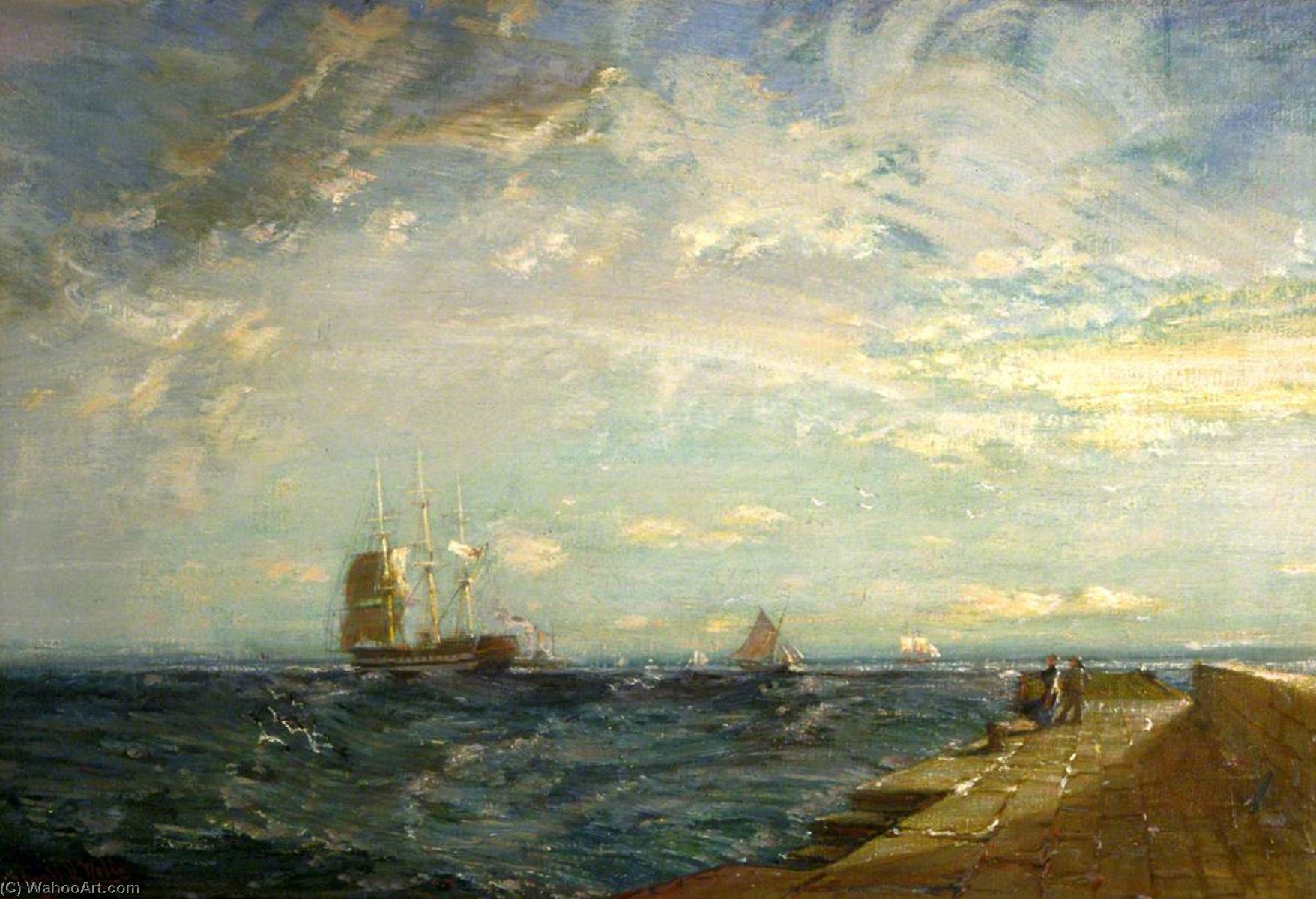
Outward Bound
 49.0 x 74.0 cm
 The Stirling Smith Art Gallery - Museum
 詳細を見る
詳細を見る




































作品のオリジナル比率に合わせた、当店の規定サイズからお選びください。

特定のフレームやスペースに合わせて、ご希望のサイズをご入力いただけます。選択されたサイズが元の画像の比率と異なる場合、アートワークをトリミングするか、手描きで要素を追加して絵画を拡張いたします。デジタルモックアップ を制作し、制作開始前にご確認(承認)をいただきます。
画面上のプレビューは、実際のトリミングや拡張を正確に反映しているものではありません。最終的な構図は、モックアップによってのみ正確にご確認いただけます。
カスタムサイズもご利用いただけますが、元の比率を維持するためには、あらかじめ用意されたリストからサイズを選択することをお勧めいたします。
ご注文後、OriginalUniqueArt.com チームより詳細な指示をお送りするとともに、仕上がりイメージ(モックアップ)をご提供いたします。


 ガラスオプションは、110cm未満のサイズでのみご利用いただけます。

Outward Bound
複製技法
複製画のサイズ
-


合計金額
$ 300
アーティストの略歴
The Luminous Legacy of James Campbell Noble
In the grand tapestry of late nineteenth-century art, few threads weave together disparate cultural traditions as gracefully as those of James Campbell Noble. Born in 1845, a period marked by the profound shifts of the Victorian era, Noble emerged as a painter who could navigate the delicate boundary between the meticulous realism of his Dutch heritage and the expressive, atmospheric freedom of Scottish Impressionism. His life was a journey of movement—between nations, between styles, and between the quietude of inland landscapes and the restless energy of the sea. To look upon a Noble canvas is to witness a masterclass in light, where the damp, heavy air of the Netherlands meets the rugged, salt-sprung coasts of Scotland.
Noble’s artistic soul was shaped by an early exposure to the nuances of visual perception. While his roots were deeply connected to the Dutch tradition, his formative training under figures such as Traugott Richard—a pioneer in photogravure—instilled in him a profound respect for the subtle interplay of light and shadow. This photographic sensibility did not lead him toward mere imitation; rather, it provided the foundation for an observational eye that could capture the fleeting shimmer of water or the heavy, grey weight of a storm-laden sky. His education at the Royal Scottish Academy schools under masters like William McTaggart and George Paul Chalmers further refined his hand, allowing him to absorb the burgeoning Impressionist movement while maintaining a structural integrity rooted in classical training.
A Voyage Through Light and Water
The evolution of Noble’s subject matter mirrors the trajectory of his own life, moving from the intimate to the expansive. In his early years, his work often focused on rustic genre scenes—quiet, dark cottages and the humble rhythms of outdoor life. However, as he gained recognition and became a Fellow of the Royal Scottish Academy, his gaze drifted toward the horizon. He abandoned the sheltered interiors for the vast, unpredictable theaters of rivers and ports. His brush began to dance across the surfaces of the Clyde, the Seine, the Tyne, and the great Dutch waterways like the Merwester and the Rhine.
This transition marked his true arrival as a premier marine and landscape painter. Noble possessed a rare ability to imbue maritime scenes with a sense of living breath. Whether depicting the bustling harbor of Dordrecht or the lonely, rocky outcrops of Berwickshire, his work captures the atmospheric tension of the natural world. His technique often utilized a sophisticated blend of meticulous detail—seen in the rigging of a ship or the texture of a stone wharf—and much broader, more emotive brushwork used to render the churning foam of a wave or the soft diffusion of mist. This duality allowed him to create works that feel both physically present and dreamily ephemeral.
Artistic Significance and Enduring Spirit
Beyond the technical mastery of his oils, Noble’s historical significance lies in his role as a cultural bridge. He was an artist who belonged to two worlds, successfully synthesizing the Dutch preoccupation with light and maritime commerce with the Scottish passion for dramatic, rugged landscapes. His influence extended beyond his own easel; as a teacher at the Royal Scottish Academy and the Trustees Academy, he helped shape the next generation of painters, including notable figures such as Robert Gemmell Hutchison.
Today, the works of James Campbell Noble serve as vital windows into a vanished era of European maritime life. His paintings are more than mere records of geography; they are emotional evocations of a time when the relationship between man and the sea was one of profound respect and constant negotiation. To study his oeuvre is to rediscover the quiet majesty of the nineteenth-century landscape, preserved forever in the amber of his masterful, light-drenched strokes.

james campbell noble
1845 - 1913
基本情報
- Artistic Movement Or Style: Dutch Landscape Painting
- Artists Or Movements Influenced By This Artist: ['Romanticism']
- Artists Who Influenced This Artist:
- Johannes Maris
- Anton Mauve
- Date Of Birth: 1845
- Date Of Death: 1913
- Full Name: James Campbell Noble
- Nationality: Scottish
- Notable Artworks:
- Waves
- A Grey Day with Dutch Fishing Boats
- Place Of Birth: Glasgow, Scotland

