

 設置イメージを確認
 送る
送る シェア
シェア
 詳細情報
詳細情報 ガイドを表示

 画像をダウンロード
 似ている作品
 X線調査
X線調査 スライドショー
 統計情報
統計情報Golden autumn
 Oil On Canvas
- WallArt
- Impressionistic Landscape
 1895
1895- 19th Century
 82.0 x 126.0 cm
 トレトヤコフ美術館
 続きを読む
続きを読む
ジークレー/アートプリント
スピーディーな制作と多彩な仕上げオプションが魅力の、ミュージアムクオリティなジークレー・キャンバスプリント。 ( 手描きの複製画を注文する デジタル画像販売へ切り替え)




P118B $10

P118H $10

P118W $10

P438Z $10

P508JH $12

P508YH $12

P805H $10

P805Z $10

P919BZ $10

P919G $10

P919XJ $10

P959ZH $10

P968JZ $12

W106C $8

W218G $10

W218JH $8

W218Y $10

W307PJ $10

W316G $10

W316PJ $8

W316Y $10

W398PJ $8

W4111J $10

W500HY $15

W500JH $15

W692G $12

W849H $8

W940BG $15

W953PJ $8




作品のオリジナル比率に合わせた、当店の規定サイズからお選びください。

特定のフレームやスペースに合わせて、ご自身でサイズを指定することも可能です。選択されたサイズが元の画像の比率と一致しない場合、作品をトリミングするか、鏡面反射または単色での塗りつぶしによって画像を拡張いたします。制作を開始する前に、ご確認用のデジタルモックアップをお送りいたします。
画面上のプレビューには、実際のトリミングや拡張は反映されませんのでご注意ください。最終的な構図を正確に確認できるのは、モックアップのみとなります。
カスタムサイズも承っておりますが、元の比率を維持するためには、あらかじめ用意されたリストからサイズを選択することをお勧めいたします。


 ガラスオプションは、110cm未満のサイズでのみご利用いただけます。

Golden autumn
ジークレー/アートプリント
複製画サイズ一覧
-


合計金額
$ 80
A Symphony of Autumnal Melancholy
In the hallowed halls of the Tretyakov Gallery in Moscow, there exists a canvas that does more than merely depict a season; it captures the very soul of the Russian landscape. Isaak Ilyich Levitan’s Golden Autumn, painted in 1895, is a monumental achievement that transcends simple representation to become a profound meditation on beauty and transition. As the eye wanders across the 82 x 126 cm expanse, one is immediately drawn into a tranquil riverside scene where birch trees stand ablaze with autumnal hues. This vibrant tapestry of golds and yellows creates a striking contrast against the muted blues and greens of the background, inviting the viewer to step into a moment frozen in time—a moment where the warmth of summer begins its slow, graceful surrender to the approaching frost.
The painting presents an idyllic tableau of rural life, featuring a meandering river that weaves through a sun-drenched meadow. Scattered throughout this pastoral landscape are cows, grazing peacefully near the water's edge, adding a sense of quiet vitality to the scene. A nearby bridge serves as a subtle anchor to the human element within this vast natural expanse, yet the true protagonist remains the atmosphere itself. For collectors and interior designers alike, this piece offers a unique ability to infuse a space with serenity and a sense of timelessness, making it an exquisite centerpiece for any curated collection.
Mastery of Light and Impressionistic Technique
Levitan’s artistic approach marks him as a master of the mood landscape, a genre he helped pioneer. While his roots lie in the Russian Realism of the Peredvizhniki movement, his technique breathes with the ethereal quality of Impressionism. Rather than relying on sharp, photographic delineations, Levitan employs loose, rhythmic brushstrokes and expertly blended pigments to capture the fleeting nuances of light and atmosphere. This soft-focus approach allows the colors to vibrate against one another, creating a shimmering effect that mimics the way sunlight filters through thinning autumn leaves.
The color palette is a masterclass in symbolic harmony. The deliberate juxtaposition between radiant gold and cool, contemplative blue serves as a visual metaphor for the duality of the season. The shimmering golds represent the peak of vitality and the warmth of life, while the deep, tranquil blues evoke the inevitable decline and the quietude of winter. This sophisticated use of color theory ensures that the painting remains emotionally resonant, offering a complex sensory experience that shifts depending on the light in which it is viewed.
A Legacy of Emotional Resonance
To understand Golden Autumn, one must understand the heart of Isaak Levitan. His life, marked by personal hardship and the profound loss of his parents, imbued his work with a characteristic sense of longing and poetic melancholy. He did not seek to paint topographical accuracy; instead, he sought to translate the emotional resonance of the land into visual form. This painting is the pinnacle of that quest—a work that finds peace within change and beauty within decay.
For those seeking to bring a piece of art history into their homes, a high-quality reproduction of this masterpiece offers more than just decoration. It provides an opportunity to live with a poem in paint, a window into the Russian soul that continues to inspire generations. Whether placed in a sunlit study or a grand living area, Golden Autumn serves as a constant reminder of the sublime beauty found in life's most transient moments.
アーティストについて
Isaak Ilyich Levitan - A Symphony of the Russian Soul
Isaak Ilyich Levitan, a name synonymous with the evocative power of Russian landscape painting, was more than just a chronicler of nature; he was a poet of the land, a translator of its moods into visual form. Born in 1860 in Kibarty (present-day Lithuania) to a Jewish family who later settled in Moscow, Levitan’s life was marked by both profound hardship and an unwavering dedication to his art. The early loss of his mother and father instilled within him a sensitivity that would permeate his canvases with a melancholic beauty—a characteristic that would define his artistic vision throughout his career.Early Life and Artistic Formation
Levitan's formative years were shaped by considerable adversity. Orphaned shortly after birth, he endured homelessness and poverty as a child, experiences which profoundly impacted his worldview and fueled an innate desire to find solace in the natural world. Recognizing his talent early on, he enrolled at the Moscow School of Painting, Sculpture and Architecture in 1873, where he was mentored by Alexei Savrasov—a pivotal encounter that instilled in him Savrasov’s distinctive approach to landscape painting: capturing not merely visual appearance but also the intangible essence of atmosphere and emotion. Savrasov championed Levitan's burgeoning ability to translate feeling into form, guiding him toward a path of artistic exploration rooted in profound observation and emotional honesty. This influence would prove instrumental in shaping Levitan’s signature style—characterized by muted palettes, subtle tonal gradations, and masterful use of light and shadow.The Birth of Mood Landscape: Savrasov's Influence
Savrasov’s teachings solidified Levitan’s conviction that landscape painting could transcend mere representation to become a conduit for spiritual contemplation. Rejecting the prevailing academic conventions of his time—particularly the idealized depictions favored by Neoclassical artists—Savrasov encouraged Levitan to embrace a radically different aesthetic: *mood landscape*. This genre prioritized conveying emotion over topographical accuracy, seeking to evoke feelings of tranquility, solitude, or melancholy through carefully crafted compositions and evocative color harmonies. As Savrasov himself famously remarked, “The artist must not depict what he sees but what he feels.” This ethos resonated deeply with Levitan, informing his artistic practice from its inception and establishing him as a pioneer of this transformative movement within Russian art.A Distinctive Artistic Voice: Exploring Emotion Through Landscape
Levitan swiftly distinguished himself as an artist capable of capturing profound emotion through landscape—a feat that cemented his reputation as one of the foremost practitioners of mood landscape. His canvases pulsated with palpable feeling, reflecting his own inner turmoil and grappling with themes of loss, longing, and mortality. Unlike many of his contemporaries who adhered to rigid stylistic conventions, Levitan cultivated a uniquely expressive style characterized by loose brushstrokes, diffused tonal ranges, and an intuitive grasp of atmospheric effects. Works such as *Autumn Day. Sokolniki* (1879)—painted during his formative years—exemplify this distinctive aesthetic—a testament to Levitan’s ability to distill complex emotions into deceptively simple visual forms. The painting's subdued palette and delicate rendering of light create a sense of wistful nostalgia, hinting at the transience of beauty and the inevitability of change.Major Achievements and Legacy
Levitan’s artistic journey culminated in recognition from the Imperial Academy of Arts—a testament to his growing stature within the Russian art world. He subsequently served as head of the landscape studio at Moscow School of Painting, Sculpture and Architecture, nurturing the talent of aspiring artists and perpetuating Savrasov's legacy of emotional landscape painting. His influence extended far beyond his students, shaping the trajectory of Russian landscape art for decades to come—inspiring generations of painters to explore the expressive potential of nature with unwavering sensitivity and conviction. Levitan’s enduring contribution to Russian culture lies in his ability to transform visual observation into profound artistic contemplation—a feat that continues to captivate audiences today. His paintings remain a poignant reminder of the beauty and melancholy inherent in the human condition, forever enshrined as masterpieces of mood landscape and symbols of Russia's soulful spirit.
イサク・イリイチ・レヴィタン
1860 - 1900 , ロシア
アーティスト情報
- Artistic Movement Or Style: ムードランド風景画、リアリズム
- Artists Who Influenced This Artist: ['アレクセイ・サヴァロフ」「ヴィタリー・ポレノフ」\n }']
- Date Of Birth: August 30, 1860
- Date Of Death: July 22, 1900
- Full Name: Isaak Ilyich Levitan
- Nationality: ロシア語
- Notable Artworks: ['秋の日のソコリンキ」「ウラジミールカ通り」「永遠の休息」「春の洪水」「嵐の日」「ヴェスパーの鐘']
- Place Of Birth: Kibarty, Lithuania
関連記事

Golden Hues & Crimson Leaves: Capturing the Magic of Autumn Colors in Fine Art
Embark on a visual journey through the golden hues of autumn fine art. Discover how masters like Van Gogh capture seasonal magic through vibrant oil landscapes and explore expert tips for collecting timeless autumnal masterpieces.

Konstantin Korovin: A Master of Russian Impressionism & Evocative Light
Explore the captivating world of Konstantin Korovin, a leading Russian Impressionist painter renowned for his vibrant landscapes & innovative theater designs. Discover his life, legacy, and enduring artistic impact.

Victor Vasnetsov: Myth, Nationalism & the Revival of Russian Fairy Tale Painting
Explore the captivating world of Victor Vasnetsov, a co-founder of Russian folklorist painting. Discover his iconic works, influence on national identity, and lasting legacy in this expert guide.
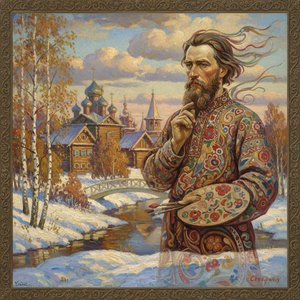
Igor Grabar: Bridging Impressionism & National Identity in Russian Modern Art
Explore the life & art of Igor Grabar, a pivotal figure in Russian Modernism. Discover his Impressionist landscapes, crucial role in art history, and legacy at the Tretyakov Gallery. A deep dive into a master painter & scholar.

Ivan Bilibin: A Synthesis of Folklore, Modernism & National Identity in Russian Illustration
Explore the enchanting world of Ivan Bilibin, a master Russian illustrator who synthesized folklore, Art Nouveau & national identity. Discover his iconic fairy tale illustrations and legacy with OriginalUniqueArt.
