- ホーム

- キャンバスプリント用
- ikkyū sōjun
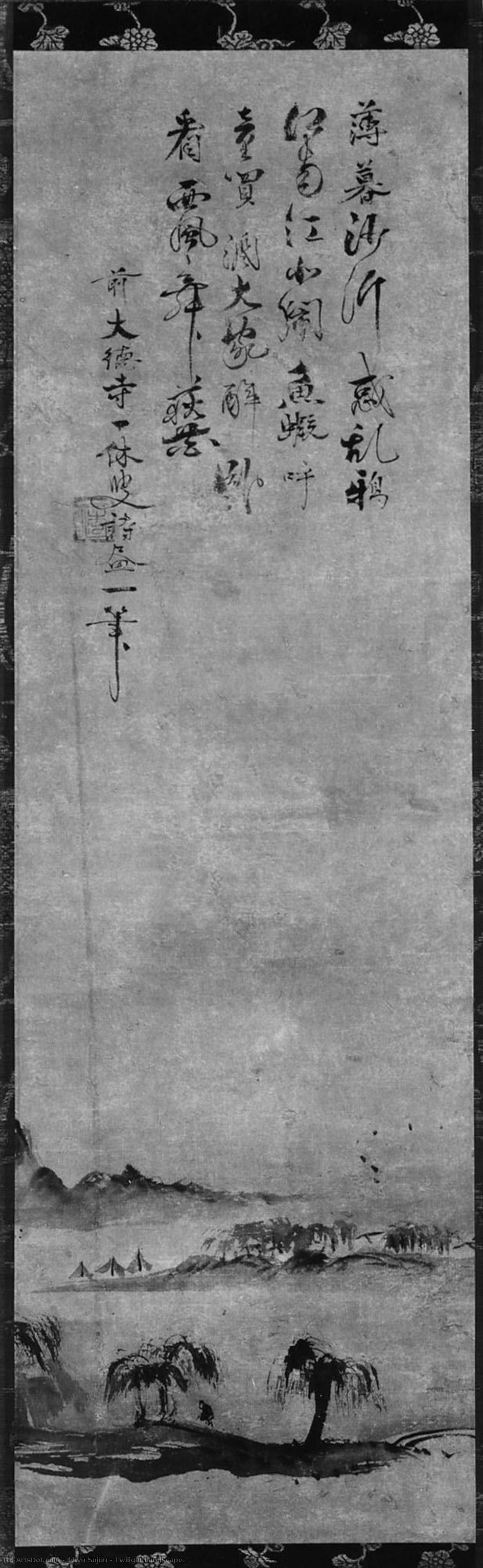
- Twilight Landscape
 手描き複製画を注文する
 シェアする
シェアする シェアする
シェアする
 詳細を見る
詳細を見る

 ダウンロード
 似ている作品
 X線調査
X線調査 スライドショー
Twilight Landscape
 87.0 x 26.0 cm
 詳細を見る
詳細を見る




































作品のオリジナル比率に合わせた、当店の規定サイズからお選びください。

特定のフレームやスペースに合わせて、ご自身でサイズを指定することも可能です。選択されたサイズが元の画像の比率と一致しない場合、作品をトリミングするか、鏡面反射または単色での塗りつぶしによって画像を拡張いたします。制作を開始する前に、ご確認用のデジタルモックアップをお送りいたします。
画面上のプレビューには、実際のトリミングや拡張は反映されませんのでご注意ください。最終的な構図を正確に確認できるのは、モックアップのみとなります。
カスタムサイズも承っておりますが、元の比率を維持するためには、あらかじめ用意されたリストからサイズを選択することをお勧めいたします。


 ガラスオプションは、110cm未満のサイズでのみご利用いただけます。

Twilight Landscape
ジークレー/アートプリント
複製画のサイズ
-


合計金額
-
アーティストの略歴
The Rebel Monk: The Life and Spirit of Ikkyū Sōjun
Ikkyū Sōjun (1394–1481) remains one of the most captivating and paradoxical figures in the history of Japanese Zen Buddhism. A man of profound contradictions, he was simultaneously a high-ranking monk and a wandering iconoclast, a scholar of deep philosophical insight and a poet of raw, uninhibited emotion. Born into the turbulent era of the Muromachi Period, Ikkyū’s very existence was marked by social complexity; as the illegitimate son of Emperor Go-Komatsu, his lineage placed him at the intersection of imperial prestige and monastic exile. This early life of displacement and struggle deeply informed his later rejection of rigid institutional hierarchies, leading him to seek a spiritual truth that resided not in the sterile confines of a monastery, but in the messy, vibrant reality of human experience. His formative years were shaped by the rigorous Gozan Zen tradition, an intellectual movement heavily influenced by Chinese culture and classical literature. Under the tutelage of esteemed masters, Ikkyū mastered the delicate arts of calligraphy, poetry, and Chinese scholarship. Yet, even as he ascended through the ranks of the Zen hierarchy, a spirit of rebellion began to take root. He famously challenged the very foundations of monastic discipline, most notably his vocal opposition to the requirement of celibacy. To Ikkyū, true enlightenment could not be achieved by suppressing the natural human condition; instead, he believed that the sacred and the profane were inextricably linked, a philosophy that would later define the radical aesthetic of his creative output.A Calligraphy of Chaos and Clarity
The artistic legacy of Ikkyū Sōjun is most vibrantly expressed through his calligraphy and poetry, works that serve as a direct mirror to his turbulent soul. His calligraphic style often eschewed the polished, formal perfection demanded by traditional monastic training in favor of something far more visceral and spontaneous. In his brushstrokes, one can sense the tension between disciplined technique and an irrepressive urge for freedom. This approach was not merely a stylistic choice but a spiritual manifestation—a way to capture the fleeting, ungraspable nature of Zen realization. His works, such as the evocative Portrait of Daruma, often utilize bold, sweeping motions that convey a sense of urgency and existential weight. Beyond the ink on paper, Ikkyū’s poetic voice revolutionized Japanese literature by infusing it with a raw, often provocative honesty. He utilized the medium to critique the hypocrisy of the religious establishment and to celebrate the beauty found in the ephemeral and the earthly. His poetry often dances between the profound and the playful, much like his own persona. This duality allowed him to bridge the gap between high intellectualism and popular culture, leaving an indelible mark on the development of Japanese lyrical expression. Through his verses, he invited his readers to look past the veneer of social decorum and confront the essential truths of life, death, and desire.Legacy of an Iconoclast
The historical significance of Ikkyū Sōjun extends far beyond the boundaries of Zen monasticism. He was a pivotal figure in shaping the cultural landscape of the Muromachi Period, influencing how art, literature, and spirituality would interact for centuries to come. By dismantling the wall between the sacred monastery and the secular world, he paved the way for a more integrated and humanistic approach to Japanese aesthetics. His influence can be traced through the development of subsequent poetic movements and the evolution of Zen-inspired arts that prioritize spontaneity and directness over rigid adherence to form. Today, Ikkyū is remembered not just as a monk, but as a cultural icon whose spirit of rebellion continues to resonate. While popular culture sometimes reduces him to the whimsical character seen in animated legends, the true Ikkyū was a formidable intellectual force who dared to redefine the boundaries of faith and art. His life serves as a powerful testament to the idea that true spiritual mastery lies in the courage to embrace one's whole humanity—flaws, passions, and all. Through his enduring works, he continues to challenge us to find the extraordinary within the ordinary and the divine within the human.
ikkyū sōjun
1394 - 1481 , Japan
基本情報
- Artistic Movement Or Style: Zen Buddhism
- Artists Or Movements Influenced By This Artist: ['Rinzai Zen']
- Artists Who Influenced This Artist:
- Botetsu
- Ken’ō Sōi
- Kasō Sōdon
- Date Of Birth: February 1, 1394
- Date Of Death: December 12, 1481
- Full Name: Ikkyū Sōjun
- Nationality: Japanese
- Notable Artworks:
- Portrait of Daruma
- Title(Japanese): 木彫根付 蛸壺
- Place Of Birth: Kyoto, Japan

