メニュー
設置イメージを確認 ARで壁に飾るイメージを見る プリント版に切り替え デジタル画像販売へ切り替え 送る
詳細情報 ガイドを表示 お気に入りに追加 画像をダウンロード 似ている作品 X線調査 スライドショー 統計情報

Untitled

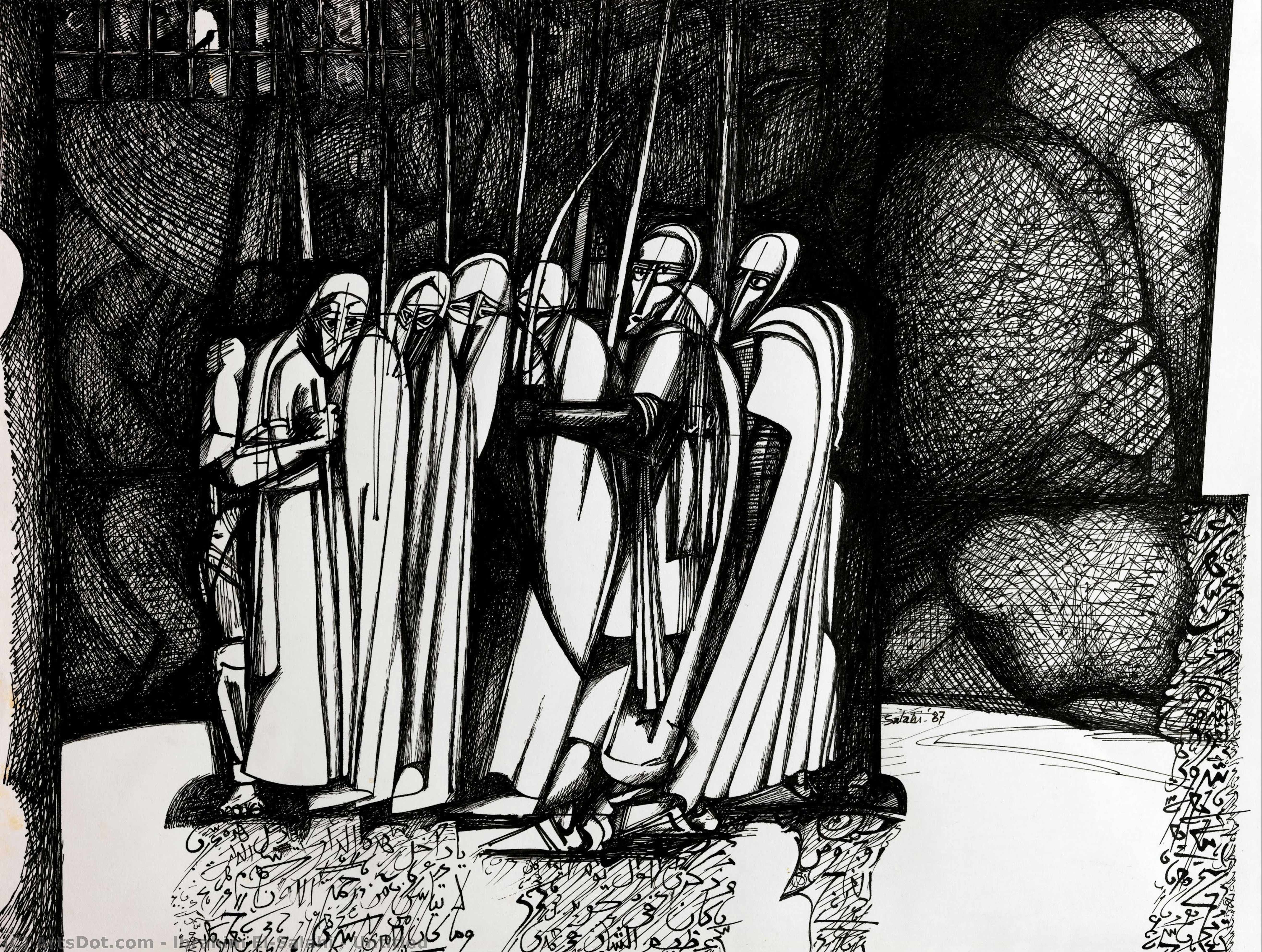
A hauntingly intricate black and white ink drawing by Sudanese master Ibrahim El-Salahi from 1987 captures a sense of confinement through layered figures and calligraphic textures, inviting you to explore this modern classic.

Explore the captivating art of Ibrahim El-Salahi, a Sudanese master of African Modernism & Hurufiyya. His paintings blend Islamic calligraphy, abstract forms, and cultural motifs. Discover his unique visual language!

このページに掲載されている作品は著作権法によって保護されており、当社の許可なく同一の複製物を制作または販売することは法律で禁じられています。この保護は、以下のような国際条約に基づき執行されます。 ベルヌ条約 および、以下の条項に定められたものを含む各国の法律により、 米国著作権法 第17編

敬意を払った法的な代替手段として、私たちはオリジナルにインスピレーションを与えられた、カスタムの手描きアートワークを提供しています。私たちの熟練したプロのアーティストは、元の作品が持つスタイル、情緒、そして芸術的なエッセンスを注意深く研究し、独自の創作物でありながら、同じ感性を呼び起こすような、新しくユニークな作品を作り上げます。

この手法は、著作権で保護された作品の複製や複写を伴わないため、著作権法に完全に準拠しています。これは単なる模倣ではなく、創造的な再解釈です。元の作品からインスピレーションを受けつつも、それとは異なる、全く新しい絵画を生み出すものです。

手描き油彩複製画

当社のアーティストが、お客様のご希望のサイズと額縁に合わせて、キャンバスに手描きで制作する油彩画です。 ( プリント版に切り替え デジタル画像販売へ切り替え)

Corner sample of the P118B picture frame: moulded polystyrene, 5 cm wide and 3 cm thick
P118B ¥10
Corner sample of the P118H picture frame: moulded polystyrene, 5 cm wide and 3 cm thick
P118H ¥10
Corner sample of the P118W picture frame: moulded polystyrene, 5 cm wide and 3 cm thick
P118W ¥10
Corner sample of the P438Z picture frame: moulded polystyrene, 5.5 cm wide and 3.5 cm thick
P438Z ¥10
Corner sample of the P508JH picture frame: moulded polystyrene, 7 cm wide and 3.5 cm thick
P508JH ¥12
Corner sample of the P508YH picture frame: moulded polystyrene, 7 cm wide and 3.5 cm thick
P508YH ¥12
Corner sample of the P805H picture frame: moulded polystyrene, 5 cm wide and 3.5 cm thick
P805H ¥10
Corner sample of the P805Z picture frame: moulded polystyrene, 5 cm wide and 3.5 cm thick
P805Z ¥10
Corner sample of the P919BZ picture frame: moulded polystyrene, 7 cm wide and 3.5 cm thick
P919BZ ¥10
Corner sample of the P919G picture frame: moulded polystyrene, 7 cm wide and 3.5 cm thick
P919G ¥10
Corner sample of the P919XJ picture frame: moulded polystyrene, 7 cm wide and 3.5 cm thick
P919XJ ¥10
Corner sample of the P959ZH picture frame: moulded polystyrene, 5 cm wide and 3 cm thick
P959ZH ¥10
Corner sample of the P968JZ picture frame: moulded polystyrene, 6 cm wide and 4 cm thick
P968JZ ¥12
Corner sample of the W106C picture frame: solid wood, 5 cm wide and 3 cm thick
W106C ¥8
Corner sample of the W218G picture frame: solid wood, 5 cm wide and 3 cm thick
W218G ¥10
Corner sample of the W218JH picture frame: solid wood, 5 cm wide and 3 cm thick
W218JH ¥8
Corner sample of the W218Y picture frame: solid wood, 5 cm wide and 3 cm thick
W218Y ¥10
Corner sample of the W307PJ picture frame: solid wood, 6 cm wide and 3 cm thick
W307PJ ¥10
Corner sample of the W316G picture frame: solid wood, 6 cm wide and 3 cm thick
W316G ¥10
Corner sample of the W316PJ picture frame: solid wood, 6 cm wide and 3 cm thick
W316PJ ¥8
Corner sample of the W316Y picture frame: solid wood, 6 cm wide and 3 cm thick
W316Y ¥10
Corner sample of the W398PJ picture frame: solid wood, 5 cm wide and 3 cm thick
W398PJ ¥8
Corner sample of the W4111J picture frame: solid wood, 6.5 cm wide and 3.5 cm thick
W4111J ¥10
Corner sample of the W500HY picture frame: solid wood, 7 cm wide and 5 cm thick
W500HY ¥15
Corner sample of the W500JH picture frame: solid wood, 7 cm wide and 5 cm thick
W500JH ¥15
Corner sample of the W692G picture frame: solid wood, 8 cm wide and 4 cm thick
W692G ¥12
Corner sample of the W849H picture frame: solid wood, 5 cm wide and 3 cm thick
W849H ¥8
Corner sample of the W940BG picture frame: solid wood, 7.5 cm wide and 4.5 cm thick
W940BG ¥15
Corner sample of the W953PJ picture frame: solid wood, 6 cm wide and 3.5 cm thick
W953PJ ¥8

標準サイズ
カスタムサイズ
CM
INCH

作品のオリジナル比率に合わせた、当店の規定サイズからお選びください。

横幅
高さ

特定のフレームやスペースに合わせて、ご希望のサイズをご入力いただけます。選択されたサイズが元の画像の比率と異なる場合、アートワークをトリミングするか、手描きで要素を追加して絵画を拡張いたします。デジタルモックアップ を制作し、制作開始前にご確認(承認)をいただきます。
画面上のプレビューは、実際のトリミングや拡張を正確に反映しているものではありません。最終的な構図は、モックアップによってのみ正確にご確認いただけます。
カスタムサイズもご利用いただけますが、元の比率を維持するためには、あらかじめ用意されたリストからサイズを選択することをお勧めいたします。

カスタマイズの例:顔をお客様の写真に置き換える、ペットを追加する(例:猫を犬に変更)、背景に隠れたメッセージを入れる、背景の風景や要素を変更するなど。
ご注文後、OriginalUniqueArt.com チームより詳細な指示をお送りするとともに、仕上がりイメージ(モックアップ)をご提供いたします。

世界中への配送()は、通常の5週間ではなく、3〜4週間でお届けいたします。(10 10月)。品質には一切妥協いたしません。

世界中へ無料エクスプレス配送
高品質なリネンキャンバス
配送時完全保険付
関税・輸入税の払い戻し保証
忠実な色彩再現の保証
100日間返品保証(製造上の欠陥がある場合のみ)
100% 全額返金保証
まとめ買い割引のご案内

合計金額

¥ 77117

Untitled

再現技法

複製画サイズ一覧

-

合計金額

¥ 77117

作品情報

  • Artistic style: Expressive and abstract
  • Location: Математи: Арабський музей сучасного мистецтва, Доха
  • Subject or theme: Human interaction within a confined space
  • Year: 1987
  • Dimensions: 45 x 34 cm
  • Medium: Ink on paper

アート・クイズ

各質問の正解は1つだけです。

問題 1:
What is the primary color palette used in Ibrahim El-Salahi's 'Untitled' (1987)?
問題 2:
Which technique does the artist use to create depth, texture, and shadows in this work?
問題 3:
What is the central subject matter depicted in the artwork?
問題 4:
Where can Arabic script be found within the composition?
問題 5:
What is the approximate size of this artwork?

A Tapestry of Shadows and Silence

In the evocative monochrome of "Untitled" (1987), Ibrahim El-Salahi invites the viewer into a profound, dreamlike realm where the boundaries between reality and introspection dissolve. This striking work, rendered in the delicate yet powerful medium of ink on paper, presents a densely layered composition that feels both intimate and monumental. At its heart lies a central cluster of nine figures, draped in long, flowing robes that suggest a shared moment of quiet communion or perhaps a collective state of confinement. The artist utilizes an intricate web of cross-hatching and fine line work to breathe life into these forms, creating a tactile surface that invites the eye to wander through its labyrinthine textures.

The atmosphere of the piece is one of heavy, contemplative stillness. There is a palpable sense of enclosure, as if the figures are held within a space defined by implied walls or bars, evoking themes of imprisonment and the weight of existence. This feeling of containment is further deepened by a large profile portrait that emerges from the background on the right, its presence partially obscuring the central scene like a memory or a haunting specter of history. Through the masterful use of varying line densities rather than traditional light sources, El-Salahi creates an illusion of depth and shadow, lending the artwork a flattened, almost surrealist quality that lingers in the mind long after the first glance.

The Intersection of Tradition and Modernity

Beyond its visual complexity, "Untitled" serves as a profound vessel for cultural and symbolic meaning. The artist’s mastery of line is not merely a technical feat but a spiritual one; the rhythmic, organic shapes of the figures and the inclusion of Arabic script in the lower corner speak to El-Salahi's unique position within the Hurufiyya movement. Here, the ancient rhythms of Islamic calligraphy are woven into the fabric of modern abstraction, transforming the alphabet from a tool of literal communication into a fundamental element of visual poetry. The interplay between the geometric precision of certain structures and the fluid, gestural freedom of the robes creates a beautiful tension that is central to the experience of the work.

For the discerning collector or interior designer, this piece offers more than just aesthetic beauty; it provides a focal point of intellectual and emotional depth. The monochromatic palette allows it to integrate seamlessly into sophisticated, contemporary environments, while its intricate subject matter demands engagement and conversation. Whether viewed as an exploration of human interaction within a confined space or as a meditation on the layers of identity and history, "Untitled" remains a timeless testament to the power of expressive abstraction. It is a work that does not merely decorate a space but enriches it, bringing with it the visionary spirit of one of the most significant voices in African Modernism.

よくあるご質問

1987年に「Untitled」を制作した際、Ibrahim El-Salahiは何歳でしたか?

Ibrahim El-Salahiは、1987年に「Untitled」を制作した際、57歳でした。この年齢は、アーティストの誕生年である1930年から算出されています。

Ibrahim El-Salahi作「Untitled」 の色彩の鮮やかさはどの程度ですか?

Ibrahim El-Salahi作「Untitled」の色調は、Monochromaticな強さを持っています。

「Untitled」は、どのアーティストの作品とされていますか?

「Untitled」はIbrahim El-Salahiの作品とされています。

Ibrahim El-Salahi作「Untitled」の制作年はいつですか?

Ibrahim El-Salahi作「Untitled」は1987年に制作されました。

「Untitled」は、Ibrahim El-Salahiの他の作品群とどのような共通点を持っていますか?

Ibrahim El-Salahiの作品群において、「Untitled」はAfrican Modernism様式に属しており、islamic calligraphy influence, african modernism, hurufiyya art movement, sudanese cultural heritage, integration of diverse traditionsというテーマを共有しています。

美術史におけるIbrahim El-Salahi作「Untitled」の立ち位置とはどのようなものでしょうか。

Ibrahim El-Salahi作「Untitled」は、Modern期におけるAfrican Modernismの動向に属しています。これらが相まって、本作に美術史における確固たる地位を与えています。

Ibrahim El-Salahi作「Untitled」の色彩の彩度はどの程度ですか?

Ibrahim El-Salahi作「Untitled」は、彩度Mutedで記録されています。


アーティストについて

The Visionary of the Khartoum School

Born in the historic city of Omdurman, Sudan, on September 5, 1930, Ibrahim El-Salahi stands as a monumental figure in the landscape of global modernism. His life and work represent a profound intersection of cultural heritage and avant-garde experimentation. As a central pillar of the Khartoum School, El-Salahi did not merely paint; he orchestrated a visual dialogue between the ancient rhythms of Islamic calligraphy and the radical abstractions of the twentieth century. His journey is one of deep intellectual synthesis, where the boundaries between the personal, the political, and the spiritual dissolve into a singular, flowing aesthetic.

El-Salahi’s early years were marked by an expansive curiosity that transcended borders. While his roots remained firmly planted in Sudanese soil, his artistic consciousness was shaped by a globalized perspective. During the 1950s, he began to absorb the transformative energies of various international movements, finding echoes of Pablo Picasso and Edgar Degas within his own developing language. This period of exploration was further enriched by his professional life as a public servant and diplomat. Traveling through diverse landscapes allowed him to witness the pulse of different cultures, an experience that would later manifest in his work as a sophisticated layering of motifs, textures, and symbols.

The Language of Hurufiyya and Abstraction

At the heart of El-Salahi’s contribution to art history is his mastery of the Hurufiyya movement. This revolutionary approach sought to reclaim the Arabic alphabet, not merely as a tool for literacy, but as a fundamental element of abstract composition. By deconstructing calligraphic forms, he moved beyond literal meaning to explore the raw, rhythmic power of the letterform itself. His canvases became battlegrounds of beautiful tension, where geometric precision met organic fluidity. This technique allowed him to participate in the broader African Modernism movement while maintaining a distinctively Pan-Arabic identity.

His stylistic evolution is characterized by a breathtaking use of bold colors and intricate, layered compositions. In his later works, one can observe a fascinating interplay of influences, where the structural lessons of Cubism meet a more meditative, almost spiritual abstraction. The artist possesses a unique ability to weave together disparate elements—traditional Sudanese motifs, cosmic symbols, and contemporary abstract shapes—into a cohesive visual tapestry. This synthesis creates a sense of "eternal time," where the past and the present exist simultaneously within the frame of a single painting.

Legacy and Global Recognition

The significance of Ibrahim El-Salahi’s oeuvre extends far beyond the borders of Sudan, reaching the most prestigious institutions in the world. His work has been celebrated in galleries and museums such as the Tate Modern and the Today Art Museum, cementing his status as one of the most important contemporary African artists of his generation. His ability to navigate the complexities of identity—balancing the local with the universal—has made him a vital voice in the discourse of post-colonial art.

Throughout his storied career, El-Salahi has achieved several milestones that define his enduring impact:

  • Pioneering African Modernism: He played a decisive role in establishing a modern visual identity for Sudan and the wider continent.
  • Mastery of Calligraphic Abstraction: His refinement of the Hurufiyya style provided a blueprint for integrating traditional script into contemporary fine art.
  • Cultural Diplomacy through Art: Through his unique aesthetic, he bridged the gap between Islamic traditions and Western modernist movements.
  • Global Artistic Influence: His works continue to inspire new generations of artists exploring the intersection of heritage and abstraction.

Today, the legacy of Ibrahim El-Salahi lives on through the profound emotional resonance of his paintings. Whether through the haunting beauty of "Deer in a Hat" or his more recent, complex abstractions, his work remains a testament to the power of art to transcend language, culture, and time.

Ibrahim El-Salahi

Ibrahim El-Salahi

1930 - , Sudan

アーティスト情報

  • Full Name: Ibrahim El-Salahi
  • Nationality: Sudanese
  • Date Of Birth: 1930
  • Place Of Birth: Omdurman, Sudan
  • Notable Artworks: ['Deer in a hat']
  • Artistic Movement Or Style: African Modernism, Hurufiyya movement
  • Artists Who Influenced This Artist:
    • Edgar Degas
    • Pablo Picasso





































