

 設置イメージを確認
 送る
送る シェア
シェア
 詳細情報
詳細情報 ガイドを表示

 画像をダウンロード
 似ている作品
 X線調査
X線調査 スライドショー
 統計情報
統計情報Self Portrait
 Academic Realism
 57.0 x 48.0 cm
 続きを読む
続きを読む
手描き油彩複製画
当社のアーティストが、お客様のご希望のサイズと額縁に合わせて、キャンバスに手描きで制作する油彩画です。 ( プリント版に切り替え デジタル画像販売へ切り替え)




P118B $10

P118H $10

P118W $10

P438Z $10

P508JH $12

P508YH $12

P805H $10

P805Z $10

P919BZ $10

P919G $10

P919XJ $10

P959ZH $10

P968JZ $12

W106C $8

W218G $10

W218JH $8

W218Y $10

W307PJ $10

W316G $10

W316PJ $8

W316Y $10

W398PJ $8

W4111J $10

W500HY $15

W500JH $15

W692G $12

W849H $8

W940BG $15

W953PJ $8




作品のオリジナル比率に合わせた、当店の規定サイズからお選びください。

特定のフレームやスペースに合わせて、ご希望のサイズをご入力いただけます。選択されたサイズが元の画像の比率と異なる場合、アートワークをトリミングするか、手描きで要素を追加して絵画を拡張いたします。デジタルモックアップ を制作し、制作開始前にご確認(承認)をいただきます。
画面上のプレビューは、実際のトリミングや拡張を正確に反映しているものではありません。最終的な構図は、モックアップによってのみ正確にご確認いただけます。
カスタムサイズもご利用いただけますが、元の比率を維持するためには、あらかじめ用意されたリストからサイズを選択することをお勧めいたします。
ご注文後、OriginalUniqueArt.com チームより詳細な指示をお送りするとともに、仕上がりイメージ(モックアップ)をご提供いたします。


 ガラスオプションは、110cm未満のサイズでのみご利用いただけます。

Self Portrait
再現技法
複製画サイズ一覧
-


合計金額
$ 300
アーティストについて
Hugh Ford Crighton (1824–1886): Sheffield’s Civic Portraitist
Hugh Ford Crighton (1824–1886) stands as a testament to Victorian portraiture, specifically its dedication to commemorating prominent figures within the burgeoning industrial cities of Britain. Born in Sheffield, Yorkshire, his artistic journey unfolded against the backdrop of rapid urbanization and social change—a period acutely aware of documenting success and upholding tradition simultaneously. While biographical details remain somewhat sparse – largely due to the limitations of archival records from the era – Crighton’s legacy rests firmly on his prolific output of meticulously rendered portraits of Mayors, JP's (Justices of the Peace), and other civic leaders, primarily focused on Sheffield and East Retford.- Early Life & Training: Little is known about Crighton’s formative years beyond confirmation that he apprenticed under William Henry Haywood, a respected artist based in Sheffield. This apprenticeship instilled foundational skills in oil painting and anatomical accuracy—essential components for capturing the likenesses of his subjects with remarkable fidelity.
- Sheffield's Patronage & Artistic Style: Crighton’s career flourished during Sheffield’s golden age – fueled by coal mining and steel production. The city’s civic elite actively commissioned portraits, recognizing their importance in bolstering prestige and reinforcing social hierarchy. His style is characterized by a commitment to realism—a painstaking attention to detail achieved through careful observation and meticulous brushwork. He favored muted palettes, prioritizing tonal harmony over flamboyant color schemes, reflecting the sensibilities of his time.
- Notable Commissions & Technique: Among Crighton’s most celebrated works are portraits of Thomas Jessop (Mayor of Sheffield 1865–1868) and Thomas Moore (Mayor of Sheffield 1868–1871). These canvases exemplify his mastery of capturing not merely physical appearance but also conveying character—a subtle nuance achieved through expressive poses and nuanced facial expressions. He skillfully employed sfumato – a technique pioneered by Leonardo da Vinci – to soften contours and create atmospheric depth, lending an air of dignity and solemnity to his subjects.
- East Retford Legacy: Beyond Sheffield, Crighton established himself as a respected artist in East Retford. His contribution to the town’s artistic heritage is evident in several portraits adorning local buildings—a testament to his versatility and enduring appeal.
Influences & Artistic Context
Crighton’s artistic sensibilities were undoubtedly shaped by the prevailing currents of Victorian art—particularly the influence of Academic painting, which championed idealized representations and adhered to strict compositional conventions. The Royal Academy in London served as a crucial incubator for stylistic ideas during his formative years, fostering an appreciation for classical ideals and meticulous technique. Furthermore, he absorbed inspiration from artists like George Frederic Watts and John Everett Millais, whose works explored themes of spirituality and natural beauty—elements subtly present in some of Crighton’s quieter portraits.- Academic Tradition: Like many artists of his era, Crighton embraced the Academic style's emphasis on anatomical accuracy and idealized form. This approach ensured that his portraits conveyed respect for tradition while simultaneously capturing the essence of his subjects.
- Contemporary Artists: Studying Watts’s emotive landscapes and Millais’s depictions of rural life broadened Crighton’s artistic horizons—introducing concepts of tonal harmony and atmospheric perspective that enriched his oeuvre.
Major Achievements & Recognition
Hugh Ford Crighton achieved considerable renown during his lifetime, securing commissions from prominent Sheffield families and civic officials. His portraits became treasured possessions—serving as visual records of significant individuals and bolstering the reputations of their respective institutions. Although he lacked formal academic acclaim – a common characteristic of artists operating outside established institutions – Crighton’s enduring legacy resides in the quality and integrity of his work—a testament to his unwavering dedication to craftmanship and artistic excellence.- Sheffield Civic Portraits: His portraits of Jessop and Moore stand as iconic representations of Sheffield's civic leadership during a pivotal period of industrial expansion.
Historical Significance
Crighton’s contribution to Victorian portraiture extends beyond mere aesthetic beauty—he embodies the spirit of his time—a commitment to documenting social status and upholding cultural values. His meticulous technique and stylistic choices reflect the broader artistic trends prevalent in Britain during the latter half of the 19th century—solidifying his place as a pivotal figure within the visual culture of Victorian England.
hugh ford crighton
1824 - 1886
アーティスト情報
- Artistic Movement Or Style: Realism
- Date Of Birth: 1824
- Date Of Death: 1886
- Full Name: Hugh Ford Crighton
- Nationality: British
- Notable Artworks:
- Thomas Moore (1809–1880), Mayor of Sheffield (1868–1871)
- Thomas Jessop (1804–1887), JP, Mayor of Sheffield (1865–1868)
- Place Of Birth: Sheffield
関連記事

19th Century Masterpieces: 10 Paintings That Defined an Era | OriginalUniqueArt
Journey through 19th century art with OriginalUniqueArt! Explore 10 iconic paintings – from Monet & Renoir to Courbet – and discover the stories behind Romanticism, Realism & Impressionism. Find museum-quality reproductions for your home decor. Explore the full collection online!

Arthur Hughes: Pre-Raphaelite Visions of Beauty & Melancholy
Explore the captivating world of Arthur Hughes (1832-1915), a leading Pre-Raphaelite painter. Discover his dreamy landscapes, poetic narratives & iconic Victorian artworks. Learn about his life, style & collecting today.
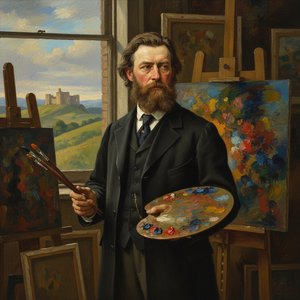
George Paul Chalmers: Rediscovering the Angus Rembrandt & Scottish Colourist Roots
Explore the captivating world of George Paul Chalmers (1833-1878), a pivotal Scottish painter. Discover his landscapes, portraits & connection to the Aesthetic Movement and Colourists. Learn about this 'Angus Rembrandt's' legacy with OriginalUniqueArt.
Reflecting the Self: A History of Portraiture & Psychological Insight
Explore the fascinating history of self-portraiture from Renaissance masters like Dürer & Rembrandt to modern interpretations. Discover the psychological insights and artistic techniques behind these iconic works. Expert analysis for art enthusiasts.

William Brassey Hole: A Victorian Master of Narrative Watercolour & Scottish Life
Explore the captivating paintings of William Brassey Hole, a Victorian master renowned for his dramatic biblical scenes, Scottish landscapes & industrial life. Discover his technique and lasting legacy.