プリント版に切り替え
 詳細を表示
詳細を表示







































 いずれかの辺が105 cm(約41インチ)を超えるアートワークまたは複製画の場合、フレームは分解されたキットの状態でお届けいたします。この方法は、輸送中の破損を防ぎ、安全に配送するために採用しております。


A Fleeting Moment of Grace: Exploring Degas’ “Dancer on Stage”
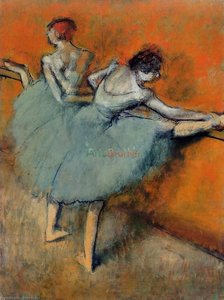
This captivating pastel work by Edgar Degas transports us to the heart of the Parisian ballet world in 1880. Housed at the Hamburger Kunsthalle, *Dancer on Stage* isn't merely a depiction of a performance; it’s an intimate glimpse into the dedication, discipline, and ephemeral beauty inherent in the art of dance.Subject & Composition: Beyond the Spotlight
The painting centers around a lone ballerina poised mid-performance. Her flowing dress suggests movement frozen in time, arms outstretched as if responding to the music only she can hear. Degas masterfully avoids a traditional, posed portrait; instead, we witness a candid moment – perhaps a rehearsal or an improvisation. The inclusion of two figures in the background—one observing intently and another seemingly awaiting their cue—adds depth and hints at the bustling world beyond the spotlight. The composition isn’t rigidly symmetrical, mirroring the natural asymmetry of human movement and creating a dynamic visual experience.Impressionism & Realism: Degas' Unique Vision
While often associated with Impressionism due to his contemporaries and focus on capturing fleeting moments, Degas resisted categorization. He preferred to be considered a realist, and this is evident in his meticulous observation of anatomy and movement. However, he embraced the *Impressionistic* techniques of utilizing light and color to evoke atmosphere and emotion. He wasn’t interested in painting outdoors (*en plein air*) like many Impressionists; instead, he brought the energy of modern life – particularly the theater – into his studio.Pastel Technique: A Symphony of Softness
Degas's choice of pastel is crucial to the work’s impact. The medium allows for a remarkable softness and luminosity, perfectly capturing the ethereal quality of dance and the delicate fabrics worn by the ballerina. He layered colors with incredible subtlety, creating nuanced shadows and highlights that define form without harshness. This technique lends an immediacy and freshness to the scene, as if we are witnessing the performance unfold before our eyes.Historical Context: The Belle Époque & Ballet
*Dancer on Stage* emerges from the vibrant cultural landscape of the *Belle Époque*. Ballet was immensely popular in Paris during this period, and Degas became fascinated with its world – not just the glamour onstage but also the rigorous training and often precarious lives of the dancers themselves. He frequently attended rehearsals and performances, creating a vast body of work dedicated to this subject. His depictions offered a more realistic portrayal than previous artistic representations, acknowledging the physicality and dedication required of these performers.Symbolism & Emotional Resonance
Beyond its aesthetic beauty, the painting carries symbolic weight. The dancer embodies grace, discipline, and the pursuit of perfection. The slightly melancholic atmosphere—perhaps suggested by the subdued color palette and the solitary figure—hints at the sacrifices and pressures inherent in a life dedicated to art. Degas doesn’t romanticize; he presents a nuanced view that acknowledges both the beauty *and* the challenges of the dancer's world.Interior Design & Collecting
A reproduction of *Dancer on Stage* would be a stunning addition to any interior, lending an air of sophistication and artistic sensibility. Its soft color palette complements a variety of décor styles—from classic to contemporary. The painting’s focus on movement and grace makes it particularly well-suited for living rooms, bedrooms, or home offices. For collectors, this work represents a pivotal moment in art history – a bridge between Realism and Impressionism, and a testament to Degas' unique artistic vision.Further Exploration
- Related Works: Explore Degas’ other ballet-themed paintings such as *The Star (Dancer on Stage)* and *Dancer on Stage with a Bouquet* to gain deeper insight into his artistic obsession.
- Museum Collections: Visit the Musée d'Orsay in Paris or the New Orleans Museum of Art to view additional works by Degas.
- Artistic Influence: Consider how Degas’ work influenced subsequent generations of artists interested in capturing movement and modern life.
Q&A
ヒラール・ジェームズ・エドガー・デガス作「Dancer on Stage」の色調は、鮮やかですか、それとも落ち着いていますか?
ヒラール・ジェームズ・エドガー・デガス作「Dancer on Stage」の彩度は程よく柔らかな彩度です。
ヒラール・ジェームズ・エドガー・デガス作「Dancer on Stage」は、どのような情緒や感情を表現していますか?
ヒラール・ジェームズ・エドガー・デガス作「Dancer on Stage」が醸し出す雰囲気は静謐であり、その感情的なトーンは平穏です。
「Dancer on Stage」の色使いは、鮮やかでしょうか、それとも淡い感じでしょうか?
ヒラール・ジェームズ・エドガー・デガス作「Dancer on Stage」の色調は、バランスの取れたな強さを持っています。
この絵画の詳細を見る
 設置イメージを表示
 シェアする
シェアする シェアする
シェアする
 詳細を見る
詳細を見る ガイドを表示

 ダウンロード
 似ている作品
 X線調査
X線調査 スライドショーを表示
 Q&A
Q&A 統計情報
統計情報