
 設置イメージを確認
 送る
送る シェア
シェア
 詳細情報
詳細情報 ガイドを表示

 画像をダウンロード
 似ている作品
 X線調査
X線調査 スライドショー
 Q&A
Q&A 統計情報
統計情報Sir Anthony Marshall

- 273.0 x 180.0 cm


 続きを読む
続きを読む
ジークレー/アートプリント
スピーディーな制作と多彩な仕上げオプションが魅力の、ミュージアムクオリティなジークレー・キャンバスプリント。 ( 手描きの複製画を注文する デジタル画像販売へ切り替え)




































作品のオリジナル比率に合わせた、当店の規定サイズからお選びください。

額縁や壁のスペースに合わせて、ご希望の幅と高さを入力してください。プリントはカットすることは可能ですが、元の画像より大きくすることはできないため、異なる比率のサイズを選択された場合は、画像の一部が欠けることになります。印刷を開始する前に、内容を確認していただくためのデジタルモックアップをお送りいたします。このページに表示されている画像は、実際のカット後の状態を示すものではありません。実際の仕上がりはモックアップにてご確認ください。


 ガラスオプションは、110cm未満のサイズでのみご利用いただけます。

Sir Anthony Marshall
ジークレー/アートプリント
複製画サイズ一覧
-


合計金額
¥ 12624
The Artist and His Work
Henry Turner Munns was a talented artist known for his portraits of prominent figures. His work can be found in various collections, including the Manchester Town Hall. The painting of Sir Anthony Marshall is a prime example of Munns' ability to capture the essence and character of his subjects. Key Features of the painting include:- The use of bold colors and intricate details to create a sense of depth and dimension
- The subject's attire, which suggests a high level of importance and dignity
- The background, which adds a sense of context and history to the portrait
Discovering More Artworks
For those interested in exploring more artworks by Henry Turner Munns and other artists, Discovering the Artworks of Manchester Town Hall, Manchester, United Kingdom is a great resource. This page provides an overview of the town hall's collection, including paintings by Munns and other notable artists.The Manchester Town Hall is also home to portraits of other prominent figures, such as Sir John Harwood and Abel Heywood, also painted by Henry Turner Munns. These paintings can be found on the OriginalUniqueArt.com website, which offers a wide range of handmade oil painting reproductions.
For more information on Henry Turner Munns and his work, visit the OriginalUniqueArt.com page dedicated to the artist. This page provides an overview of Munns' life and career, as well as examples of his work, including the captivating portrait of Sir Anthony Marshall.
よくあるご質問
Henry Turner Munns作「Sir Anthony Marshall」のコントラストはどの程度ですか?
Henry Turner Munns作「Sir Anthony Marshall」は、明部と暗部の間にSereneなコントラストを描き出しています。
「Sir Anthony Marshall」の作者と制作年はいつですか?
「Sir Anthony Marshall」の作者はHenry Turner Munnsで、制作年は1895年です。
「Sir Anthony Marshall」はいつ制作されたもので、どの様式(ムーブメント)に属していますか?
Henry Turner Munns作「Sir Anthony Marshall」は1895年に制作されたもので、Academic Realismに属します。
アーティストについて
A Compassionate Eye on Victorian Life: The World of Henry Turner Munns
Henry Turner Munns, born in Birmingham in 1832 and passing away in 1898, occupies a fascinating, yet often overlooked, position within the pantheon of Victorian artists. He wasn’t a revolutionary like the Pre-Raphaelites, nor did he court the dramatic flair of some of his contemporaries. Instead, Munns carved out a niche for himself by offering deeply sensitive and insightful portrayals of everyday British life, particularly focusing on the working classes with an empathy rarely seen in academic painting of the period. His work provides a valuable window into the social fabric of 19th-century England, moving beyond grand historical narratives to capture the quiet dignity and subtle struggles of ordinary people.Early Life and Artistic Training
Munns’s early life remains somewhat shrouded in mystery; biographical details are scarce. What is known is that he received his artistic training at the Birmingham School of Art, a relatively new institution at the time dedicated to providing accessible art education. This grounding in local artistic circles would profoundly shape his subject matter and approach. Unlike artists who sought inspiration in Italy or classical mythology, Munns turned his gaze inward, finding compelling narratives within the streets and homes of his native city. The influence of early photography is also palpable in his work; the burgeoning medium’s ability to capture realistic detail likely informed his meticulous technique and commitment to portraying authentic scenes. He exhibited at the Birmingham Society of Artists from 1854, quickly gaining recognition for his skill in depicting genre subjects – scenes of everyday life.A Focus on Genre and Portraiture
Munns’s artistic output primarily revolved around two key areas: genre painting and portraiture. His genre scenes are particularly noteworthy for their lack of sentimentality or moralizing. He didn't depict poverty as a spectacle, but rather focused on the resilience, quiet strength, and familial bonds within working-class communities. Paintings like “The Mother’s Pride” (1860) exemplify this approach; it portrays a mother gazing lovingly at her child, devoid of any overt drama or pathos, yet radiating warmth and affection. His portraits, while often commissioned by middle-class patrons, also reveal his compassionate eye. He wasn't interested in simply capturing likenesses but sought to convey the inner character and dignity of his sitters. He possessed a remarkable ability to imbue even seemingly mundane subjects with a sense of humanity.Development and Artistic Style
Throughout his career, Munns’s style remained largely consistent – characterized by meticulous detail, realistic rendering, and a subdued palette. He wasn't one for bold experimentation or dramatic brushwork. Instead, he prioritized clarity and accuracy in depicting form and texture. His compositions are often carefully balanced, drawing the viewer’s eye to the central figures and emphasizing their emotional connection. While influenced by earlier Realist painters like Wilkie and Teniers, Munns developed a distinctive voice through his focus on British subjects and his compassionate approach. His landscapes, though less numerous than his genre scenes or portraits, demonstrate a similar attention to detail and atmospheric effect. He often used light and shadow to create a sense of intimacy and mood, further enhancing the emotional impact of his work.Legacy and Historical Significance
Although Munns never achieved widespread fame during his lifetime, his work has experienced a resurgence in recent years as scholars and collectors have recognized its historical and artistic value. His paintings offer a unique glimpse into Victorian society, providing a counterpoint to the more idealized or sensationalized depictions of the period.- His compassionate portrayal of working-class life is particularly significant.
- He documented a segment of British society often overlooked by academic painters.
- His meticulous technique and realistic rendering demonstrate a high level of artistic skill.

Henry Turner Munns
1832 - 1898
関連記事
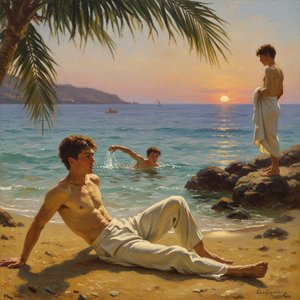
Henry Scott Tuke: Sunlit Masculinity & the Pastoral Ideal in Victorian Painting
Explore the captivating world of Henry Scott Tuke's paintings – a master of British Impressionism renowned for his intimate depictions of youth and sunlit maritime scenes. Discover his legacy & aesthetic influence.

Mastering the Grand Style: The 25 Best Artworks by Sir Joshua Reynolds
Explore 25 iconic Sir Joshua Reynolds masterpieces of the Grand Style. Discover museum-quality art on OriginalUniqueArt.com.

アンリ・マティスの傑作25選:色彩と情熱の軌跡|OriginalUniqueArt
アンリ・マティスの傑作25選🎨 色彩と情熱が織りなす世界を旅する。フォーヴィスム代表の巨匠、マティスの絵画の魅力と歴史を紐解きます。OriginalUniqueArtで高品質なアートプリントや複製画を見つけ、インテリアに芸術的な輝きを✨ Explore the full collection online

Masterpieces of the English Countryside: Top 25 Sir Alfred James Munnings Artworks
Explore 25 iconic Sir Alfred James Munnings masterpieces. Discover timeless equine art on OriginalUniqueArt.com.
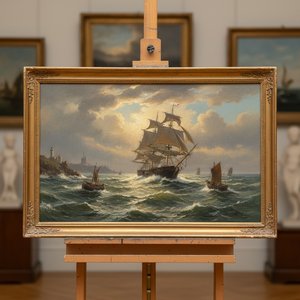
Henry Thomas Dawson: Navigating Light, Sea & Sentiment in Victorian Marine Painting
Explore the captivating world of Henry Thomas Dawson (1811-1878), a master of Victorian marine painting. Discover his evocative coastal scenes, landscapes & lasting artistic legacy. Learn about collecting Dawson's work and find reproductions at OriginalUniqueArt.