

 設置イメージを確認
 送る
送る シェア
シェア
 詳細情報
詳細情報 ガイドを表示

 画像をダウンロード
 似ている作品
 X線調査
X線調査 スライドショー
 統計情報
統計情報PORTRAIT DE JEUNE HOMME


 続きを読む
続きを読む
ジークレー/アートプリント
スピーディーな制作と多彩な仕上げオプションが魅力の、ミュージアムクオリティなジークレー・キャンバスプリント。 ( 手描きの複製画を注文する デジタル画像販売へ切り替え)




P118B ¥10

P118H ¥10

P118W ¥10

P438Z ¥10

P508JH ¥12

P508YH ¥12

P805H ¥10

P805Z ¥10

P919BZ ¥10

P919G ¥10

P919XJ ¥10

P959ZH ¥10

P968JZ ¥12

W106C ¥8

W218G ¥10

W218JH ¥8

W218Y ¥10

W307PJ ¥10

W316G ¥10

W316PJ ¥8

W316Y ¥10

W398PJ ¥8

W4111J ¥10

W500HY ¥15

W500JH ¥15

W692G ¥12

W849H ¥8

W940BG ¥15

W953PJ ¥8




作品のオリジナル比率に合わせた、当店の規定サイズからお選びください。

額縁や壁のスペースに合わせて、ご希望の幅と高さを入力してください。プリントはカットすることは可能ですが、元の画像より大きくすることはできないため、異なる比率のサイズを選択された場合は、画像の一部が欠けることになります。印刷を開始する前に、内容を確認していただくためのデジタルモックアップをお送りいたします。このページに表示されている画像は、実際のカット後の状態を示すものではありません。実際の仕上がりはモックアップにてご確認ください。


 ガラスオプションは、110cm未満のサイズでのみご利用いただけます。

PORTRAIT DE JEUNE HOMME
ジークレー/アートプリント
複製画サイズ一覧
-


合計金額
¥ 12582
A Glimpse into Contemplation: The Allure of Portrait de Jeune Homme
To stand before this portrait is to step into a moment suspended in time—a quiet chamber where thought seems more palpable than the dust motes dancing in the soft light. Henry Scheffer’s Portrait de Jeune Homme captures not merely a likeness, but an entire state of being: one of profound, introspective contemplation. The young man gazes outward, yet his eyes seem fixed on some distant horizon visible only to him. It is a study in quiet dignity, rendered with the masterful touch of an artist navigating the delicate transition between the fervent emotion of Romanticism and the emerging clarity of modern vision.
Mastery of Light and Shadow: Technical Brilliance
Scheffer’s technique here speaks volumes about his skill as an observer. The painting is executed in oil on canvas, allowing for a rich interplay of texture that rewards close inspection. Notice how the light, seemingly entering from an unseen window to the left, does not illuminate uniformly but rather caresses the contours of the subject's face and hands. This soft, diffused illumination creates subtle gradations of shadow across the muted palette of browns, grays, and deep blues. The brushwork itself is visible—a testament to his hand—offering a slightly loose handling that prevents the portrait from feeling overly academic. Instead, it breathes with an organic vitality, suggesting the very act of painting in progress.
The Language of Objects: Symbolism and Intellect
The surrounding elements are not mere props; they are carefully chosen signifiers. The inclusion of books resting on nearby shelves and perhaps a small mirror suggests a life steeped in intellectual pursuit and self-examination. These objects anchor the sitter within an environment conducive to deep thought, inviting the viewer to ponder the nature of knowledge and self-reflection. The composition balances the organic curves of the figure’s hair and drapery against the more rigid, geometric forms of the furniture, creating a visual tension that mirrors the internal dialogue suggested by the subject's thoughtful repose.
Historical Echoes: Bridging Eras in Art
Henry Scheffer himself stands as an artist bridging epochs. His career saw him move from the grand emotional sweep of Romanticism toward the observational precision that would characterize later movements. This portrait embodies that pivotal moment—it possesses the psychological depth and narrative weight associated with Romantic ideals, yet it grounds itself in a tangible realism. For the modern collector or designer, this piece offers an unparalleled connection to 19th-century European artistic currents, providing an atmosphere of cultured melancholy perfect for a distinguished study or drawing-room.
よくあるご質問
Henry Scheffer作「PORTRAIT DE JEUNE HOMME」は、明るい印象の作品ですか、それとも暗い印象の作品ですか?
Henry Scheffer作「PORTRAIT DE JEUNE HOMME」の明るさはdeep_shadow、輝度はDarkと記録されています。
「PORTRAIT DE JEUNE HOMME」の中で、最も際立っている色はどれですか?
Henry Scheffer作「PORTRAIT DE JEUNE HOMME」の主色(メインカラー)はBlack (#0b1013)です。
Henry Scheffer作「PORTRAIT DE JEUNE HOMME」では、どのような配色が使われていますか?
Henry Scheffer作「PORTRAIT DE JEUNE HOMME」は、Earthyなカラーパレットを使用しています。この配色が、作品全体の色彩的特徴を象徴しています。
アーティストについて
The Soul of Romanticism: The Life and Legacy of Henry Scheffer
In the vibrant, turbulent landscape of nineteenth-century European art, few figures embody the transition from the fervent idealism of Romanticism to the burgeoning clarity of modern vision as gracefully as Henry Scheffer. Born Hendrik Scheffer in The Hague in 1798, this Dutch master spent much of his life in France, where he became known as Henri Scheffer. His journey was one of profound connection, not only to the shifting tides of art history but to a lineage of creative brilliance. As the younger brother of the celebrated painter Ary Scheffer and the grandson of Arie Lamme, Henry was immersed in an environment where the brush and canvas were the primary languages of expression. This familial heritage provided him with more than just technical foundations; it instilled a deep-seated understanding of compositional balance and the psychological weight that a single stroke can carry.
Scheffer’s artistic formation was marked by rigorous academic discipline, beginning at the Academy for Industrial Design in Eindhoven and progressing to the prestigious “Vrije Academie” Art College in The Hague. Under the mentorship of Pierre-Narcisse Guérin, a teacher renowned for championing expressive painting, Scheffer learned to navigate the delicate interplay between structure and emotion. This training allowed him to master the dramatic aesthetic that would define his career—a style characterized by intense emotionality, vivid color palettes, and dynamic brushwork. His work often sought to capture the very essence of a moment, whether through the monumental scale of historical narratives or the quiet, introspective depths of a portrait.
A Master of Drama and Introspection
The oeuvre of Henry Scheffer is a testament to his ability to breathe life into both the grand stage of history and the intimate corners of the human psyche. He was particularly adept at depicting biblical narratives and historical milestones, using chiaroscuro to create a sense of theatrical tension. His masterpiece, “The Arrest of Charlotte Corday,” remains one of his most arresting achievements. In this work, the chaotic energy of the French Revolution is palpable; through a masterful use of impasto technique, Scheffer captures the frantic movement and the heavy atmosphere of a pivotal historical tragedy. This ability to render history not merely as a record of events, but as a visceral experience, cemented his reputation among the luminaries of his era.
Yet, beyond the sweeping drama of his historical canvases, Scheffer possessed a remarkable sensitivity for portraiture and genre painting. In works such as “Portrait de Jeune Homme,” the viewer is invited into a state of profound contemplation. Here, the artist moves away from the external chaos of revolution to explore the internal landscape of the subject. The soft, diffused light that caresses the sitter’s features suggests a moment suspended in time, where thought becomes as tangible as the dust motes dancing in a sunbeam. Through his portraits, Scheffer demonstrated that greatness could be found in the subtle gradations of shadow and the quiet dignity of a single, searching gaze.
Historical Significance and Artistic Transition
While his work was celebrated by many, Scheffer’s career also navigated the sharp critiques of contemporary literary giants like Charles Baudelaire and Théophile Gautier. This tension between traditional Romanticism and the emerging modern sensibilities reflects the very era in which he lived. He stood at a crossroads, bridging the gap between the grand, emotive traditions of the past and the nascent explorations of what would eventually become Impressionism. His technical brilliance—seen in his ability to manipulate light and texture—provided a foundation upon which future generations could build.
The enduring legacy of Henry Scheffer is found in his versatility and his commitment to the emotional truth of his subjects. His contributions to the art world include:
- Technical Innovation: The masterful use of impasto and chiaroscuro to evoke atmosphere and movement.
- Historical Preservation: Capturing the spirit of the French Revolution and significant historical figures like the Marquis de Lafayette.
- Psychological Depth: Elevating portraiture from mere likeness to a study of human introspection and intellect.
- Artistic Lineage: Serving as a pivotal link in the evolution of European painting, connecting the academic traditions of Guérin to the modern era.
Though he passed away in Paris in 1862, Scheffer’s influence remains etched in the canvases that continue to captivate audiences. He remains a painter of transitions, an artist who could command the roar of a battlefield and the silence of a library with equal, breathtaking mastery.

Henry Scheffer
1798 - 1862
アーティスト情報
- Full Name: Hendrik Scheffer
- Nationality: Dutch
- Date Of Birth: 1798
- Date Of Death: 1862
- Place Of Birth: The Hague, Netherlands
- Notable Artworks:
- L’arrestation de Charlotte Corday
- Joan of Arc entering Orléans
- Artistic Movement Or Style: Romanticism
- Artists Who Influenced This Artist: ['Pierre-Narcisse Guérin']
- Artists Or Movements Influenced By This Artist: ['Romanticism']
関連記事

The Enduring Power of Painting: A Historical & Contemporary Exploration of Form and Emotion
Explore the rich history & enduring techniques of oil painting with OriginalUniqueArt. Discover masterpieces, learn about art collecting, and find authentic handmade reproductions crafted by skilled artists.
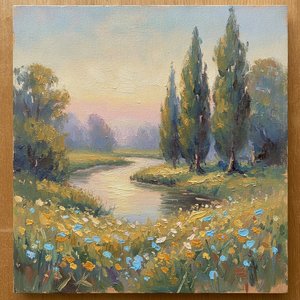
The Timeless Charm of Oil on Board: Reimagining Texture and Light through the Impressionist Lens
Discover the profound intimacy of oil on panel. Explore how Impressionist masters used rigid supports to capture light, texture, and impasto depth through exquisite, handmade oil reproductions for discerning collectors.

The Enduring Legacy of Oil on Canvas: Technique, History & Aesthetic Impact
Explore the rich history & techniques of oil painting – from Renaissance masters to Impressionism. Discover pigments, layering methods, and why this timeless medium endures. Expert insights for artists & art enthusiasts.

Oil on Canvas: A Historical & Technical Exploration of a Timeless Artistic Medium
Explore the rich history & enduring techniques of oil painting on canvas. Discover the science behind its longevity, conservation practices, and contemporary relevance. Expert insights for art enthusiasts.

19th Century Masterpieces: 10 Paintings That Defined an Era | OriginalUniqueArt
Journey through 19th century art with OriginalUniqueArt! Explore 10 iconic paintings – from Monet & Renoir to Courbet – and discover the stories behind Romanticism, Realism & Impressionism. Find museum-quality reproductions for your home decor. Explore the full collection online!