
 プレビュー
プレビュー
 プリントを購入
 シェアする
シェアする シェアする
シェアする
 詳細を見る
詳細を見る

 ダウンロード
 似ている作品
 X線調査
X線調査 スライドショー
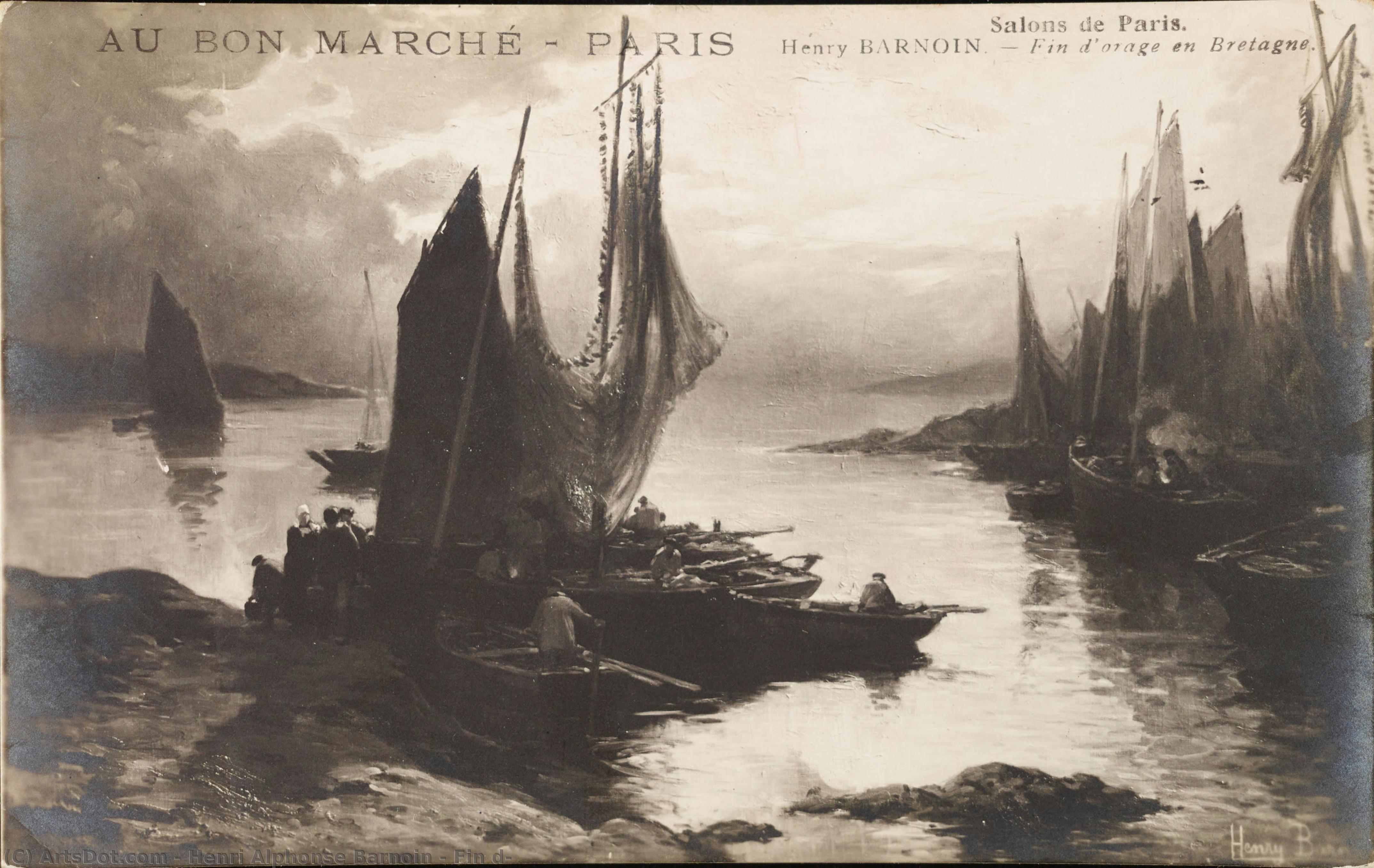
Fin d


 詳細を見る
詳細を見る




































作品のオリジナル比率に合わせた、当店の規定サイズからお選びください。

特定のフレームやスペースに合わせて、ご希望のサイズをご入力いただけます。選択されたサイズが元の画像の比率と異なる場合、アートワークをトリミングするか、手描きで要素を追加して絵画を拡張いたします。デジタルモックアップ を制作し、制作開始前にご確認(承認)をいただきます。
画面上のプレビューは、実際のトリミングや拡張を正確に反映しているものではありません。最終的な構図は、モックアップによってのみ正確にご確認いただけます。
カスタムサイズもご利用いただけますが、元の比率を維持するためには、あらかじめ用意されたリストからサイズを選択することをお勧めいたします。
ご注文後、OriginalUniqueArt.com チームより詳細な指示をお送りするとともに、仕上がりイメージ(モックアップ)をご提供いたします。


 ガラスオプションは、110cm未満のサイズでのみご利用いただけます。

Fin d
複製技法
複製画のサイズ
-


合計金額
$ 300
アーティストの略歴
A Life Immersed in Light: The Story of Henri Alphonse Barnoin
Henri Alphonse Barnoin, born in Paris in 1882, was a painter whose life and work became inextricably linked to the captivating allure of Impressionism. He wasn’t merely an artist who adopted a style; he embodied it, translating fleeting moments of light and atmosphere onto canvas with a sensitivity that resonated deeply with his contemporaries and continues to charm audiences today. Barnoin came from a family steeped in artistic tradition—his father and two uncles were all practicing artists—creating an environment where creativity wasn’t just encouraged but considered fundamental. This familial foundation led him to the prestigious École des Beaux Arts in Paris, where he initially studied under Luc-Olivier Merson. However, it was his subsequent mentorship with Émile Dameron that proved truly transformative, steering Barnoin toward the principles of Impressionism and unlocking a passion for capturing the ephemeral beauty of the world around him.From Parisian Salons to Olympic Recognition
Barnoin’s artistic journey began in earnest around 1909 with his debut at the Salon des Artistes de Paris, a pivotal platform for emerging talents. He exhibited regularly there throughout his career, steadily gaining recognition and critical acclaim. This dedication culminated in significant accolades: an honorable mention in 1909, followed by a silver medal in 1921, and ultimately, a gold medal in 1935—testaments to his growing mastery and the evolving sophistication of his work. Beyond the established art world, Barnoin’s talent extended to an unusual arena: the 1928 Summer Olympics in Amsterdam. His inclusion in the painting event at these games underscores not only his technical skill but also a broader cultural appreciation for artistic expression during that period. This participation highlights how painting was considered alongside athletic achievement as a form of human excellence, a celebration of creativity and dedication on an international stage.The Allure of Brittany: A Defining Chapter
While Barnoin’s early work encompassed Parisian scenes, it was his connection to the coastal region of Brittany that truly defined his artistic identity. Beginning around 1912, he spent increasing amounts of time in this picturesque corner of France, captivated by its dramatic landscapes and vibrant maritime life. This wasn't a fleeting visit; Barnoin established a studio in Concarneau in 1919, transforming it into a hub for fellow artists drawn to the region’s unique light and atmosphere. The port town became his muse, inspiring countless paintings of fishing boats, bustling markets, and the ever-changing sea. He wasn't simply documenting scenes; he was capturing the *essence* of Brittany—the energy, the color, the very soul of the place. In 1926, Barnoin received another prestigious honor: appointment as the official painter of the French Navy, further solidifying his connection to the maritime world and providing him with a wealth of new subject matter.A Post-Impressionist Palette and Lasting Legacy
Barnoin’s style, while rooted in Impressionism, evolved into something uniquely his own—a blend of observation and emotion often described as Post-Impressionistic. He wasn't solely focused on capturing the immediate impression of light; he infused his paintings with a narrative quality, telling stories through carefully composed scenes and evocative brushwork. His renowned pastels demonstrate a particular sensitivity to color and texture, playing with the effects of light in a way that feels both spontaneous and meticulously crafted. Barnoin’s favored subjects—marine views, harbor life, coastal landscapes—were rendered with a richness and depth that set him apart. Paintings like *Fishing Harbour, Concarneau, Brittany* exemplify his ability to capture not just the visual beauty of a scene but also its underlying spirit. His work can be found in prominent museums throughout France, including the Musée du Faouet and the Musées des beaux-arts in Quimper and Brest, ensuring that his legacy continues to inspire generations of artists and art lovers. He died in Paris in 1940, leaving behind a body of work that stands as a testament to his dedication, talent, and enduring passion for capturing the beauty of the world around him.
henri alphonse barnoin
1882 - 1940 , France
基本情報
- Artistic Movement Or Style: Impressionism
- Artists Or Movements Influenced By This Artist:
- Edouard Cortès
- Eugène Galien-Laloue
- Artists Who Influenced This Artist:
- Luc-Olivier Merson
- Émile Dameron
- Date Of Birth: July 7, 1882
- Date Of Death: March 17, 1940
- Full Name: Henri Alphonse Barnoin
- Nationality: French
- Notable Artworks:
- Fishing Harbour, Concarneau
- A Brittany harbour
- La promenade en barque
- Pardon de St. Fiacre
- Place Of Birth: Paris, France

