 プリント版に切り替え
 詳細を表示
詳細を表示







































 いずれかの辺が105 cm(約41インチ)を超えるアートワークまたは複製画の場合、フレームは分解されたキットの状態でお届けいたします。この方法は、輸送中の破損を防ぎ、安全に配送するために採用しております。


The Melodic Shadows of the Utrecht Caravaggisti
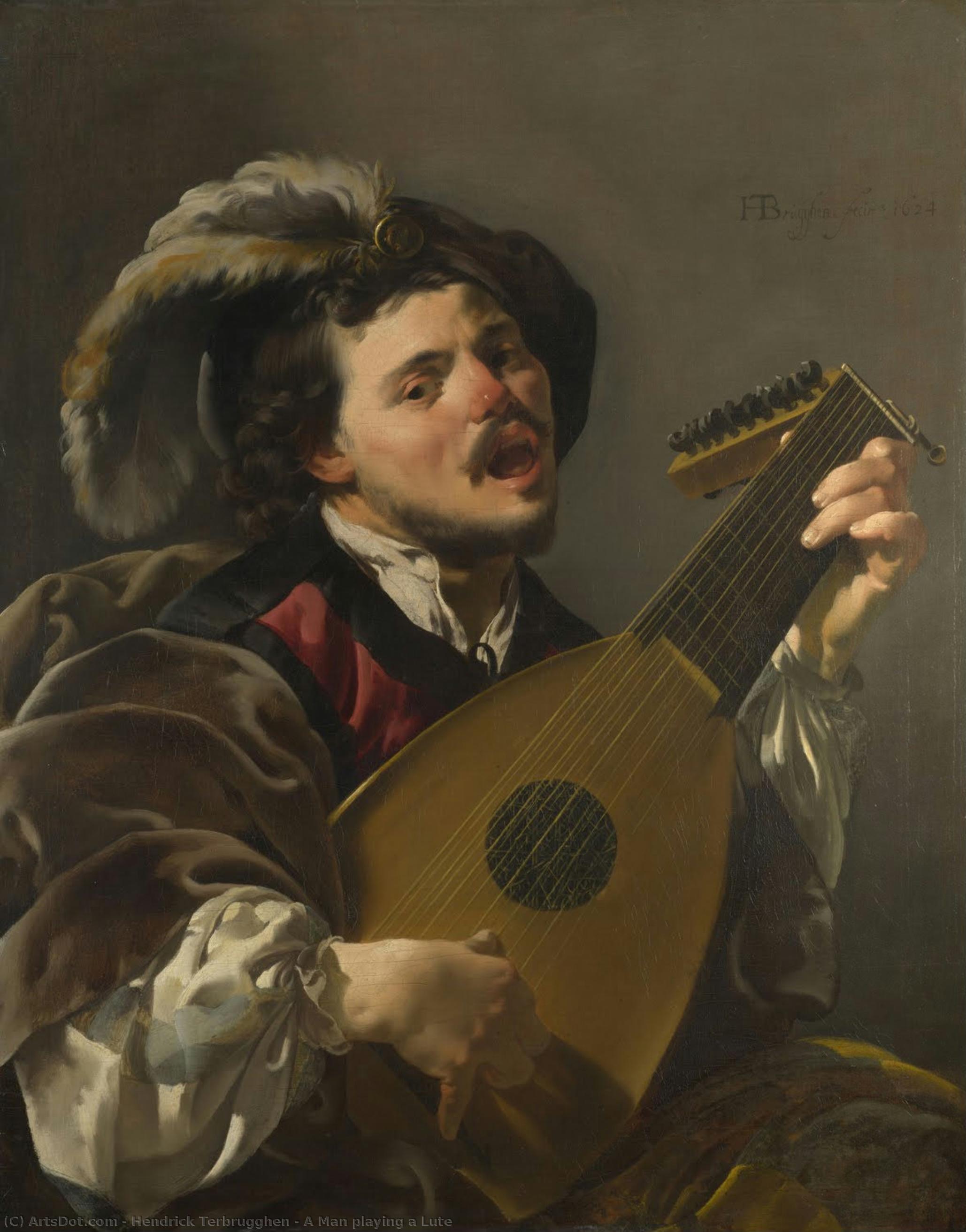
In the quiet intimacy of 1624, Hendrick Terbrugghen captured a moment of profound musical devotion that transcends the centuries. A Man playing a Lute is not merely a portrait of a musician; it is a masterclass in the dramatic interplay of light and shadow, a hallmark of the Utrecht Caravaggisti movement. As the man cradles his instrument, the viewer is drawn into a private world where the only sound is the imagined resonance of plucked strings. The composition breathes with an elegance that speaks to the sophisticated tastes of the Dutch Golden Age, offering a window into a period where art sought to bridge the gap between the earthly and the divine through the visceral beauty of everyday life.
The technique employed by Terbrugghen is nothing short of breathtaking. Utilizing the chiaroscuro method—a technique perfected by Caravaggio and brought to the Netherlands by artists like Terbrugghen—the painter uses deep, velvety shadows to sculpt the figure from the darkness. This high-contrast approach directs our gaze toward the vibrant textures of the subject's attire: the rich, crimson fabric of his clothing and the soft, tactile presence of his fur-trimmed hat. Every brushstroke serves to highlight the intricate craftsmanship of the lute itself, making the instrument feel heavy, tangible, and central to the soul of the painting.
A Symphony of Color and Texture
For the discerning collector or interior designer, this piece offers a magnificent palette of warm tones that can anchor a room with a sense of historical prestige. The deep reds and earthy ochres create an atmosphere of warmth and luxury, making it an ideal centerpiece for a study, a library, or a formal dining area. The visual weight of the lute, which occupies a significant portion of the canvas, provides a structural focal point that commands attention without overwhelming the surrounding decor. It is a work that invites contemplation, encouraging guests to linger on the fine details of the man's concentrated expression and the delicate anatomy of his hands.
Beyond its aesthetic appeal, the painting carries a symbolic weight common in seventeenth-century Dutch art. The lute often served as a metaphor for harmony—both musical and social. To possess such a work is to invite a sense of balance and refined culture into one's space. Whether viewed as a historical artifact or a stunning decorative element, A Man playing a Lute remains a timeless testament to the power of light to reveal the hidden beauty in a single, fleeting moment of artistic expression.
Q&A
ヘンドリック・テルブルッヘン作「A Man playing a Lute」は、どの芸術運動や時代に属していますか?
「A Man playing a Lute」はBaroqueの様式に属しており、その作者は近世美術の時代に活動していました。
「A Man playing a Lute」の複製画は、お部屋のどの場所に飾るのがおすすめですか?
ヘンドリック・テルブルッヘン作「A Man playing a Lute」にふさわしい空間はLiving Roomです。もちろん、お客様のインテリアに合わせて調整していただくことも可能です。
学生向けのヘンドリック・テルブルッヘン作「A Man playing a Lute」に関するファクトシートはありますか?
ヘンドリック・テルブルッヘン作「A Man playing a Lute」には、解説資料ページをご用意しています。これは、学生や教室での学習用に設計された、印刷可能な作品解説シートです。
この絵画の詳細を見る
 設置イメージを表示
 シェアする
シェアする シェアする
シェアする
 詳細を見る
詳細を見る ガイドを表示

 ダウンロード
 似ている作品
 X線調査
X線調査 スライドショーを表示
 Q&A
Q&A 統計情報
統計情報






