
 設置イメージを表示
 シェアする
シェアする シェアする
シェアする
 詳細を見る
詳細を見る ガイドを表示

 ダウンロード
 似ている作品
 X線調査
X線調査 スライドショーを表示
 Q&A
Q&A 統計情報
統計情報untitled (6565)


 詳細を表示
詳細を表示
ジークレー/アートプリント
スピーディーな制作と多彩な仕上げオプションが魅力の、ミュージアムクオリティなジークレー・キャンバスプリント。 ( 手描き複製画を注文する デジタル画像販売へ切り替え)




P118B ¥10

P118H ¥10

P118W ¥10

P438Z ¥10

P508JH ¥12

P508YH ¥12

P805H ¥10

P805Z ¥10

P919BZ ¥10

P919G ¥10

P919XJ ¥10

P959ZH ¥10

P968JZ ¥12

W106C ¥8

W218G ¥10

W218JH ¥8

W218Y ¥10

W307PJ ¥10

W316G ¥10

W316PJ ¥8

W316Y ¥10

W398PJ ¥8

W4111J ¥10

W500HY ¥15

W500JH ¥15

W692G ¥12

W849H ¥8

W940BG ¥15

W953PJ ¥8




作品のオリジナル比率に合わせた、当店の規定サイズからお選びください。

額縁や壁のスペースに合わせて、ご希望の幅と高さを入力してください。プリントはカットすることは可能ですが、元の画像より大きくすることはできないため、異なる比率のサイズを選択された場合は、画像の一部が欠けることになります。印刷を開始する前に、内容を確認していただくためのデジタルモックアップをお送りいたします。このページに表示されている画像は、実際のカット後の状態を示すものではありません。実際の仕上がりはモックアップにてご確認ください。


 ガラスオプションは、110cm未満のサイズでのみご利用いただけます。

untitled (6565)
ジークレー/アートプリント
複製画サイズ一覧
-


合計金額
¥ 12810
A Study in Intensity: Unraveling the Enigmatic Portrait of Hans Holbein the Younger
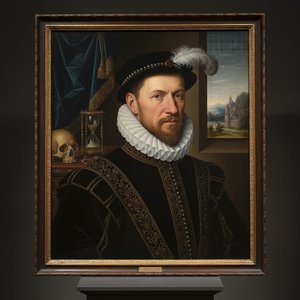
Hans Holbein the Younger’s “Untitled (6565)” is not merely a portrait; it's a carefully constructed psychological landscape, a window into the mind of an unknown subject rendered with the artist’s signature precision and unsettling intensity. Painted circa 1530-32 during his time in England, this oil on panel work transcends the conventional depiction of a likeness, instead offering a profound meditation on gaze, time, and perhaps even mortality. The painting immediately commands attention through its stark contrasts – the dark, almost impenetrable background punctuated by the unsettling presence of two clocks, each frozen at a specific moment, creating an immediate sense of arrested time.
The subject himself is presented with remarkable directness. He sits in profile, his features sharply defined, yet subtly ambiguous. The meticulously rendered beard and mustache, hallmarks of Holbein’s style, frame a face etched with a palpable seriousness. His eyes, wide open and intensely focused, meet the viewer's gaze head-on – an act of deliberate confrontation that forces us to confront our own reflection within the painting. This directness is further emphasized by his slightly parted lips, suggesting either speech or contemplation, leaving the viewer perpetually questioning his intentions.
Holbein’s mastery of technique is evident in every detail. The subtle gradations of light and shadow create a remarkable sense of volume and texture, particularly noticeable in the rendering of the subject's clothing – a simple black shirt that serves as a neutral backdrop to highlight his features. The artist’s use of oil paint allows for an unparalleled level of control, enabling him to achieve astonishingly realistic detail while simultaneously conveying a sense of emotional depth. Note the delicate brushstrokes defining the texture of the fabric and the subtle nuances in the subject's skin tone – evidence of Holbein’s painstaking observation and artistic skill.
Beyond its technical brilliance, “Untitled (6565)” is rich in symbolic meaning. The presence of the two clocks is particularly significant. In Renaissance thought, time was often associated with mortality, and the depiction of multiple clocks could be interpreted as a reminder of our fleeting existence. Some scholars suggest that the specific times displayed on the clocks might hold personal significance for the subject or perhaps even allude to a particular event in his life. The dark background, devoid of any identifying features, further contributes to the painting’s enigmatic quality, suggesting a deliberate attempt to strip away extraneous details and focus solely on the essential elements of the portrait – the subject's face and gaze.
Hans Holbein the Younger was a pivotal figure in the Northern Renaissance, renowned for his ability to capture the psychological complexities of his subjects. His portraits were not simply representations of appearance; they were attempts to reveal the inner lives of those depicted. “Untitled (6565)” exemplifies this approach perfectly, offering a compelling and unsettling glimpse into the soul of an unknown man – a testament to Holbein’s genius and enduring legacy. Reproductions of this captivating work, meticulously crafted using traditional techniques and high-quality materials, allow art enthusiasts to experience the profound impact of this remarkable painting firsthand.
The Artist: A Master of Portraiture in the Northern Renaissance
Born in Augsburg, Germany, in 1497, Hans Holbein the Younger emerged from a family steeped in artistic tradition. His father, Hans Holbein the Elder, was a respected painter and printmaker, providing young Hans with an invaluable foundation in technique and observation. This early exposure instilled within him a meticulous approach to detail – a characteristic that would become synonymous with his distinctive style. Holbein’s training initially occurred within his father's workshop, where he honed his skills in various mediums, including oil painting, woodcut, and engraving.
Following his apprenticeship, Holbein embarked on a period of extensive travel throughout Europe, seeking opportunities to refine his craft and establish himself as an independent artist. He spent significant time in Basel, Switzerland, producing a diverse range of works – portraits, religious paintings, and intricate woodcut designs. Notably, he created the famous *Dance of Death* series, a macabre yet captivating depiction of mortality that cemented his reputation as a skilled and imaginative artist. His work during this period demonstrates a growing confidence and experimentation with style.
Holbein’s career took a significant turn when he moved to England in 1532, where he quickly gained the favor of King Henry VIII. He became the court painter for several years, producing iconic portraits of the king and his family – works that continue to be celebrated today. His time in England was marked by both artistic success and political intrigue, as he navigated the complex dynamics of the Tudor court. Despite facing challenges, Holbein’s talent and skill ensured his place among the most influential artists of the era.
Echoes of Time: Symbolism and Technique
The composition of “Untitled (6565)” is a carefully orchestrated interplay of visual elements designed to evoke specific emotions and ideas. The stark contrast between the dark background and the subject’s pale face immediately draws the viewer's attention, creating a sense of dramatic tension. The two clocks, strategically placed within the scene, are not merely decorative; they serve as potent symbols of time, mortality, and perhaps even judgment.
Holbein’s masterful use of oil paint allows for an unparalleled level of detail and nuance. He employs subtle gradations of light and shadow to create a sense of volume and texture, rendering the subject's features with remarkable accuracy. The meticulous attention to detail is particularly evident in the depiction of the subject’s beard and mustache – each strand carefully rendered to convey a sense of realism and character. The artist’s use of atmospheric perspective further enhances the painting’s depth and spatial relationships, creating a convincing illusion of three-dimensionality.
Furthermore, Holbein's choice of profile view is deliberate. This compositional technique was popular during the Renaissance as it allowed for a more intimate and psychologically revealing portrayal of the subject. By presenting the subject in profile, Holbein forces the viewer to confront his gaze directly, creating a sense of connection and engagement.
Owning a Masterpiece: Reproductions and Legacy
OriginalUniqueArt offers meticulously crafted handmade oil painting reproductions of “Untitled (6565)” by Hans Holbein the Younger, allowing art enthusiasts to own a piece of this iconic Renaissance masterpiece. These reproductions are created using traditional techniques – layering thin glazes of oil paint to achieve the same luminous effects as the original – and employ only the finest quality materials for exceptional durability and visual fidelity.
Beyond its aesthetic beauty, “Untitled (6565)” represents a profound exploration of human psychology. It’s a painting that invites contemplation, prompting viewers to consider the nature of time, mortality, and the enigmatic depths of the human soul. Whether you are an art historian, a collector, or simply someone who appreciates exceptional artistry, this reproduction offers a unique opportunity to experience the enduring legacy of Hans Holbein the Younger.
To learn more about the Mauritshuis museum and its collection on OriginalUniqueArt.com
Q&A
ハンス・ホルバイン(子)作「untitled (6565)」は、どのような感情を伝えていますか?
ハンス・ホルバイン(子)作「untitled (6565)」は、内省的なな情緒を伝えています。
ハンス・ホルバイン(子)作「untitled (6565)」のプリントサイズと向きは、どのような設定がおすすめですか?
推奨プリントサイズ:大判、向き:縦長(ハンス・ホルバイン(子)作「untitled (6565)」 に最適な設定です)
「untitled (6565)」のプリントは、どのような用途でのご利用がおすすめですか?
「untitled (6565)」のプリントのおすすめの使い方は、アクセントカラーです。
作家プロフィール
ホルベインとその時代:ルネサンスの肖像画家
ハンス・ホルベイン(1497/8 - 1543)は、ドイツ生まれのスイス人画家であり、北ヨーロッパにおけるルネサンス美術を代表する肖像画の巨匠として知られています。彼の作品は、驚くべきリアリズムと心理描写の深さで、時代を超えて人々を魅了し続けています。ホルベインの生涯は、芸術的探求心と時代の変遷が複雑に絡み合ったものであり、その足跡は16世紀ヨーロッパ美術史に深く刻まれています。幼少期を過ごしたアウグスブルクは、当時すでに芸術の中心地として栄えており、ホルベインは父ハンス・ホルベイン長老の工房で基礎を築きました。この初期教育は、単なる筆遣いや色彩技法だけでなく、対象を注意深く観察し、その本質を見抜く力を養う上で重要な役割を果たしました。バーゼルからテューダー朝へ:台頭する芸術家
ホルベインは、修業を終えると、スイス各地を旅しながら独立した画家として活動を開始します。特にバーゼルでは、宗教画や木版画など多様な作品を手がけ、その才能を開花させました。『死の踊り』シリーズはその代表的な例で、死という普遍的なテーマを独自の解釈で描き出しています。1526年、ホルベインはイングランドへ渡ります。この時、人文学者エラスムスの紹介状を持参しており、それがテューダー朝の有力な社交界への足がかりとなりました。すぐにその才能が認められ、トーマス・モア卿をはじめとする多くの貴族から肖像画の依頼を受けるようになります。肖像画における革新:リアリズムと象徴性
ホルベインの芸術的特徴は、驚くべきリアリズムにあります。彼は対象を丹念に観察し、質感や衣服の細部まで忠実に再現することで、単なる外見だけでなく、その人物の内面までも描き出そうと試みました。肖像画の構図においても革新的な試みが見られ、象徴的な小道具や背景を用いることで、作品に深遠な意味を付与しています。『大使たち』は、ホルベインの才能を示す傑作中の傑作です。この作品には、あえて歪曲された形状で描かれた頭蓋骨が隠されており、死という避けられない運命を暗示する*Memento Mori*として解釈されています。ヘンリー8世の肖像画群は、王権の威厳と権力を象徴するものとして、歴史に刻まれました。また、『ニコラウス・クラッツァーの肖像』は、その写実性と科学的な詳細描写において、ホルベインの卓越した技術を物語っています。影響と遺産:時代を超えた芸術的貢献
ホルベインの芸術は、ドイツ美術の伝統とイタリア・ルネサンスの影響が融合した独自のスタイルを確立しました。アルブレヒト・デューラーをはじめとするドイツ人画家たちから影響を受けつつも、イタリア美術の研究を通して得た知識や技術を取り入れ、それを昇華させました。彼の肖像画は、後の世代の画家たちに大きな影響を与え、リアリズムと心理描写を重視する肖像画の新たな基準を打ち立てました。テューダー朝時代の主要な人物たちの肖像画は、当時の政治的・宗教的な動向や文化の変化を知る上で貴重な資料となっています。ホルベインの芸術は、単なる技術的な卓越性にとどまらず、知的好奇心と芸術的革新、そして人間存在に対する深い理解に基づいたものであり、今なお多くの人々に感動を与え続けています。彼の作品は、時を超えて私たちに語りかけ、過去の世界を鮮やかに蘇らせます。歴史的意義:時代の鏡
1543年、ホルベインはロンドンで死去しましたが、その残した作品群は、今日に至るまで美術史において重要な位置を占めています。彼の肖像画は、単なる美しいイメージではなく、テューダー朝時代の政治的な陰謀や宗教改革の混乱、そして文化的な変遷を映し出す歴史的文書としての価値も持ち合わせています。- ヘンリー8世の肖像画は、王権の象徴として、その威厳を示す役割を果たしました。
- エラスムスやトーマス・モアといった人文主義者の肖像画は、当時の知識人たちの生き様を伝えています。
- 作品に込められた象徴的な要素は、観る者に深い思索を促し、時代背景への理解を深めます。

ハンス・ホルバイン(子)
1497 - 1543 , イタリア
プロフィール概要
- フルネーム: ハンス・ホルバイン ザンガー
- 主な作品:
- アンバサダーズ
- ヘンリー8世の肖像
- エラスムスの肖像
- ニコラウス クラッツァーの肖像
- 出生地: アウグスブルク(ドイツ)
- 国籍: ドイツ・スイス
- 影響を与えた芸術家: ['後世の肖像画家']
- 影響を受けた芸術家: ['アルブレヒト・デューラー']
- 死亡年月日: 1543年
- 生年月日: 1497年頃
- 芸術運動: 北方ルネサンス
関連記事

The Enduring Legacy of Oil on Canvas: Technique, History & Aesthetic Impact
Explore the rich history & techniques of oil painting – from Renaissance masters to Impressionism. Discover pigments, layering methods, and why this timeless medium endures. Expert insights for artists & art enthusiasts.

Oil on Canvas: A Historical & Technical Exploration of a Timeless Artistic Medium
Explore the rich history & enduring techniques of oil painting on canvas. Discover the science behind its longevity, conservation practices, and contemporary relevance. Expert insights for art enthusiasts.

The Enduring Power of Painting: A Historical & Contemporary Exploration of Form and Emotion
Explore the rich history & enduring techniques of oil painting with OriginalUniqueArt. Discover masterpieces, learn about art collecting, and find authentic handmade reproductions crafted by skilled artists.

Hans Holbein the Younger: A Renaissance Portraitist's Mastery of Realism & Psychological Insight
Explore the life & art of Hans Holbein the Younger, a Renaissance master renowned for his strikingly realistic portraits and psychological insight. Discover iconic works like 'The Ambassadors' and delve into his lasting legacy.
Mastering Detail: The Captivating World of Hans Holbein the Younger’s Northern Renaissance Masterpieces
Explore the breathtaking precision of Hans Holbein the Younger. From Tudor royal portraits to intricate Northern Renaissance details, discover the mastery behind his legendary works and learn how to bring this historical grandeur into your collection with museum-quality reproductions.





![ジャン・ド・ダンティヴィルとジョルジュ・ド・セルヴの二重肖像画(別名:大使たち)[細部]](/media/artworks/images-thumb/bb/ab/bbab7ce77b7dd15d23d21114a63b51a4.jpg)


