プリントを購入
 シェアする
シェアする シェアする
シェアする
 詳細を見る
詳細を見る

 ダウンロード
 似ている作品
 X線調査
X線調査 スライドショー
Eve

 詳細を見る
詳細を見る




P118B $10

P118H $10

P118W $10

P438Z $10

P508JH $12

P508YH $12

P805H $10

P805Z $10

P919BZ $10

P919G $10

P919XJ $10

P959ZH $10

P968JZ $12

W106C $8

W218G $10

W218JH $8

W218Y $10

W307PJ $10

W316G $10

W316PJ $8

W316Y $10

W398PJ $8

W4111J $10

W500HY $15

W500JH $15

W692G $12

W849H $8

W940BG $15

W953PJ $8




作品のオリジナル比率に合わせた、当店の規定サイズからお選びください。

特定のフレームやスペースに合わせて、ご希望のサイズをご入力いただけます。選択されたサイズが元の画像の比率と異なる場合、アートワークをトリミングするか、手描きで要素を追加して絵画を拡張いたします。デジタルモックアップ を制作し、制作開始前にご確認(承認)をいただきます。
画面上のプレビューは、実際のトリミングや拡張を正確に反映しているものではありません。最終的な構図は、モックアップによってのみ正確にご確認いただけます。
カスタムサイズもご利用いただけますが、元の比率を維持するためには、あらかじめ用意されたリストからサイズを選択することをお勧めいたします。
ご注文後、OriginalUniqueArt.com チームより詳細な指示をお送りするとともに、仕上がりイメージ(モックアップ)をご提供いたします。


 ガラスオプションは、110cm未満のサイズでのみご利用いただけます。

Eve
複製技法
複製画のサイズ
-


合計金額
-
作品解説
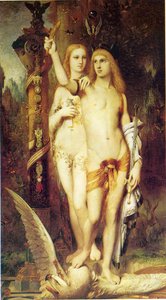
A Vision of Temptation: Gustave Moreau’s Eve
Gustave Moreau (1826 – 1898), a luminary of Symbolist painting, stands apart from his contemporaries as an artist singularly devoted to exploring the depths of myth and spirituality. Unlike Impressionists who sought to capture fleeting moments of light and color, Moreau embarked on a quest for inner truth—a journey meticulously rendered in canvases imbued with rich symbolism and unsettling beauty. His formative years were shaped by a privileged upbringing within Parisian intellectual circles, fostering an unwavering fascination with literature, philosophy, and the arcane arts – influences that would irrevocably define his artistic vision. Trained initially at the École des Beaux-Arts under François-Édouard Picot, Moreau’s academic grounding provided him with foundational skills but swiftly propelled him beyond conventional stylistic boundaries. He rejected the pursuit of realism, choosing instead to delve into realms inaccessible to empirical observation, prioritizing emotional resonance over photographic accuracy.The Serpent's Whisper: Style and Technique
Moreau’s distinctive style is instantly recognizable—characterized by a meticulous attention to detail combined with an ethereal luminescence that borders on dreamlike quality. He employed tempera paint on canvas, a technique favored for its ability to achieve subtle tonal gradations and preserve luminosity over time. This painstaking process demanded hours of labor, layering thin glazes upon glazes to build up complex textures and create an atmosphere of profound stillness. Moreau’s palette leaned heavily toward muted hues—deep reds, blues, and greens—often juxtaposed with flashes of iridescent gold and silver, mirroring the opulent symbolism prevalent in medieval illuminated manuscripts and reflecting his fascination with esoteric traditions. The artist's meticulous brushwork contributes to a palpable sense of unease, hinting at hidden narratives beneath the surface of seemingly serene imagery.Genesis Revisited: Historical Context and Influences
Moreau’s “Eve” emerged from the crucible of Symbolism—a movement that arose in France during the late 1880s as a reaction against both Impressionism and Naturalism. Symbolists rejected materialism and positivism, asserting instead that art should strive to convey spiritual truths beyond the grasp of rational thought. Moreau drew inspiration from sources ranging from Dante’s Inferno to medieval Christian iconography, meticulously reconstructing biblical narratives with an uncompromising commitment to psychological depth. The painting directly confronts themes of temptation, innocence lost, and the confrontation between good and evil—concepts central to Judeo-Christian theology. Furthermore, Moreau's artistic sensibilities were profoundly impacted by his engagement with occultism and esoteric philosophies, particularly Kabbalah and Alchemy, which informed his understanding of symbolism and contributed to his exploration of archetypal imagery.Symbolic Resonance: Imagery and Emotion
The composition itself is deliberately unsettling—a carefully orchestrated tableau designed to provoke contemplation. Eve’s posture—leaning towards the serpent—represents vulnerability and receptiveness to influence, while the serpent's averted gaze symbolizes deceit and concealment. The tree serves as a potent emblem of both life and death, mirroring the duality inherent in human experience. Moreau skillfully employs chiaroscuro—the dramatic interplay of light and shadow—to heighten emotional impact, emphasizing Eve’s isolation and amplifying the serpent’s seductive allure. The luminous gold leaf adorning certain elements underscores the painting's spiritual significance, suggesting divine grace amidst darkness. Ultimately, “Eve” transcends mere depiction; it aspires to evoke a visceral response in the viewer—a feeling of profound melancholy mingled with an awareness of humanity’s eternal struggle against temptation and despair.A Legacy of Dreamlike Beauty
Gustave Moreau's "Eve" remains a cornerstone of Symbolist art, demonstrating his unparalleled ability to transform biblical narratives into hauntingly beautiful visual meditations. Its enduring appeal lies not only in its exquisite craftsmanship but also in its profound exploration of human psychology and spiritual yearning—a testament to Moreau’s unwavering conviction that art possesses the power to illuminate hidden truths and stir the soul. Reproductions of this masterpiece offer collectors and interior designers alike an opportunity to experience firsthand the captivating allure of Symbolist aesthetics, transporting viewers into a realm where myth and emotion converge in unforgettable splendor.アーティストの略歴
Gustave Moreau (1826 - 1898)
Gustave Moreau, a name synonymous with the ethereal beauty and enigmatic depths of Symbolist painting, emerged from 19th-century Paris as a singular artistic voice. Born in 1826 into a bourgeois family—his father an architect and archivist—Moreau’s early life was steeped in intellectual curiosity and aesthetic sensibility. From a young age, he displayed a remarkable gift for drawing, nurtured through traditional academic training at the École des Beaux-Arts under figures like François-Édouard Picot. However, Moreau's artistic path would diverge sharply from the prevailing Realist and Impressionist currents of his time. He wasn’t interested in capturing fleeting moments or objective reality; instead, he sought to unlock the hidden realms of myth, religion, and the human psyche through a deeply personal and symbolic visual language. His journey was one of inward exploration, translating subjective emotions and spiritual yearnings onto canvas with an obsessive attention to detail and a vibrant, often opulent palette.Early Influences and Artistic Training
Moreau’s artistic development wasn't born in a vacuum. While rejecting the dominant trends of his era, he drew inspiration from diverse sources. The dramatic use of color and exotic subject matter found in the works of Eugène Delacroix ignited a passion for narrative painting imbued with emotional intensity—a fascination that would define much of his oeuvre. He particularly admired Michelangelo’s monumental sculptures and Leonardo da Vinci’s masterful anatomical drawings, recognizing their profound impact on artistic technique and psychological insight. Moreau's formal training at the École des Beaux-Arts solidified these influences, equipping him with the skills necessary to execute ambitious projects and forge a distinctive visual style. However, he quickly distinguished himself from his peers by prioritizing imaginative exploration over mere replication of nature—a decision that would propel him toward the forefront of Symbolist painting.The Italian Journey: Rediscovering Antiquity
Between 1857 and 1859, Moreau embarked on a transformative voyage to Italy—a pilgrimage fueled by an ardent desire to reconnect with the artistic heritage of antiquity and the Renaissance. Guided by his mentor Frédéric de Courcy, he immersed himself in the art of Rome and Florence, meticulously copying Old Master paintings and studying architectural ruins. This experience profoundly shaped his artistic sensibilities, fostering a fascination for Byzantine iconography and inspiring him to synthesize classical and medieval traditions into a wholly original visual language. Moreau’s meticulous observation and unwavering dedication to craft—traits that would characterize his entire career—were honed during this formative period, preparing him for the monumental achievements that lay ahead.Salome Dancing Before Herod: A Symbolist Masterpiece
Moreau's artistic breakthrough arrived in 1864 with *Salome Dancing before Herod*, a painting that instantly established his reputation as a visionary artist and cemented his place among the pioneers of Symbolism. Departing radically from the conventions of academic art, Moreau presented a dramatic depiction of the biblical tale—not as a literal recounting of events, but as an exploration of psychological complexities and symbolic resonances. The composition is strikingly asymmetrical, mirroring the fractured psyche of Salome—a figure embodying sensual desire and moral ambiguity—and reflecting the unsettling interplay between light and shadow. Moreau’s masterful use of color—particularly crimson and gold—creates an atmosphere of opulent grandeur and underscores the painting's spiritual dimension. He employed a technique characterized by painstaking layering of paint, achieving remarkable textural detail and capturing the elusive beauty of the human form with unparalleled precision.Legacy and Influence: Shaping Modern Art
Though initially met with skepticism from some critics, Moreau’s work gained recognition in subsequent decades—particularly after the resurgence of interest in Symbolism during the 1960s and 70s. His influence extended far beyond the confines of his own time, inspiring artists across generations—including Henri Matisse and Georges Rouault—to embrace imaginative exploration and challenge conventional artistic norms. Moreau championed the notion that painting should strive to evoke emotion and convey spiritual truths—a conviction that resonated deeply with the existential anxieties of the 20th century. His unwavering commitment to craft—combined with his profound understanding of mythology and psychology—established him as a pivotal figure in the history of art—a testament to the enduring power of Symbolist painting and its capacity to illuminate the complexities of human experience. Gustave Moreau’s legacy continues to inspire artists today, reminding us that true artistic achievement lies not merely in technical virtuosity but in the ability to capture the essence of the soul and transform vision into tangible form.
ゴスタヴ・モロー
1826 - 1898 , フランス
基本情報
- Artistic Movement Or Style: シンボリズム
- Artists Who Influenced This Artist:
- エウゲニオ・デルラクロワール
- ミケランジェロ
- レオナルド・ダ・ヴィンチ
- Date Of Birth: 1826年4月6日
- Date Of Death: 1898年4月18日
- Full Name: Gustave Moreau
- Nationality: フランス人
- Notable Artworks:
- ソロモンの踊り før ヘロドス
- ユピテルのセメレ
- オレアフス
- 出現
- デスメドナ
- Place Of Birth: パリ、フランス
関連記事
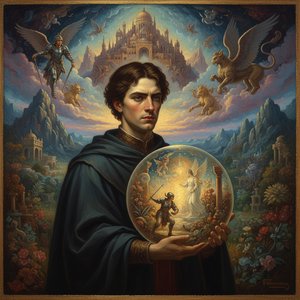
Gustave Moreau: Symbolism's Enigmatic Visionary & Precursors of Modern Fantasy Art
Explore the captivating world of Gustave Moreau, the leading Symbolist painter. Discover his iconic masterpieces, influences, and lasting legacy. Expert analysis for collectors & art enthusiasts.
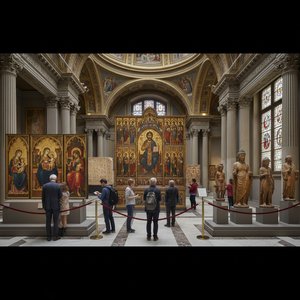
Sacred Narratives Embodied: A Comprehensive Exploration of Religious Iconography in Art History
Explore the rich history of religious iconography in art! Discover symbolism, movements & masterpieces from Byzantine to Renaissance periods. Expert insights for collectors and enthusiasts at OriginalUniqueArt.

The Golden Age Reforged: Dramatic Realism & Religious Zeal in Spanish Baroque Art
Explore the dramatic world of Spanish Baroque art! Discover masters like Zurbarán & the powerful influence of religious zeal on painting techniques – a guide for collectors and enthusiasts.
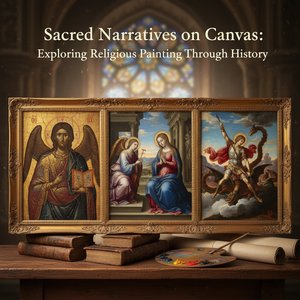
Sacred Narratives on Canvas: Exploring Religious Painting Through History
Explore the rich history of religious painting with OriginalUniqueArt.com! Discover iconic artworks, symbolism & techniques from antiquity to the Renaissance. Enhance your art appreciation today.

Sacred Visions: Exploring Faith & Devotion in Religious Art Across Cultures
Explore the rich history of religious art across cultures! Discover symbolism, Renaissance masterpieces & the power of color in devotional works. Expert insights for collectors and enthusiasts.