プレビュー
プレビュー
 プリントを購入
 シェアする
シェアする シェアする
シェアする
 詳細を見る
詳細を見る

 ダウンロード
 似ている作品
 X線調査
X線調査 スライドショー
the quarry

 詳細を見る
詳細を見る




P118B $10

P118H $10

P118W $10

P438Z $10

P508JH $12

P508YH $12

P805H $10

P805Z $10

P919BZ $10

P919G $10

P919XJ $10

P959ZH $10

P968JZ $12

W106C $8

W218G $10

W218JH $8

W218Y $10

W307PJ $10

W316G $10

W316PJ $8

W316Y $10

W398PJ $8

W4111J $10

W500HY $15

W500JH $15

W692G $12

W849H $8

W940BG $15

W953PJ $8




作品のオリジナル比率に合わせた、当店の規定サイズからお選びください。

特定のフレームやスペースに合わせて、ご希望のサイズをご入力いただけます。選択されたサイズが元の画像の比率と異なる場合、アートワークをトリミングするか、手描きで要素を追加して絵画を拡張いたします。デジタルモックアップ を制作し、制作開始前にご確認(承認)をいただきます。
画面上のプレビューは、実際のトリミングや拡張を正確に反映しているものではありません。最終的な構図は、モックアップによってのみ正確にご確認いただけます。
カスタムサイズもご利用いただけますが、元の比率を維持するためには、あらかじめ用意されたリストからサイズを選択することをお勧めいたします。
ご注文後、OriginalUniqueArt.com チームより詳細な指示をお送りするとともに、仕上がりイメージ(モックアップ)をご提供いたします。


 ガラスオプションは、110cm未満のサイズでのみご利用いただけます。

the quarry
複製技法
複製画のサイズ
-


合計金額
$ 300
作品解説
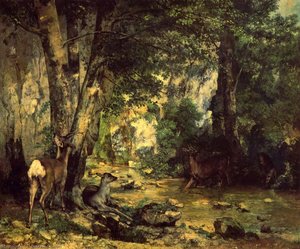
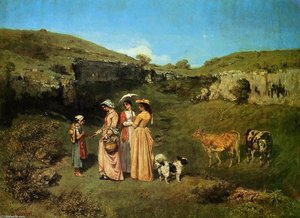
The Quarry: A Testament to Courbet’s Radical Realism
Gustave Courbet's “The Quarry,” completed in 1867, stands as a cornerstone of French Realist art—a defiant rejection of Romantic idealism and an uncompromising portrayal of the natural world devoid of embellishment. More than just a depiction of a hunting scene, it’s a carefully constructed statement about artistic ambition, social observation, and Courbet's unwavering belief in capturing reality with unflinching honesty.
- Subject Matter: The painting depicts a solitary hunter—Courbet himself—engaged in the pursuit of deer amidst the rugged Jura Mountains. Alongside him are two dogs, meticulously rendered to convey movement and texture, adding dynamism to the tranquil landscape.
- Style & Technique: Courbet employed a monumental scale – approximately 183 x 245 cm – reflecting his ambition to elevate Realism beyond mere imitation. His technique is characterized by thick impasto brushstrokes, layering pigment onto the canvas with considerable physicality. This deliberate roughness contrasts sharply with the smooth surfaces favored by academic painters of the era.
- Historical Context: Created during a period of significant artistic upheaval, “The Quarry” emerged from the wake of Jules Michelet’s controversial “Histoire Naturelle et Philosophique des Paysages Français,” which championed scientific observation and challenged Romantic notions of sublime beauty. Courbet actively engaged with these debates, asserting that art should reflect the everyday experiences of ordinary people.
Symbolism Beyond Landscape
While seemingly simple on the surface, “The Quarry” is laden with symbolic significance. The hunter’s posture—rigid and focused—represents a deliberate rejection of Romantic gestures of emotion and contemplation. The dogs symbolize loyalty and instinct, mirroring Courbet's own dedication to his craft. Furthermore, the deer themselves are not merely animals; they embody nobility and grace – qualities that Courbet wished to portray with uncompromising accuracy.
- Color Palette: Courbet utilized a muted palette dominated by earthy browns and greens—colors derived directly from the Jura Mountains—to emphasize the materiality of the scene. This deliberate choice underscores his commitment to depicting nature as it truly is, rather than idealizing it for aesthetic pleasure.
- Composition: The horizontal orientation of the canvas reinforces the stability of the landscape while simultaneously conveying a sense of quiet contemplation. Courbet’s masterful use of perspective creates depth and realism, immersing the viewer in the atmosphere of the mountainside.
Emotional Resonance & Legacy
"The Quarry" transcends mere visual representation; it communicates a profound emotional response to its surroundings. Courbet sought not only to depict what he saw but also to convey his own feelings about nature—a reverence tempered by an awareness of its indifference to human concerns. This painting solidified Courbet’s reputation as a revolutionary artist and profoundly influenced subsequent generations of painters who championed Realism.
- Influence on Impressionists: Although Courbet predates the Impressionist movement, his uncompromising approach to pigment and texture paved the way for artists like Monet and Renoir, who prioritized capturing fleeting impressions of light and color.
- Continuing Relevance: Today, “The Quarry” continues to resonate with audiences captivated by its masterful technique and its enduring message about confronting reality without sentimentality—a timeless testament to Courbet’s artistic vision.
アーティストの略歴
Gustave Courbet: 現実の筆致 – 人生の軌跡と芸術的遺産
フランス東部の小さな村、オルナンで1819年に生まれたギュスターヴ・クールベは、その時代のアート界の確立された規範に対する大胆な反逆者として現れました。彼の物語は単なる絵画やキャンバスの話ではなく、社会的なコメント、政治的な信念、そして彼が見た世界を飾り立てることなく、生々しく、深く現実的に表現するという揺るぎない決意が織り込まれた物語です。比較的裕福なブルジョワ階級の家庭で育ち、母親からの芸術的才能への奨励を受け、それが彼の芸術革命の燃料となりました。1839年にパリのアカデミー・ド・ボザールでの正式な訓練はすぐに学術的な慣習やロマン主義的な理想主義に反発し、彼自身の道を切り開きました。それは想像力よりも観察を優先し、伝統よりも真実を重視する道でした。リアリズムの誕生:芸術的慣習への挑戦
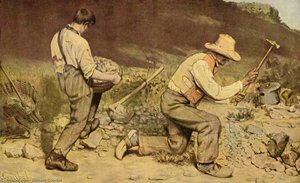
クールベの芸術的発展は、支配的な美学基準に対する意図的な拒絶によって特徴づけられました。彼は神話物語や英雄的寓話に興味がなく、彼の視線は労働に従事し、農村生活を送る普通の人の日常生活に向けられていました。この世界を飾り立てることなく表現するというリアリズムへのコミットメントは、より洗練された理想化された表現に慣れ親しんだ批評家から当初は軽蔑と嘲笑を受けました。初期の作品は風景画や肖像画を探求しましたが、すぐに労働者階級の生活を描いた場面へと移行し、伝統的に歴史的または宗教的な絵画のために予約されていた巨大なスケールで描かれました。この意図的な選択は単なるスタイルではなく、しばしば見過ごされるこれらの主題の本質的な尊厳と重要性を示す声明でした。「石炭採掘者」は1849年に完成しましたが、第二次世界大戦中に悲劇的に破壊され、このアプローチを例証しました。– 疲労と苦難で顔が隠された二人の労働者の鮮明な描写です。「オルナンの埋葬」とともに、この絵画は「ふさわしい」芸術の定義そのものを覆しました。主要作品と芸術的哲学
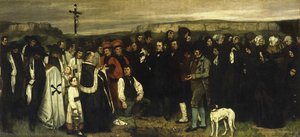
1850年から51年にサロンに展示された巨大なキャンバス「オルナンの埋葬」は、そのスケールの大きさで、通常は壮大な歴史画のために予約されていたものと、揺るぎないリアリズムの組み合わせにより、観客を衝撃させました。クールベは悼み人を高貴または悲しみに満ちた人物として描くのではなく、彼らを悲しみ、退屈、そして諦めの混合が刻まれた普通の人間として提示しました。この誠実さは革命的でした。彼の芸術的哲学は主題を超えて技法にも及びます。彼は素材そのものを強調する厚い絵の具をキャンバスに塗布する直接的なインパストスタイルを好み、「画家のスタジオ」 (1855) は、彼の芸術的信念と現代社会問題への関与を反映した寓意的な作品であり、彼を挑発的で独立したアーティストとしての地位をさらに確固たるものにしました。 1863年のレフュゼのサロンへの参加は、反逆者としての彼の地位と芸術的自由の擁護者を強化しました。フォンテーヌブローの森の眺め (1855) のような風景画でさえ、ロマンチックな表現を避けて、森の自然の美しさを捉え、リアリズムに浸っていました。遺産と歴史的意義
ギュスターヴ・クールベの影響は、その後の芸術運動において否定できません。彼は17世紀のカラヴァッジョのような初期の巨匠から影響を受け、彼らの劇的なリアリズムと光と影の使用を参考にしましたが、単なる模倣を超えた影響力を行使しました。彼は、伝統的な表現の制約から解放し、世界を見る新しい方法を探求することを奨励することで印象派や後期印象派に深く影響を与えました。彼の社会的なコメントは、彼らの仕事を政治的活動のためのプラットフォームとして使用した後の社会的に関与したアーティストたちの道を開きました。クールベは画家であるだけでなく、芸術的自由と政治的変化の熱心な擁護者であり、1871年のパリ・コミューンのような彼の時代の大混乱した出来事に積極的に参加し、それがスイスへの亡命につながりました。彼は1877年に亡くなり、今日でも聴衆にインスピレーションを与え、挑発する作品を残しました。- リアリズムの先駆者
- 学術的慣習への挑戦
- 印象派と後期印象派に影響
- 芸術的自由の擁護者

ギュスターヴ・クールベ
1819 - 1877 , フランス
基本情報
- フルネーム: ギュスターヴ・クールベ
- 主な作品:
- 石割り
- オルナンの埋葬
- 画室
- 出生地: オルナンの町、フランス
- 国籍: フランス人
- 影響を与えたアーティストまたはムーブメント:
- 印象派
- 後期印象派
- 影響を受けたアーティスト:
- ドラクロワ
- ジェリコー
- カラヴァッジョ
- 死亡年月日: 1877年12月31日
- 生年月日: 1819年6月10日
- 芸術運動またはスタイル: 写実主義
関連記事

グスタフ・クリムト傑作25選:華麗なる装飾性と象徴が織りなす世界 | OriginalUniqueArt
グスタフ・クリムトの傑作25選。華麗なる装飾性と象徴が織りなす世界を紐解きます。キス、ポートレートなど、美術史に残る名画の物語と技法をOriginalUniqueArtで。高品質複製画やインテリアアートも豊富に。今すぐコレクションをご覧ください。
Romantic Realism's Finest: 10 Masterpieces for Your Home | OriginalUniqueArt
Explore 10 defining masterpieces of Romantic Realism! Discover Courbet, Millet & Daumier's powerful paintings—capturing emotion and social realities. Find museum-quality reproductions for your home at OriginalUniqueArt.com.
Beyond the Horizon: 10 Landscape Masterpieces for Your Home Decor
Journey through 10 breathtaking landscape paintings by Monet, Van Gogh & more! Explore iconic artworks, artistic techniques & find inspiration for your home decor. Museum-quality reproductions at OriginalUniqueArt.com. Discover all masterpieces on OriginalUniqueArt.com
Gustave Courbet: Realism's Revolutionary Vision & the Social Canvas of 19th-Century France
Explore the revolutionary art of Gustave Courbet, pioneer of Realism. Discover his iconic paintings, social commentary, and lasting impact on 19th-century French art history. Expert analysis & insights.
写実主義を定義する至宝:時代を映した10大名作の世界
時代を写し出す写実主義の名作10選。クールベ、ミレーなど巨匠たちの世界と技法を紐解き、至高のアートが空間にもたらす感動を体験してください。OriginalUniqueArt.comで、ミュージアム品質の複製と洗練されたインテリアを見つけましょう。