

 プレビュー
プレビュー
 シェアする
シェアする シェアする
シェアする
 詳細を見る
詳細を見る

 ダウンロード
 似ている作品
 X線調査
X線調査 スライドショー
 統計情報
統計情報Lamentation


 詳細を見る
詳細を見る
手描き油彩複製画
当社のアーティストが、お客様のご希望のサイズと額縁に合わせて、キャンバスに手描きで制作する油彩画です。 ( プリント版に切り替え デジタル画像販売へ切り替え)




































作品のオリジナル比率に合わせた、当店の規定サイズからお選びください。

特定のフレームやスペースに合わせて、ご希望のサイズをご入力いただけます。選択されたサイズが元の画像の比率と異なる場合、アートワークをトリミングするか、手描きで要素を追加して絵画を拡張いたします。デジタルモックアップ を制作し、制作開始前にご確認(承認)をいただきます。
画面上のプレビューは、実際のトリミングや拡張を正確に反映しているものではありません。最終的な構図は、モックアップによってのみ正確にご確認いただけます。
カスタムサイズもご利用いただけますが、元の比率を維持するためには、あらかじめ用意されたリストからサイズを選択することをお勧めいたします。
ご注文後、OriginalUniqueArt.com チームより詳細な指示をお送りするとともに、仕上がりイメージ(モックアップ)をご提供いたします。


 ガラスオプションは、110cm未満のサイズでのみご利用いただけます。

Lamentation
複製技法
複製画のサイズ
-


合計金額
$ 300
アーティストの略歴
The Sculptor of Emotion: The Life and Legacy of Guido Mazzoni
Guido Mazzoni, known to his contemporaries by the affectionate moniker Il Modanino, stands as one of the most evocative figures of the Italian Renaissance. Born around 1450 in Modena, Italy, Mazzoni was an artist who bridged the gap between the theatricality of courtly spectacle and the profound, somber depths of religious devotion. His career was not merely defined by the static permanence of stone, but by a dynamic movement that flowed from the workshops of Italy to the royal courts of France. Early in his development, Mazzoni found himself within the influential patronage circle of the Este family, where he studied under the master Francesco Cossa. This early exposure to the vibrant, narrative-driven style of the Ferrarese school provided him with a foundation in visual storytelling that would later define his sculptural masterpieces.
Before he became a master of the monumental, Mazzoni’s artistry was rooted in the ephemeral and the spectacular. His initial renown was built upon the creation of theatrical masks and elaborate props designed for the grand wedding celebrations of Federico II Gonzaga in Ferrara. This period of his life is crucial to understanding his later sculptural achievements; the skill required to craft lifelike, expressive faces for the stage translated seamlessly into his work with clay. He possessed a unique ability to capture fleeting moments of human expression, a talent that allowed him to infuse even the most rigid materials with a sense of breathing, pulsing life. This mastery of ephemera—the art of the temporary—gave his later religious works an unparalleled psychological immediacy.
The Mastery of Terracotta and the Lamentation Series
Mazzoni’s most enduring contribution to the history of Western art lies in his breathtaking series of polychromed terracotta Lamentations. Unlike the more common marble sculptures of his era, which often sought a cool, idealized perfection, Mazzoni embraced the warmth and malleability of terracotta. This medium allowed him to achieve an ultra-realistic texture that could mimic the folds of heavy fabric, the tear-streaked skin of mourners, and the visceral reality of grief. His most celebrated works, such as those found in the Church of Gesù in Ferrara and the Sant'Anna dei Lombardi Basilica in Naples, represent a pinnacle of Renaissance realism.
These sculptural groups are far more than mere religious icons; they are immersive, theatrical experiences. In these Compianto scenes, Mazzoni meticulously modeled figures gathered around the corpse of Christ, imbuing each face with a distinct, individualized sorrow. A remarkable feature of these works is his integration of portraiture; he often included the likenesses of his patrons, such as Federico II Gonzaga and his family members, directly into the mourning crowd. This technique blurred the line between the sacred and the secular, inviting the viewer to participate in the divine tragedy. The use of polychromy—the application of color to the clay—further enhanced this realism, creating a lifelike presence that seemed to command the very space around it.
A Transnational Legacy
The trajectory of Mazzoni’s life reflects the broader movement of Renaissance talent across European borders. His journey took him through the cultural hubs of Bologna and Naples, eventually leading him to the French court. This international presence allowed his style to influence a wider audience, blending Italian emotional intensity with the burgeoning interest in naturalism found in Northern Europe. His ability to adapt his skills—from the delicate creation of courtly props to the monumental execution of religious drama—ensured his relevance across different artistic landscapes.
Ultimately, Guido Mazzoni’s significance lies in his profound understanding of human empathy. While many of his contemporaries focused on the mathematical proportions and structural harmony of the High Renaissance, Mazzoni prioritized the psychological depth of his subjects. He captured the raw, unvarnished essence of mourning, making the divine accessible through the lens of human suffering. His work remains a testament to the power of art to act as a mirror for the soul, leaving behind a legacy of terracotta figures that continue to move and haunt the hearts of all who behold them.
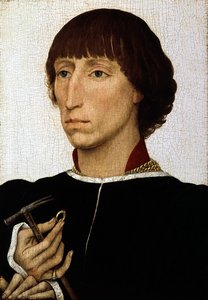
Guido Mazzoni
1450 - 1518 , Italy
基本情報
- Artistic Movement Or Style: Renaissance Sculpture
- Artists Or Movements Influenced By This Artist: ["Niccolò dell'Arca"]
- Artists Who Influenced This Artist:
- Francesco Cossa
- Luca Della Robbia
- Date Of Birth: ca. 1450
- Date Of Death: 1518
- Full Name: Guido Mazzoni
- Nationality: Italian
- Notable Artworks:
- Lamentation
- Adoration Of The Child
- Place Of Birth: Modena, Italy