プリント版に切り替え
 詳細を表示
詳細を表示







































 いずれかの辺が105 cm(約41インチ)を超えるアートワークまたは複製画の場合、フレームは分解されたキットの状態でお届けいたします。この方法は、輸送中の破損を防ぎ、安全に配送するために採用しております。


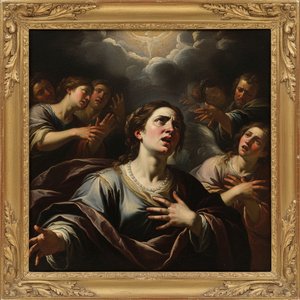
The Enigmatic Scene: Guido Cagnacci’s Susanna and the Elders
Guido Cagnacci's “Susanna and the Elders” is not merely a depiction of a biblical narrative; it’s an immersion into the sensual drama and psychological tension that defined the height of the Bolognese Baroque. Painted around 1627-1630, this arresting work resides within the hallowed halls of The Hermitage Museum in St. Petersburg, Russia, yet its power transcends geographical boundaries, captivating viewers with a masterful blend of classical restraint and intensely felt emotion. Cagnacci, born in Sant'Arcangelo di Romagna, skillfully inherited and expanded upon the traditions of his predecessors – Reni, Carracci – while forging a distinctly personal style characterized by rich color palettes, dramatic chiaroscuro, and an uncanny ability to capture the fleeting expressions of human desire.
A Story of Deception and Virtue
The narrative unfolds with a quiet intensity, centered around Susanna, a young woman renowned for her beauty and virtue. She is depicted in a moment of vulnerability – seated on a simple bench within a private garden, bathed in the diffused light of an unseen window. Her gaze, direct and unwavering, draws the viewer into the scene, creating an immediate connection between subject and observer. Behind her, two elderly men, figures of authority and presumed wisdom, lurk in shadow, their faces etched with lustful intent. The Elders, driven by a desperate desire for Susanna, have falsely accused her of adultery, threatening to expose her shame to the community. This isn’t a grand, operatic drama; it's a slow-burning revelation of deceit and the struggle between innocence and corruption.
Cagnacci masterfully utilizes composition to heighten this tension. The diagonal lines created by Susanna’s posture and the placement of the Elders draw our eye across the canvas, emphasizing their proximity and the potential danger she faces. The mirror reflecting her image adds a layer of self-awareness, suggesting that even in her vulnerability, Susanna retains a sense of dignity and control.
Technique and Artistic Flourishes
Cagnacci’s technical prowess is immediately apparent in the painting's rich textures and luminous colors. He employs a masterful use of chiaroscuro – the dramatic contrast between light and shadow – to sculpt Susanna’s form and create a sense of depth within the intimate setting. The warm hues of her dress and skin stand in stark opposition to the cool, shadowed figures of the Elders, further emphasizing their moral corruption. The brushwork is remarkably smooth and refined, indicative of Cagnacci's meticulous attention to detail. Note particularly the delicate rendering of the fabric folds, the subtle nuances of expression on Susanna’s face, and the atmospheric quality of the background – a dark, suggestive space that hints at both danger and mystery.
The painting is executed in oil on canvas, measuring 144 x 173 cm. The scale allows for a remarkable level of detail and intimacy, drawing the viewer into the heart of the drama. The artist’s choice to depict Susanna partially clothed – seated on a bench with only her dress covering her body – is deliberate, inviting contemplation about themes of modesty, virtue, and the vulnerability of women in a patriarchal society.
Symbolism and Enduring Resonance
Beyond its biblical subject matter, “Susanna and the Elders” resonates with broader themes of justice, deception, and the triumph of truth. The painting serves as a potent allegory for the dangers of false accusations and the importance of upholding moral integrity. The mirror reflects not only Susanna’s image but also the viewer's own reflection, prompting us to consider our own roles in witnessing and challenging injustice. Cagnacci’s work continues to hold relevance today, reminding us of the timeless struggle between virtue and vice, and the enduring power of art to illuminate the complexities of human experience.
Q&A
グイド・カニャッチ作「Susanna and the Elders」をスライドショーで閲覧するには、どうすればよいですか?
「Susanna and the Elders」のスライドショーは、作品のスライドショーページでご覧いただけます。
「Susanna and the Elders」には、グイド・カニャッチの他の作品群とどのような共通点が見られますか?
「Susanna and the Elders」は、グイド・カニャッチの他の作品と同様に、Baroque様式と、一貫して描かれてきたテーマであるbolognese school, sensual subjects, religious narrative, moral lesson, courtly painting, aristocratic themes, chiaroscuro, dramatic lightingを共有しています。
グイド・カニャッチ作「Susanna and the Elders」の来場者の属性(統計データ)はどこで確認できますか?
グイド・カニャッチ作「Susanna and the Elders」に関する統計情報は、作品の閲覧統計ページでご確認いただけます。こちらでは、作品の月間訪問数、アーティストの作品への訪問数、および最近の訪問者の国別・言語別の内訳をご覧いただけます。
この絵画の詳細を見る
 設置イメージを表示
 シェアする
シェアする シェアする
シェアする
 詳細を見る
詳細を見る ガイドを表示

 ダウンロード
 似ている作品
 X線調査
X線調査 スライドショーを表示
 Q&A
Q&A 統計情報
統計情報