
 プレビュー
プレビュー
 シェアする
シェアする シェアする
シェアする
 詳細を見る
詳細を見る

 ダウンロード
 似ている作品
 X線調査
X線調査 スライドショー
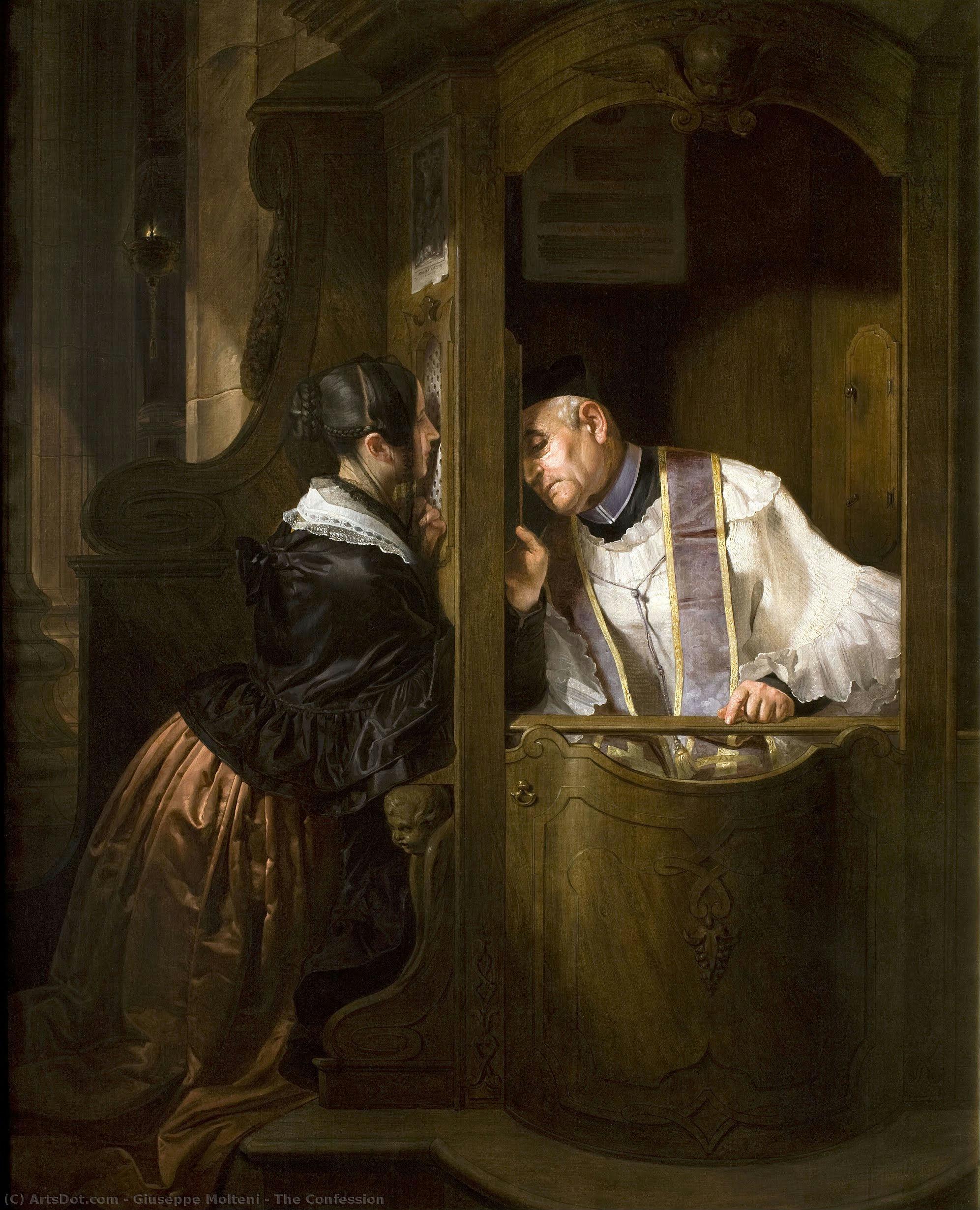
The Confession

 詳細を見る
詳細を見る
ジークレー/アートプリント
迅速な制作と多彩な仕上げオプションを備えた、ミュージアムクオリティのジークレーまたはキャンバスプリント。 ( 手描き画への切り替え 画像に切り替え)




































作品のオリジナル比率に合わせた、当店の規定サイズからお選びください。

特定のフレームやスペースに合わせて、ご自身でサイズを指定することも可能です。選択されたサイズが元の画像の比率と一致しない場合、作品をトリミングするか、鏡面反射または単色での塗りつぶしによって画像を拡張いたします。制作を開始する前に、ご確認用のデジタルモックアップをお送りいたします。
画面上のプレビューには、実際のトリミングや拡張は反映されませんのでご注意ください。最終的な構図を正確に確認できるのは、モックアップのみとなります。
カスタムサイズも承っておりますが、元の比率を維持するためには、あらかじめ用意されたリストからサイズを選択することをお勧めいたします。


 ガラスオプションは、110cm未満のサイズでのみご利用いただけます。

The Confession
ジークレー/アートプリント
複製画のサイズ
-


合計金額
$ 81
作品詳細説明
アーティストの略歴
Giuseppe Molteni (1800-1867): Bridging Biedermeier and Milanese Splendor
Giuseppe Molteni (Affori, Milan, 1800 – Milan, 1867) was an Italian painter whose career spanned from the mid-nineteenth century, establishing him as a prominent figure in Milanese art history. Forced to abandon his formal studies at the Brera Academy due to financial constraints—a common predicament for aspiring artists of the era—Molteni redirected his talents towards the meticulous restoration of ancient paintings under the tutelage of Giuseppe Guizzardi in Bologna. This formative experience instilled within him a profound appreciation for craftsmanship and detail, shaping his artistic sensibilities. Returning to Milan, he swiftly ascended the ranks of Milanese art circles, becoming one of the most sought-after restorers of his time and earning commissions from prestigious institutions like the Louvre and the British Museum. Simultaneously, Molteni cultivated an independent artistic practice, producing captivating paintings that showcased both technical mastery and stylistic innovation.Early Years & Restoration Training
Molteni’s initial foray into art wasn't through easel painting but rather through painstaking conservation work. Studying under Guizzardi honed his skills in pigment analysis, varnish removal, and surface consolidation—techniques crucial for preserving cultural heritage. This dedication to restoration not only provided him with a livelihood but also instilled within him an understanding of artistic materials and processes that would later inform his own compositions. The influence of Guizzardi’s meticulous approach is evident in Molteni's subsequent paintings, where he achieved remarkable realism through careful observation and skillful brushwork.Portraiture & Milanese Style
Molteni quickly gained renown for his portraiture style, characterized by an unprecedented level of realism and opulent settings. Unlike the prevailing Biedermeier aesthetic—which favored understated elegance—Molteni embraced a bold approach, depicting subjects in richly embroidered costumes and elaborate interiors that captured the grandeur of Milanese aristocratic life. His success directly challenged the artistic dominance of Francesco Hayez, establishing him as a leading voice in Milanese painting and securing his place among Italy’s most celebrated portraitists. The meticulous detail with which he rendered fabrics, jewelry, and architectural elements demonstrated an exceptional command of technique and contributed to the distinctive visual language of his era.Genre Painting & Viennese Influence
Moving beyond portraiture in the mid-1830s, Molteni embarked on a prolific exploration of genre painting—scenes depicting everyday life—a trend that resonated deeply with the public and critics alike. His canvases captured moments of domestic tranquility, social gatherings, and urban landscapes with remarkable sensitivity and accuracy. Notably, his time spent at the Viennese court in 1837 exposed him to the stylistic precepts of Johann Friedrich Overbeck and fostered a friendship with fellow painter Friedrich von Amerling—influences that subtly enriched Molteni’s artistic vision.Later Career & Legacy
Molteni's involvement with the Brera exhibitions waned in the 1850s, culminating in his appointment as curator of the academy’s gallery in 1854 and marking a cessation of his painting activity. However, Molteni’s contribution to Italian art history remains indelible. His pioneering approach to portraiture—combining realism with theatrical grandeur—established him as a pivotal figure in bridging the gap between Biedermeier simplicity and Romantic exuberance. Furthermore, his meticulous genre paintings offer invaluable insights into Victorian Milanese society and continue to inspire admiration for their artistic merit. Giuseppe Molteni’s legacy endures as a testament to the transformative power of observation, dedication to craftmanship, and an unwavering commitment to capturing the beauty and complexity of human experience.
giuseppe molteni
1800 - 1867
基本情報
- Artistic Movement Or Style: Biedermeier & Genre Painting
- Artists Or Movements Influenced By This Artist: ['Friedrich von Amerling']
- Artists Who Influenced This Artist:
- Giuseppe Guizzardi
- Johann Friedrich Overbeck
- Francesco Hayez
- Date Of Death: 1867
- Full Name: Giuseppe Molteni
- Nationality: Italian
- Notable Artworks:
- The Family of Barbiano di Belgioioso d'Este
- Lorenzo Vatalaro Antiques
- The Confession
- Place Of Birth: Affori, Milan

