プリント版に切り替え
 詳細を表示
詳細を表示







































 いずれかの辺が105 cm(約41インチ)を超えるアートワークまたは複製画の場合、フレームは分解されたキットの状態でお届けいたします。この方法は、輸送中の破損を防ぎ、安全に配送するために採用しております。


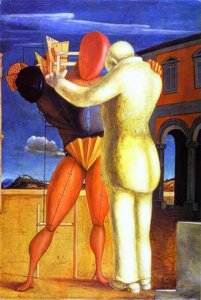
A Dreamscape of Surrealism: Exploring Giorgio de Chirico’s “Ariadne”
Giorgio de Chirico's "Ariadne," completed in 1913, stands as a cornerstone of Surrealist art and a testament to the artist’s profound engagement with philosophical ideas. More than just a depiction of myth—the tale of Ariadne abandoning Theseus on Naxos—it embodies a deeper exploration into the human psyche, mirroring de Chirico's own anxieties about isolation and displacement during his relocation to Paris following World War I. The painting resides within the Metropolitan Museum of Art’s collection, where its haunting beauty continues to captivate audiences worldwide.- Subject Matter & Narrative Context: De Chirico draws inspiration from Greek mythology, specifically the story of Ariadne—a princess abandoned by her lover Theseus—to convey a narrative of abandonment and vulnerability. However, unlike traditional depictions emphasizing heroic action, “Ariadne” presents a serene, almost melancholic scene of slumbering beauty within an unsettling urban space.
- Style & Technique: The artwork exemplifies Surrealist style, characterized by illogical perspective, dreamlike atmosphere, and juxtaposition of incongruous elements. De Chirico meticulously employs graphite alongside oil paint on canvas, layering textures to create a palpable sense of stillness punctuated by subtle distortions—a technique that deliberately disrupts conventional realism.
Symbolism: Echoes of Schopenhauer & Nietzsche’s Philosophy
De Chirico's artistic vision was heavily influenced by the existential philosophies of Arthur Schopenhauer and Friedrich Nietzsche. The desolate square—a recurring motif in his oeuvre—represents a void, mirroring Schopenhauer’s concept of “Will”—the relentless striving that underlies all existence—and highlighting the inherent loneliness of human consciousness. Similarly, Nietzsche's ideas about overcoming nihilism resonate within the painting’s stillness; Ariadne’s repose suggests an acceptance of fate and a confrontation with the abyss.- Spatial Illusion & Perspective: De Chirico masterfully manipulates spatial illusion, employing distorted perspective to heighten the unsettling atmosphere. The elongated shadows cast by unseen buildings contribute to this sense of disorientation, mirroring Nietzsche’s critique of Western metaphysics and its inability to grasp fundamental truths.
Emotional Impact & Artistic Legacy
“Ariadne” transcends mere visual representation; it evokes a profound emotional response—a palpable feeling of melancholy and contemplation. The painting's muted palette—dominated by earthy tones—underscores its contemplative mood, inviting viewers to confront existential questions about life, death, and the human condition. De Chirico’s influence extends far beyond Surrealism, shaping subsequent generations of artists who sought to explore the subconscious mind and challenge conventional artistic conventions. It remains a powerful emblem of the Surrealist movement's ambition to liberate art from rational constraints and unlock the mysteries of inner experience.- Concluding Remarks: Ultimately, “Ariadne” serves as an enduring reminder that art possesses the capacity to illuminate not only visual beauty but also the complexities of human thought and emotion—a legacy that continues to inspire artists and collectors alike.
Q&A
ジョルジオ・デ・キリコ作「untitled (8848)」の構図を主導している色は何ですか?
ジョルジオ・デ・キリコ作「untitled (8848)」の主色(メインカラー)はEspresso (#3c2825)です。
「untitled (8848)」は、ジョルジオ・デ・キリコのこれまでの作風を象徴するものと言えるでしょうか?
「untitled (8848)」はroman arcades, shadows, masks, surrealism, mythology, isolation, perspectiveを描いていますが、ジョルジオ・デ・キリコのこれまでの主要なテーマはschopenhauer philosophy, surrealist style, mythological symbolism, artistic alienation, legacy explorationです。この二つを比較することで、本作が作家の恒常的な主題とどのように結びついているかが浮き彫りになります。
ジョルジオ・デ・キリコ作「untitled (8848)」 の色彩に調和する空間はどこでしょうか?
Earthyの色彩を纏ったジョルジオ・デ・キリコ作「untitled (8848)」は、Living Roomに飾るのがおすすめです。その色使いこそが、この提案の理由のひとつです。
More about this painting
 設置イメージを表示
 シェアする
シェアする シェアする
シェアする
 詳細を見る
詳細を見る ガイドを表示

 ダウンロード
 似ている作品
 X線調査
X線調査 スライドショーを表示
 Q&A
Q&A 統計情報
統計情報