
 プレビュー
プレビュー
 シェアする
シェアする シェアする
シェアする
 詳細を見る
詳細を見る

 ダウンロード
 似ている作品
 X線調査
X線調査 スライドショー
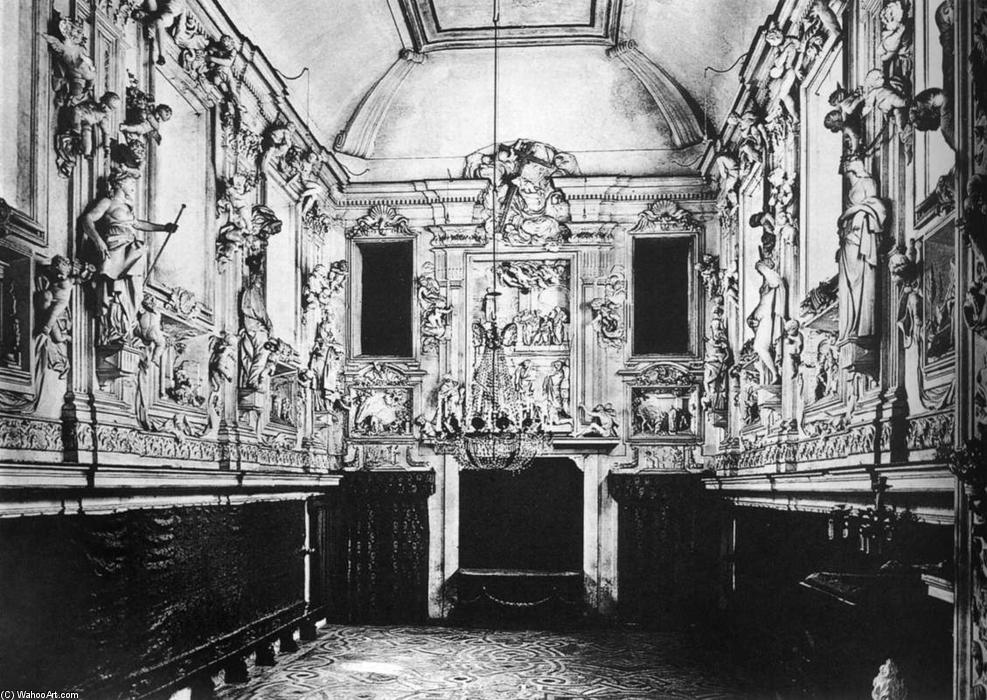
Interior decoration


 詳細を見る
詳細を見る
ジークレー/アートプリント
迅速な制作と多彩な仕上げオプションを備えた、ミュージアムクオリティのジークレーまたはキャンバスプリント。 ( 手描き画への切り替え 画像に切り替え)




































作品のオリジナル比率に合わせた、当店の規定サイズからお選びください。

特定のフレームやスペースに合わせて、ご自身でサイズを指定することも可能です。選択されたサイズが元の画像の比率と一致しない場合、作品をトリミングするか、鏡面反射または単色での塗りつぶしによって画像を拡張いたします。制作を開始する前に、ご確認用のデジタルモックアップをお送りいたします。
画面上のプレビューには、実際のトリミングや拡張は反映されませんのでご注意ください。最終的な構図を正確に確認できるのは、モックアップのみとなります。
カスタムサイズも承っておりますが、元の比率を維持するためには、あらかじめ用意されたリストからサイズを選択することをお勧めいたします。


 ガラスオプションは、110cm未満のサイズでのみご利用いただけます。

Interior decoration
ジークレー/アートプリント
複製画のサイズ
-


合計金額
$ 81
アーティストの略歴
The Meteor in the Sicilian Sky
In the golden, sun-drenched landscape of seventeenth-century Sicily, a singular brilliance emerged that would forever alter the texture of Baroque ornamentation. Rudolf Wittkower famously christened Giacomo Serpotta as a “meteor in the Sicilian sky,” a metaphor that perfectly captures the sudden, dazzling impact of an artist who rose from provincial roots to achieve a level of mastery rarely seen in the history of sculpture. Born in Palermo in 1656, Serpotta did not seek the grand stages of Rome or Florence; instead, he remained anchored to his native island, transforming its churches and oratories into ethereal realms of white, luminous splendor. While the great masters of his era were preoccupied with the heavy permanence of marble, Serpotta found his voice in a far more humble medium: stucco.
Serpotta’s life was deeply intertwined with the very material he mastered. Born into a family of artisans, he learned the rhythm of the workshop from a young age, absorbing the secrets of gypsum and lime. This intimate connection to his craft allowed him to perform what many described as alchemy—turning wet, malleable plaster into scenes of such lifelike vitality that they seemed to breathe within the stone. His early career was marked by collaborations, most notably with Procopio de Ferrari in the decoration of the Chiesa della Madonna dell'Itria in Monreale. However, it was his ability to move beyond mere architectural ornament to create entire, self-contained dramatic worlds that truly set him apart.
A Mastery of Motion and Light
The genius of Serpotta lay in his profound understanding of spatial illusion and the emotive power of light. Unlike the rigid structures of classical sculpture, Serpotta’s work possessed a florid elegance and a sense of weightless movement. He utilized the unique properties of stucco to create deep undercuts and delicate, fluttering drapery that caught the shifting Sicilian sunlight, creating a dance of shadows across the walls of Palermo's most sacred spaces. His compositions were often teeming with life—a profusion of putti, graceful figures, and intricate floral motifs that seemed to erupt from the very architecture itself.
His technical achievements reached breathtaking heights in projects such as the Oratory of San Lorenzo and the Oratory of Santa Cita. In the latter, he achieved a feat of narrative complexity by depicting a massive naval battle, inspired by the Battle of Lepanto, all rendered in the delicate medium of plaster. To witness his work is to experience a sense of organized chaos; the walls appear to quiver with the movement of a crowd, yet every figure is placed with an intuitive sense of balance and grace. This ability to blend the monumental with the minute—to make a heavy wall feel as light as lace—is the hallmark of his unparalleled skill.
Legacy of the Stucco Master
Serpotta’s influence was not merely individual but familial, as he spearheaded a prolific artistic enterprise alongside his brother Giuseppe and his son Procopio. Together, they established a studio that became the heartbeat of Sicilian Baroque decoration, leaving an indelible mark on the religious landscape of Palermo. Though some historians suggest he may have lacked direct exposure to the mainstream currents of the Roman Baroque, his work possesses a distinctive, localized energy that feels entirely original. He did not imitate the grandeur of Bernini; he reimagined it through a Sicilian lens, replacing marble's cold permanence with the radiant, ephemeral glow of white stucco.
The historical significance of Giacomo Serpotta extends far beyond the borders of Sicily. He represents a rare moment in art history where a provincial artist, working in isolation from the major artistic capitals, managed to create a style so potent and recognizable that it redefined the aesthetic of an entire region. His legacy remains etched in the very bones of Palermo’s oratories—a testament to a man who could take the simplest of materials and, through sheer vision, turn them into eternal masterpieces of light and motion.

Giacomo Serpotta
1656 - 1732 , Italy
基本情報
- Artistic Movement Or Style: Rococo Stucco Sculpture
- Artists Or Movements Influenced By This Artist: ['Caravaggio']
- Artists Who Influenced This Artist: ['Antonio Raggi']
- Date Of Birth: 1656 Palermo Italy
- Date Of Death: 1732
- Full Name: Giacomo Serpotta
- Nationality: Italian
- Notable Artworks:
- Fortitude
- Humility
- Charity
- Place Of Birth: Palermo Sicily

