

 設置イメージを確認
 送る
送る シェア
シェア
 詳細情報
詳細情報 ガイドを表示

 画像をダウンロード
 似ている作品
 X線調査
X線調査 スライドショー
 Q&A
Q&A 統計情報
統計情報Skunk Cabbage


 続きを読む
続きを読む
このページに掲載されている作品は著作権法によって保護されており、当社の許可なく同一の複製物を制作または販売することは法律で禁じられています。この保護は、以下のような国際条約に基づき執行されます。 ベルヌ条約 および、以下の条項に定められたものを含む各国の法律により、 米国著作権法 第17編。
敬意を払った法的な代替手段として、私たちはオリジナルにインスピレーションを与えられた、カスタムの手描きアートワークを提供しています。私たちの熟練したプロのアーティストは、元の作品が持つスタイル、情緒、そして芸術的なエッセンスを注意深く研究し、独自の創作物でありながら、同じ感性を呼び起こすような、新しくユニークな作品を作り上げます。
この手法は、著作権で保護された作品の複製や複写を伴わないため、著作権法に完全に準拠しています。これは単なる模倣ではなく、創造的な再解釈です。元の作品からインスピレーションを受けつつも、それとは異なる、全く新しい絵画を生み出すものです。
手描き油彩複製画
当社のアーティストが、お客様のご希望のサイズと額縁に合わせて、キャンバスに手描きで制作する油彩画です。 ( プリント版に切り替え デジタル画像販売へ切り替え)




P118B ¥10

P118H ¥10

P118W ¥10

P438Z ¥10

P508JH ¥12

P508YH ¥12

P805H ¥10

P805Z ¥10

P919BZ ¥10

P919G ¥10

P919XJ ¥10

P959ZH ¥10

P968JZ ¥12

W106C ¥8

W218G ¥10

W218JH ¥8

W218Y ¥10

W307PJ ¥10

W316G ¥10

W316PJ ¥8

W316Y ¥10

W398PJ ¥8

W4111J ¥10

W500HY ¥15

W500JH ¥15

W692G ¥12

W849H ¥8

W940BG ¥15

W953PJ ¥8




作品のオリジナル比率に合わせた、当店の規定サイズからお選びください。

フレームや壁のスペースに合わせて、ご希望の幅と高さを入力してください。本作品は手描きのため、異なる比率のサイズをご希望の場合、絵画の周囲を少し広げて描くか、あるいは端を少しカットして調整することが可能です。お客様のご要望に合わせます。制作を開始する前に、仕上がりを確認するためのデジタルモックアップをお送りいたします。このページに表示されている画像は完成品の実物ではなく、あくまでモックアップによるイメージです。
ご注文後、OriginalUniqueArt.com チームより詳細な指示をお送りするとともに、仕上がりイメージ(モックアップ)をご提供いたします。


 ガラスオプションは、110cm未満のサイズでのみご利用いただけます。

Skunk Cabbage
再現技法
複製画サイズ一覧
-


合計金額
¥ 47215
Georgia O’Keeffe's "Skunk Cabbage": A Study in Form and Fragility
Georgia O’Keeffe’s “Skunk Cabbage,” painted in 1922, isn’t merely a depiction of a plant; it’s an immersion into the raw, elemental beauty of the American Southwest. This oil on canvas, measuring 18 x 14 inches, represents a pivotal moment in O'Keeffe’s artistic evolution – a deliberate shift away from representational realism and toward a deeply personal, almost abstract exploration of form and texture. The painting captures a skunk cabbage plant, native to the eastern United States, but it’s the way O’Keeffe renders this humble subject that truly captivates: she elevates it to an object of intense scrutiny, demanding our attention with its bold colors and simplified geometry.
A Worm's-Eye View – Perspective and Intimacy
What immediately draws the eye is O’Keeffe’s unconventional perspective. Rather than presenting a traditional view from above, she adopts a “worm’s-eye” angle, as if looking up at the plant from ground level. This choice dramatically alters our perception of the subject, transforming it into a monumental presence dominating the foreground. The close proximity creates an intimate and almost unsettling feeling – we are brought face to face with the plant's robust structure, its thick, heart-shaped leaves, and the dark, pungent form of its flower head. The painting’s composition is remarkably dynamic; the twisting stem and upward-reaching leaf create a sense of movement and growth, while the swirling background suggests an expansive, almost chaotic landscape.
Color and Texture: The Language of Form
O'Keeffe’s masterful use of color is central to the painting’s impact. Deep browns and reddish hues dominate, evoking the earthiness of the plant’s roots and the rich soil it inhabits. These are juxtaposed with vibrant greens and yellows in the background, creating a striking contrast that emphasizes the plant's form. The texture is equally important; O’Keeffe employs thick, impasto brushstrokes – applying paint directly to the canvas in heavy layers – to build up the surface and create a tactile quality. This technique not only adds visual interest but also conveys a sense of physicality, as if we could reach out and touch the plant itself. The dark, almost bruised tones of the cabbage’s foliage are particularly notable, hinting at its characteristic odor when crushed.
Symbolism and the American Landscape
The skunk cabbage, a resilient plant thriving in swampy conditions, carries symbolic weight. It represents tenacity, adaptability, and an ability to flourish in challenging environments – qualities that resonated deeply with O’Keeffe as she explored the rugged landscapes of New Mexico. Furthermore, the painting can be interpreted as a meditation on the relationship between humanity and nature. By isolating this seemingly unremarkable plant and presenting it with such intensity, O'Keeffe invites us to reconsider our perceptions of the natural world and appreciate its inherent beauty and complexity. The painting’s roots in the Northeast—a region she left behind—add another layer of meaning, suggesting a nostalgic longing for her origins while simultaneously embracing the new landscapes of the Southwest.
A Legacy of Bold Vision
“Skunk Cabbage” stands as a testament to Georgia O’Keeffe's groundbreaking approach to painting. It exemplifies her ability to transform ordinary subjects into extraordinary works of art, driven by an unwavering commitment to personal expression and a profound connection with the natural world. Reproductions of this iconic piece offer a window into O’Keeffe’s unique vision – a vision that continues to inspire artists and captivate viewers today.
よくあるご質問
「Skunk Cabbage」の複製画は、お部屋のどの場所に飾るのがおすすめですか?
ジョージア・オキーフ作「Skunk Cabbage」にふさわしい空間はLiving Roomです。もちろん、お客様のインテリアに合わせて調整していただくことも可能です。
ジョージア・オキーフ作「Skunk Cabbage」のコントラストはどの程度強いですか?
ジョージア・オキーフ作「Skunk Cabbage」は、明部と暗部の間にBalancedなコントラストを描き出しています。
「Skunk Cabbage」は、全体的に明るい印象ですか、それとも暗い印象ですか?
「Skunk Cabbage」の全体的な明るさはshadowで、輝度はDarkです。
アーティストについて
Early Life and Artistic Foundations
Georgia Totto O’Keeffe, a name synonymous with American modernism, emerged from the unassuming landscape of Sun Prairie, Wisconsin, in 1887. Born into a family of Irish and Hungarian descent engaged in dairy farming, young Georgia displayed an artistic inclination early on, deciding by age ten that she would dedicate her life to art. This determination was nurtured through lessons with local watercolorist Sara Mann, followed by formal studies at the School of the Art Institute of Chicago from 1905 to 1906 and later at the University of Virginia. However, it was her encounter with Arthur Wesley Dow’s principles – emphasizing personal expression and a harmonious balance of color and line – that truly ignited her artistic path. Dow's teachings steered O’Keeffe away from strict realism toward a more subjective and emotionally resonant approach to art, an approach that would define her career. These formative years weren’t without their challenges; periods of illness and dissatisfaction led her to temporarily abandon painting, but the creative impulse always drew her back, evolving with each new experience and influence.New York and the Stieglitz Circle
A pivotal moment arrived in 1916 when O’Keeffe’s abstract charcoal drawings were discovered by Alfred Stieglitz, a renowned photographer and art dealer. He exhibited her work without her prior knowledge, sparking a dialogue that would profoundly shape both their lives and the course of American art. Stieglitz recognized an exceptional talent in O’Keeffe, one that resonated with his own modernist sensibilities. He invited her to New York City in 1918, providing not only professional support but also fostering a deep personal connection. Their relationship blossomed into marriage in 1924, creating a dynamic artistic partnership and intellectual exchange. Stieglitz championed O’Keeffe’s work, showcasing it at his gallery “291” and promoting her as a leading figure in the American avant-garde. During this period, she began to develop her signature style – bold, simplified forms and intensely saturated colors – initially expressed through depictions of New York skyscrapers and, most famously, magnified flower paintings. These floral works, often interpreted (though consistently denied by O’Keeffe herself) as veiled representations of female anatomy, challenged conventional notions of beauty and sexuality in art.The Allure of the Southwest
While New York provided a crucial platform for her early success, it was the landscapes of the American Southwest that truly captivated O’Keeffe’s imagination and profoundly influenced her artistic vision. Her first visit to New Mexico in 1929 marked the beginning of a lifelong love affair with the region’s stark beauty, vibrant colors, and unique cultural heritage. The vastness of the desert, the dramatic rock formations, and the ancient Pueblo architecture resonated deeply within her, inspiring a new series of paintings that reflected the spirit of the land. Works like *Cow’s Skull: Red, White, and Blue* (1931) and *Summer Days* (1936) are powerful testaments to this influence, transforming seemingly mundane objects into iconic symbols of the American West. She eventually settled permanently in New Mexico in 1949 following Stieglitz’s death, establishing a home and studio in Abiquiu that became integral to her artistic process and identity.Legacy and Enduring Influence
Georgia O'Keeffe continued to paint prolifically throughout her life, experimenting with new subjects and pushing the boundaries of abstraction. Her later works included aerial views of clouds and skies, reflecting a fascination with the vastness and ethereal quality of the natural world. She remained fiercely independent and uncompromising in her artistic vision, refusing to be categorized or defined by prevailing art movements. O’Keeffe’s impact on American art is immeasurable. She paved the way for future generations of female artists, challenging societal norms and asserting her own unique voice in a male-dominated field. Her paintings continue to captivate audiences with their bold simplicity, emotional depth, and evocative power. The establishment of the Georgia O'Keeffe Museum in Santa Fe in 1997 further solidified her legacy, preserving her art and providing a space for ongoing scholarship and appreciation. In 2014, *Jimson Weed/White Flower No. 1* sold for $44.4 million, setting a record price for a work by a female artist – a testament to the enduring value and significance of her artistic contribution. O’Keeffe's influence extends beyond painting; she became an icon of American individualism and self-reliance, inspiring countless artists and admirers with her unwavering commitment to her craft and her unique perspective on the world. Her work remains a powerful reminder of the transformative power of art and the enduring beauty of the natural world.
ジョージア・オキーフ
1887 - 1986 , アメリカ合衆国
アーティスト情報
- Artistic Movement Or Style: モダンアート
- Artists Who Influenced This Artist: ['アルフレッド・ステイグリッツ']
- Date Of Birth: November 15, 1887
- Date Of Death: March 6, 1986
- Full Name: Georgia Totto O'Keeffe
- Nationality: アメリカン
- Notable Artworks:
- レッド・カンナ
- コウズスキュル:レッド、ホワイト、ブルー
- Place Of Birth: Sun Prairie, USA
関連記事

Georgia O'Keeffe: Redefining Modernism Through Symbolism & the American Landscape
Explore the captivating world of Georgia O'Keeffe! Discover her groundbreaking flower paintings, New Mexico landscapes & lasting impact on American Modernism. Expert analysis and insights.

Giclée Prints: Archival Quality & Aesthetic Nuances for the Discerning Collector
Explore the world of giclée prints with OriginalUniqueArt. Learn about archival quality, aesthetic nuances & investment potential. Expert guidance for discerning art collectors seeking museum-quality reproductions and lasting value.

The Enduring Legacy of Fine Art Prints: Technique, History & Aesthetic Impact
Explore the rich history & techniques of fine art prints. Discover investment potential, assess authenticity, and learn how to preserve your collection with expert guidance. Trusted insights for discerning collectors.
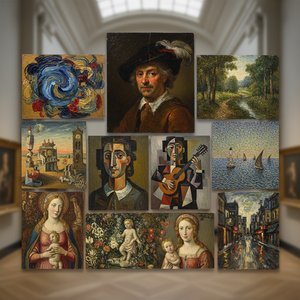
Oil on Board Masters: 10 Paintings That Redefined Art | OriginalUniqueArt
Explore 10 legendary 'Oil on Board' masterpieces by Van Gogh, Monet & more! Discover art history, iconic styles like Impressionism, and find museum-quality reproductions to elevate your home decor. Explore the full collection online at OriginalUniqueArt.com.

Echoes of Time: Exploring the Enduring Appeal & Historical Context of Vintage Art Prints
Explore the captivating world of vintage art prints! Discover their history, collecting tips & enduring appeal. Expert insights on chromolithography and building a legacy collection with OriginalUniqueArt.


