 設置イメージを確認
 送る
送る シェア
シェア
 詳細情報
詳細情報 ガイドを表示

 画像をダウンロード
 似ている作品
 X線調査
X線調査 スライドショー
 Q&A
Q&A 統計情報
統計情報Ghost Ranch Landscape


 続きを読む
続きを読む
このページに掲載されている作品は著作権法によって保護されており、当社の許可なく同一の複製物を制作または販売することは法律で禁じられています。この保護は、以下のような国際条約に基づき執行されます。 ベルヌ条約 および、以下の条項に定められたものを含む各国の法律により、 米国著作権法 第17編。
この手法は、著作権で保護された作品の複製や複写を伴わないため、著作権法に完全に準拠しています。これは単なる模倣ではなく、創造的な再解釈です。元の作品からインスピレーションを受けつつも、それとは異なる、全く新しい絵画を生み出すものです。
ジークレー/アートプリント
スピーディーな制作と多彩な仕上げオプションが魅力の、ミュージアムクオリティなジークレー・キャンバスプリント。 ( 手描きの複製画を注文する デジタル画像販売へ切り替え)




P118B ¥10

P118H ¥10

P118W ¥10

P438Z ¥10

P508JH ¥12

P508YH ¥12

P805H ¥10

P805Z ¥10

P919BZ ¥10

P919G ¥10

P919XJ ¥10

P959ZH ¥10

P968JZ ¥12

W106C ¥8

W218G ¥10

W218JH ¥8

W218Y ¥10

W307PJ ¥10

W316G ¥10

W316PJ ¥8

W316Y ¥10

W398PJ ¥8

W4111J ¥10

W500HY ¥15

W500JH ¥15

W692G ¥12

W849H ¥8

W940BG ¥15

W953PJ ¥8




作品のオリジナル比率に合わせた、当店の規定サイズからお選びください。

額縁や壁のスペースに合わせて、ご希望の幅と高さを入力してください。プリントはカットすることは可能ですが、元の画像より大きくすることはできないため、異なる比率のサイズを選択された場合は、画像の一部が欠けることになります。印刷を開始する前に、内容を確認していただくためのデジタルモックアップをお送りいたします。このページに表示されている画像は、実際のカット後の状態を示すものではありません。実際の仕上がりはモックアップにてご確認ください。


 ガラスオプションは、110cm未満のサイズでのみご利用いただけます。

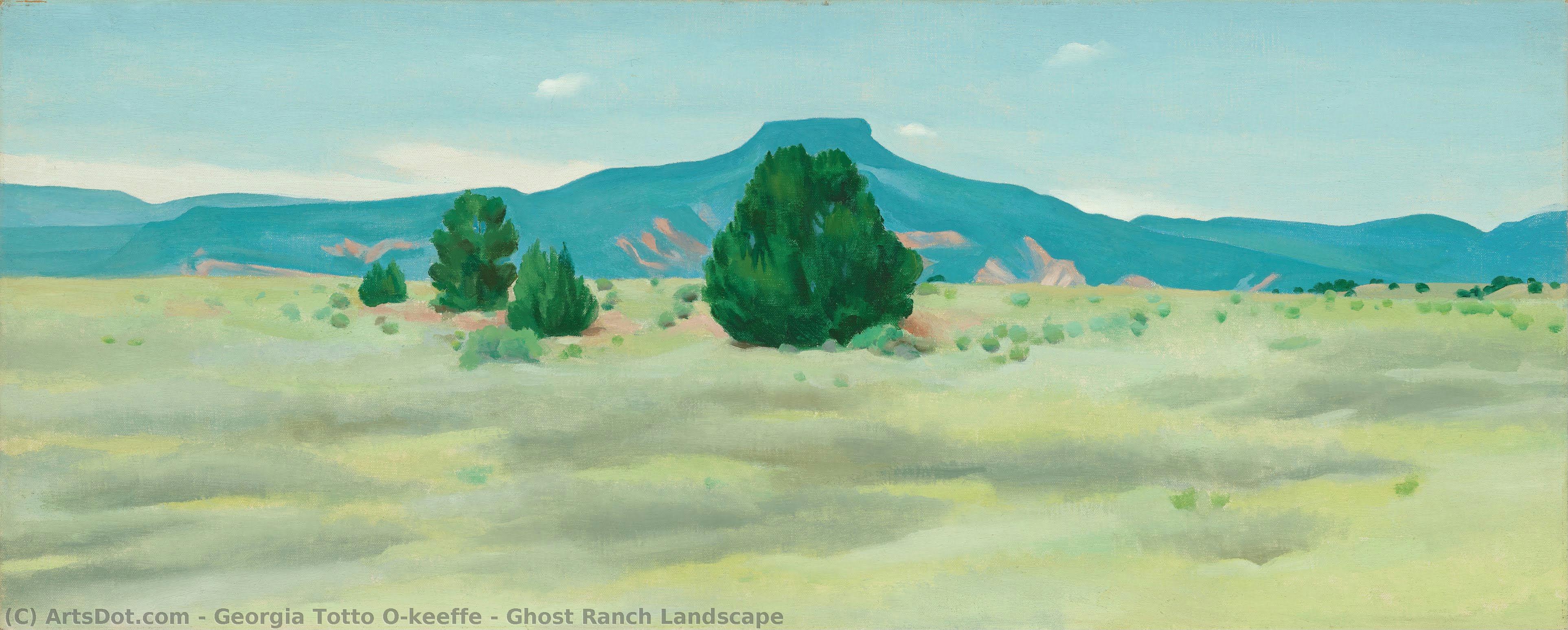
Ghost Ranch Landscape
ジークレー/アートプリント
複製画サイズ一覧
-


合計金額
¥ 12626
Georgia O’Keeffe's Ghost Ranch Landscape: A Meditation on Southwestern Silence
The painting “Ghost Ranch Landscape,” created in 1936 by Georgia O’Keeffe, transcends mere depiction; it embodies a profound stillness—a visual echo of the arid beauty and contemplative spirit of New Mexico. More than just capturing a vista, O’Keeffe transforms the rugged terrain into an emblem of resilience and inner peace, reflecting her own artistic philosophy rooted in simplification and observation.Subject Matter and Composition
At first glance, the landscape presents itself as deceptively serene. Dominating the lower half of the canvas is a relatively flat expanse punctuated by sparse shrubs and trees—primarily juniper bushes—that cling to the hillside. A single, mature tree stands prominently in the center, anchoring the composition and drawing the eye upwards towards Pedernal Peak, which rises majestically in the distance. This peak, a geological landmark significant to Pueblo culture and O’Keeffe herself, serves as a focal point for contemplation. The artist meticulously rendered the textures of the earth—the rough bark of the tree, the prickly foliage of the shrubs—creating an immersive experience for the viewer.Style and Technique: Minimalism Embodied
O’Keeffe's approach to painting exemplifies the tenets of American Modernism championed by artists like Arthur Wesley Dow. Rejecting academic realism, she prioritized conveying emotion through reductive forms and harmonious color palettes. The landscape is rendered in oil on canvas using a technique characterized by thick impasto—a layering of paint that builds up substantial texture—particularly around the tree trunk and branches. This tactile quality invites viewers to engage with the artwork physically, mirroring O’Keefe's desire to capture not just what she saw but how it *felt*. The color scheme is muted yet deliberate: earthy browns and ochres dominate, punctuated by subtle hints of violet and crimson—colors that evoke the hues of twilight and imbue the scene with an aura of melancholy beauty.Historical Context and Artistic Influences
Painted during O’Keeffe's formative years in New Mexico, “Ghost Ranch Landscape” reflects her growing fascination with Southwestern landscapes and Native American culture. Inspired by Dow’s teachings—specifically his emphasis on distilling visual experience into its essential elements—O’Keefe sought to distill the grandeur of the desert into a single, evocative image. The painting aligns itself with the broader modernist movement's rejection of traditional conventions and embrace of subjective expression. It anticipates O’Keeffe’s later explorations of abstraction, where she would further reduce forms and colors to convey pure emotion—a stylistic trajectory that cemented her legacy as one of America’s most influential artists.Symbolism: Resilience and Inner Reflection
Beyond its aesthetic qualities, “Ghost Ranch Landscape” carries symbolic weight. The tree represents strength and endurance—a visual metaphor for O’Keeffe's own unwavering determination to pursue her artistic vision despite obstacles. Pedernal Peak symbolizes permanence and spiritual contemplation—a reminder of the enduring beauty of the natural world and the importance of introspection. The overall stillness of the scene speaks to a deeper yearning for serenity and acceptance—themes that resonate powerfully with O’Keeffe's personal philosophy and contribute to the painting’s lasting emotional impact. It is a testament to O’Keefe’s ability to transform observation into profound artistic expression, capturing not just what she saw but what it meant to her soul.よくあるご質問
Ghost Ranch Landscapeは、ジョージア・オキーフのキャリアにおけるどの時期の作品にあたりますか?
「Ghost Ranch Landscape」は、ジョージア・オキーフのMature Periodを象徴する作品です。
ジョージア・オキーフには、他にどのような別名や通称がありますか?
ジョージア・オキーフは、ジョージア トット オキーフという別名でも知られています。
ジョージア・オキーフ作「Ghost Ranch Landscape」の色調は、鮮やかですか、それとも落ち着いていますか?
ジョージア・オキーフ作「Ghost Ranch Landscape」の色調は、Balanced Softの彩度とVividの強さを備えています。
アーティストについて
Early Life and Artistic Foundations
Georgia Totto O’Keeffe, a name synonymous with American modernism, emerged from the unassuming landscape of Sun Prairie, Wisconsin, in 1887. Born into a family of Irish and Hungarian descent engaged in dairy farming, young Georgia displayed an artistic inclination early on, deciding by age ten that she would dedicate her life to art. This determination was nurtured through lessons with local watercolorist Sara Mann, followed by formal studies at the School of the Art Institute of Chicago from 1905 to 1906 and later at the University of Virginia. However, it was her encounter with Arthur Wesley Dow’s principles – emphasizing personal expression and a harmonious balance of color and line – that truly ignited her artistic path. Dow's teachings steered O’Keeffe away from strict realism toward a more subjective and emotionally resonant approach to art, an approach that would define her career. These formative years weren’t without their challenges; periods of illness and dissatisfaction led her to temporarily abandon painting, but the creative impulse always drew her back, evolving with each new experience and influence.New York and the Stieglitz Circle
A pivotal moment arrived in 1916 when O’Keeffe’s abstract charcoal drawings were discovered by Alfred Stieglitz, a renowned photographer and art dealer. He exhibited her work without her prior knowledge, sparking a dialogue that would profoundly shape both their lives and the course of American art. Stieglitz recognized an exceptional talent in O’Keeffe, one that resonated with his own modernist sensibilities. He invited her to New York City in 1918, providing not only professional support but also fostering a deep personal connection. Their relationship blossomed into marriage in 1924, creating a dynamic artistic partnership and intellectual exchange. Stieglitz championed O’Keeffe’s work, showcasing it at his gallery “291” and promoting her as a leading figure in the American avant-garde. During this period, she began to develop her signature style – bold, simplified forms and intensely saturated colors – initially expressed through depictions of New York skyscrapers and, most famously, magnified flower paintings. These floral works, often interpreted (though consistently denied by O’Keeffe herself) as veiled representations of female anatomy, challenged conventional notions of beauty and sexuality in art.The Allure of the Southwest
While New York provided a crucial platform for her early success, it was the landscapes of the American Southwest that truly captivated O’Keeffe’s imagination and profoundly influenced her artistic vision. Her first visit to New Mexico in 1929 marked the beginning of a lifelong love affair with the region’s stark beauty, vibrant colors, and unique cultural heritage. The vastness of the desert, the dramatic rock formations, and the ancient Pueblo architecture resonated deeply within her, inspiring a new series of paintings that reflected the spirit of the land. Works like *Cow’s Skull: Red, White, and Blue* (1931) and *Summer Days* (1936) are powerful testaments to this influence, transforming seemingly mundane objects into iconic symbols of the American West. She eventually settled permanently in New Mexico in 1949 following Stieglitz’s death, establishing a home and studio in Abiquiu that became integral to her artistic process and identity.Legacy and Enduring Influence
Georgia O'Keeffe continued to paint prolifically throughout her life, experimenting with new subjects and pushing the boundaries of abstraction. Her later works included aerial views of clouds and skies, reflecting a fascination with the vastness and ethereal quality of the natural world. She remained fiercely independent and uncompromising in her artistic vision, refusing to be categorized or defined by prevailing art movements. O’Keeffe’s impact on American art is immeasurable. She paved the way for future generations of female artists, challenging societal norms and asserting her own unique voice in a male-dominated field. Her paintings continue to captivate audiences with their bold simplicity, emotional depth, and evocative power. The establishment of the Georgia O'Keeffe Museum in Santa Fe in 1997 further solidified her legacy, preserving her art and providing a space for ongoing scholarship and appreciation. In 2014, *Jimson Weed/White Flower No. 1* sold for $44.4 million, setting a record price for a work by a female artist – a testament to the enduring value and significance of her artistic contribution. O’Keeffe's influence extends beyond painting; she became an icon of American individualism and self-reliance, inspiring countless artists and admirers with her unwavering commitment to her craft and her unique perspective on the world. Her work remains a powerful reminder of the transformative power of art and the enduring beauty of the natural world.
ジョージア・オキーフ
1887 - 1986 , アメリカ合衆国
アーティスト情報
- Artistic Movement Or Style: モダンアート
- Artists Who Influenced This Artist: ['アルフレッド・ステイグリッツ']
- Date Of Birth: November 15, 1887
- Date Of Death: March 6, 1986
- Full Name: Georgia Totto O'Keeffe
- Nationality: アメリカン
- Notable Artworks:
- レッド・カンナ
- コウズスキュル:レッド、ホワイト、ブルー
- Place Of Birth: Sun Prairie, USA
関連記事

ロマン派ランドスケープ:時代を彩る巨匠の10選|アートとインテリアの世界
ロマン派絵画の時代を彩る10選。巨匠たちの風景が織りなす感動の世界へ。ターナー、ルーベンスなど、名作の裏話と高精細複製でアートをお部屋に。OriginalUniqueArt.comで至福のアート体験を。

Evocations of Place: A Historical Journey Through Landscape Art
Explore the rich history of landscape art with OriginalUniqueArt. Discover renowned artists, movements like Impressionism & tonalism, and expert guidance for collecting timeless pieces. Find your perfect serene escape today!

ジョン・コンスタブルの傑作25選:英国風景画の巨匠が描く自然と光の詩 | OriginalUniqueArt
ジョン・コンスタブルの傑作25選。英国風景画の巨匠が描く自然と光の詩の世界へ。ロマン主義を代表する絵画、デダム・ヴェールやヘイ・ウェインなど、OriginalUniqueArtで高品質なアートプリントをお楽しみください。インテリアに深みと感動を。コレクションはこちら。

Georgia O'Keeffe: Redefining Modernism Through Symbolism & the American Landscape
Explore the captivating world of Georgia O'Keeffe! Discover her groundbreaking flower paintings, New Mexico landscapes & lasting impact on American Modernism. Expert analysis and insights.

Evocations of Place: A Historical Journey Through Landscape Art
Explore the rich history of landscape art with OriginalUniqueArt. Discover renowned artists, movements like Impressionism & Romanticism, and expert guidance for collecting timeless pieces. Find your perfect serene escape today!


