プリント版に切り替え
 詳細を表示
詳細を表示







































 いずれかの辺が105 cm(約41インチ)を超えるアートワークまたは複製画の場合、フレームは分解されたキットの状態でお届けいたします。この方法は、輸送中の破損を防ぎ、安全に配送するために採用しております。


A Vision of Neoclassical Grace
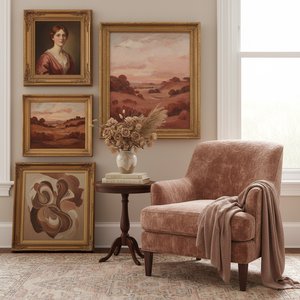
In the quiet splendor of George Romney’s 1785 masterpiece, Lady in a Brown Robe, we encounter more than a mere portrait; we step into the refined atmosphere of the Georgian era. This exquisite work captures Miss Eliza Siddall, a woman celebrated for her beauty, not through flamboyant display, but through a profound sense of serenity and poise. As she gazates toward the viewer, there is an intimate connection established—a silent dialogue between the subject and the observer that has captivated audiences for centuries. The painting serves as a quintessential window into Neoclassical portraiture, a movement that sought to revive the dignified ideals of ancient Greece and Rome, stripping away excessive ornamentation to reveal the pure, sculptural essence of the human form.
The technical mastery displayed by Romney is nothing short of breathtaking. Utilizing the rich, luminous possibilities of oil on canvas, the artist achieves a depth of texture that invites the eye to linger upon every fold of the sitter's attire. His approach is characterized by a meticulous attention to tonal gradation, where light and shadow dance across the surface to create a lifelike three-dimensionality. The soft, warm glow emanating from the skin tones contrasts beautifully with the earthy, understated palette of the brown robe, creating a visual harmony that feels both grounded and ethereal. For the discerning collector or interior designer, this balance of subtle color and masterful light makes the piece an incredibly versatile anchor for any sophisticated space.
Symbolism and Social Elegance
Beyond its aesthetic brilliance, the artwork is steeped in the social aspirations of late 18th-century London. During this period of Enlightenment, the aristocracy sought to project values of virtue, stability, and classical wisdom. The choice of a simple brown robe is deeply symbolic; rather than relying on the ostentatious silks or jewels common in royal portraiture, Romney uses the understated elegance of the garment to emphasize the sitter's inner character and natural grace. This restraint reflects the Neoclassical preference for clarity and truth over superficiality. The delicate pearl necklace, catching a glint of light, provides just enough ornamentation to signify her high social standing without disrupting the painting's overall sense of tranquil dignity.
To possess or display a reproduction of this work is to invite a sense of historical continuity and timelessness into a modern environment. The painting does not merely decorate a wall; it commands a room with its quiet authority and emotional depth. Whether placed in a sunlit library or a formal dining area, Lady in a Brown Robe offers an enduring inspiration, reminding us of an era where art was used to capture the very soul of elegance. It remains a cornerstone of British art history, a testament to George Romney's ability to transform a single moment of stillness into an eternal emblem of beauty.
Q&A
「Lady in a Brown Robe」の作者と制作年はいつですか?
「Lady in a Brown Robe」の作者はジョージ・ロミユーで、制作年は1785年です。
ジョージ・ロミユー作「Lady in a Brown Robe」の来場者の属性(統計データ)はどこで確認できますか?
ジョージ・ロミユー作「Lady in a Brown Robe」の閲覧統計ページでは、公開されている閲覧統計をご覧いただけます。この作品の月間閲覧数、アーティストのなかで最も閲覧されている作品との比較、そして訪問者の地域情報などが掲載されています。
ジョージ・ロミユーによる「Lady in a Brown Robe」はパブリックドメインに含まれますか?また、その理由は何ですか?
ジョージ・ロミユー作「Lady in a Brown Robe」はパブリックドメイン(著作権消滅)です。著作権の保護期間は、1802年に亡くなった作家の没年から起算されます。
この絵画の詳細を見る
 設置イメージを表示
 シェアする
シェアする シェアする
シェアする
 詳細を見る
詳細を見る ガイドを表示

 ダウンロード
 似ている作品
 X線調査
X線調査 スライドショーを表示
 Q&A
Q&A 統計情報
統計情報