 設置イメージを表示
 シェアする
シェアする シェアする
シェアする
 詳細を見る
詳細を見る ガイドを表示

 ダウンロード
 似ている作品
 X線調査
X線調査 スライドショーを表示
 Q&A
Q&A 統計情報
統計情報The Young Executive


 詳細を表示
詳細を表示
ウェブ上のプレビューを遥かに凌駕する、印刷に最適なファイルをご提供します。当サイトで販売しているすべてのデジタル画像は、弊社のデータベース内にある高解像度のマスターデータ(通常、幅5,000〜15,000ピクセル)から作成されています。そのため、大判印刷や大胆なクロップ、細部まで緻密な再現も、安心してお楽しみいただけます。
当スタジオから送り出される画像は、すべて丁寧に加工されています。デジタルエキスパートが原画と照らし合わせて色調を精査し、必要に応じて補正を行った上で、プロ仕様のリタッチツールを用いて鮮明さと細部を向上させます。その際、アーティストの筆致やスタイルに忠実であることを常に追求しています。その結果、単なるスキャン画像にフィルターをかけたようなものではなく、まるで本物の絵画を見ているかのような仕上がりを実現しています。
仕上がりをご確認いただいてから完了となります。専門スタッフが、ご確認用の画像を72時間以内にメールでお送りいたします。もしご満足いただけない場合は、修正や改善のご要望を承るほか、品質が基準に満たない場合には返金も可能です。
出版社、デザインスタジオ、ギャラリー、そして印刷所から信頼される品質です。
デジタルアート
個人での鑑賞、印刷、クリエイティブなプロジェクトにご利用いただける高解像度ファイルをダウンロードできます。 ( プリント版に切り替え 手描き複製画を注文する)
デジタル画像のご注文に付随する特典
確かな品質による、プロフェッショナルなデジタル配信
OriginalUniqueArt.com を選ぶことは、単に画像を手に入れることではありません。プロの手によって精密に仕上げられ、満足保証が付いた高品質なデジタルアートワークを受け取ることを意味します。ご注文いただいた際に自動的に付随する内容は、以下の通りです:

メールですぐにお届け
ご注文から72時間以内に、高解像度のデジタル画像ファイルをメールでお送りいたします。お手元に届き次第、すぐにご利用いただけます。

AI技術で最適化されたデジタルファイル
お客様の作品は、高度なAI技術と専門家による手作業を組み合わせてプロフェッショナルに最適化されており、細部のディテール、鮮明さ、そして正確な色再現性を最大限に引き出しています。

生涯無料の再送サービス
ファイルを誤って削除したり、紛失してしまったりしましたか?ご安心ください。いつでも無料で再送いたします。

輸入手数料は、いつでも一切かかりません
関税や手数料、配送料を気にすることなく、お気に入りのアートワークをすぐにお楽しみいただけます。デジタルダウンロードは常に免税です。

正確な色彩の保証
プロ仕様のツールとカラーマネジメント技術を用いることで、デジタル画像が元の色を最大限に忠実に再現することを保証いたします。

100日間満足保証
ご購入いただいたデジタル画像にご満足いただけない場合は、100日以内であれば、理由を問わず修正または100%の返金対応をさせていただきます。

100% 返金保証
ご満足いただけない場合は、デジタルファイルを受け取ってから100日以内であれば、理由を問わず全額返金いたします。

まとめ買い割引
3枚購入で10%OFF、5枚購入で15%OFF、10枚以上のご購入で20%OFF。クリエイティブなプロジェクトやギャラリー、エージェンシーに最適です。
A Captivating Portrait: George Condo's "The Young Executive"
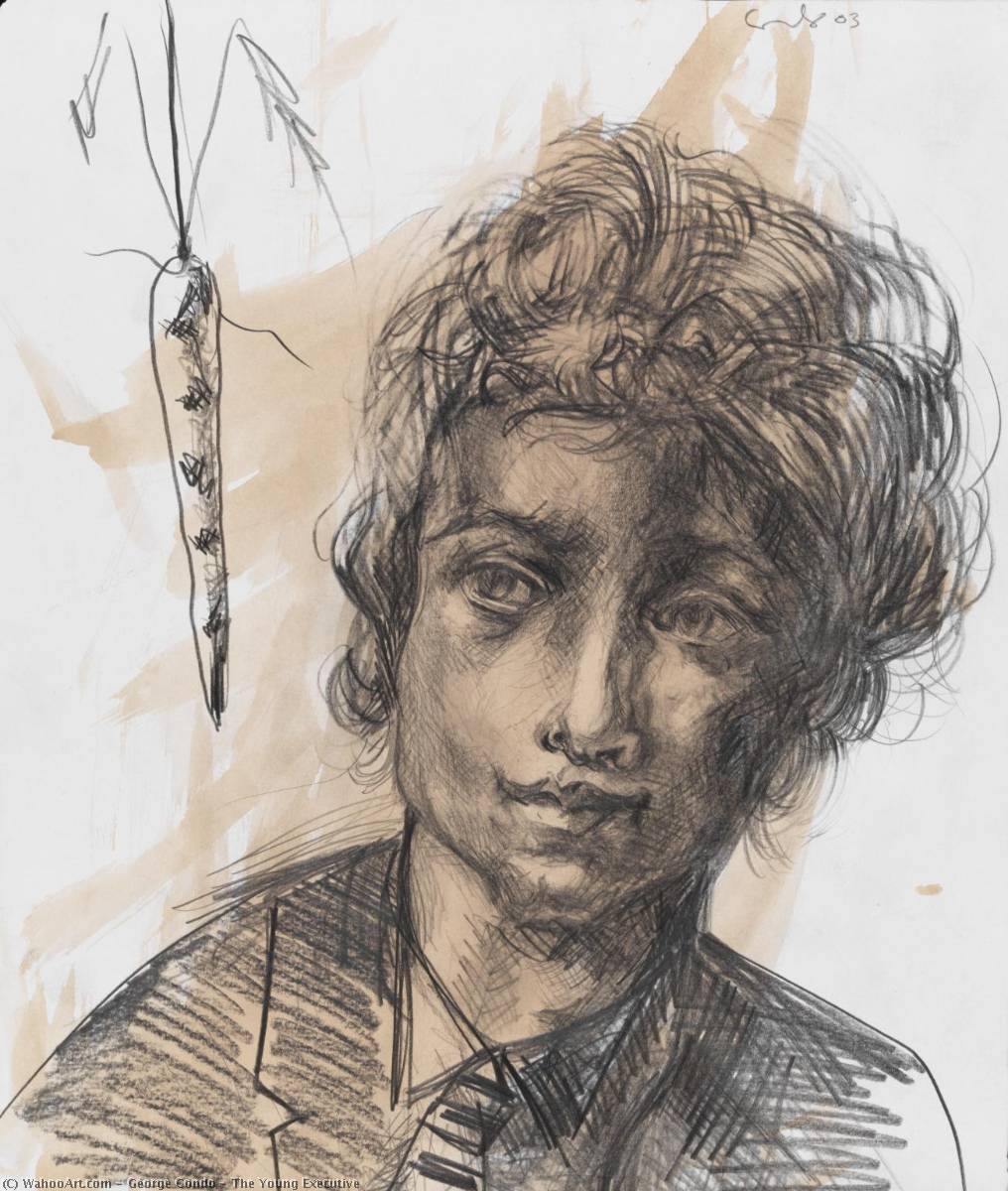
George Condo’s “The Young Executive” is a striking charcoal drawing that transcends simple portraiture. It presents a young woman rendered with an arresting blend of realism and expressive distortion, characteristic of Condo’s unique ‘Artificial Realism’ style. This piece isn't merely about capturing likeness; it delves into the psychological complexities of its subject, inviting viewers to contemplate her inner world.
Style & Technique: Artificial Realism in Charcoal
Condo is renowned for his 'Artificial Realism,' a fascinating fusion of Old Masters’ techniques and Pop Art sensibilities. In "The Young Executive," this manifests through the highly detailed rendering of the woman's features, reminiscent of classical portraiture, juxtaposed with an almost dreamlike quality created by the swirling charcoal background. The technique is primarily dry – relying on the pressure of the charcoal stick to build up volume and form. Notice how Condo utilizes hatching and cross-hatching to create a rich, layered texture that emphasizes the three-dimensionality of the subject’s face and hair. The dramatic shading creates a powerful sense of depth and mood.
Historical Context & Influences
Created in 2003, "The Young Executive" reflects Condo's ongoing exploration of portraiture within a contemporary context. While drawing inspiration from the academic portrait tradition of the late 19th century, Condo subverts it with his expressive and gestural approach. His artistic journey, shaped by early studies in art history and music theory, alongside connections to figures like Jean-Michel Basquiat, has fostered a unique visual language that blends high art references with elements of popular culture. The drawing’s aged appearance suggests a timeless quality, hinting at the enduring power of portraiture across generations.
Symbolism & Emotional Impact
While seemingly straightforward as a bust portrait, "The Young Executive" contains subtle symbolic nuances. The inclusion of carrots in the background is intriguing – perhaps suggesting a connection to nature or offering a playful contrast with the formality of the portrait style. More importantly, the drawing evokes a complex range of emotions. The woman’s gaze, combined with the dramatic lighting and expressive charcoal strokes, creates an atmosphere of quiet intensity and introspection. The swirling background adds to this sense of mystery, suggesting a world beyond the immediate subject. Ultimately, Condo's work invites viewers to project their own interpretations onto the portrait, fostering a deeply personal connection.
A Timeless Addition
“The Young Executive” is more than just a drawing; it’s an exploration of identity, emotion, and artistic expression. Its compelling composition, masterful technique, and subtle symbolism make it a captivating piece for art lovers, collectors, and interior designers alike. A hand-painted reproduction captures the nuances of Condo's charcoal work, bringing this powerful portrait into any space.
Q&A
「The Young Executive」の画像はダウンロードできますか?
「The Young Executive」のダウンロードが可能です。作品のデジタルイメージをダウンロードページにて高解像度デジタル画像のダウンロードいただけます。
「The Young Executive」は、どのような色調に寄っていますか?
ジョージ・コンド作「The Young Executive」には、Golden Yellow Rangeの色調が全体に広がっています。
「The Young Executive」はパブリックドメインですか?
ジョージ・コンド作「The Young Executive」は著作権の保護対象ですです。このステータスは、作品画像の複製に関する規定を定めたものです。
作家略歴
過去と現在の統合:ジョージ・コンドの世界
1957年、ニューハンプシャー州コンコードに生まれたジョージ・コンドは、自ら「アーティフィシャル・リアリズム(人工的写実主義)」と名付けた、全く新しい視覚言語を構築することで、現代美術における極めて重要な人物として台頭しました。これは単なる様式上の選択ではありませんでした。それは一つの哲学的な姿勢であり、巨匠たちの崇高な技法と、アメリカのポップカルチャーが持つ鮮やかで、時に混沌としたエネルギーを意図的に融合させたものだったのです。コンドの幼少期は、この統合の礎となりました。マサチューセッツ大学ローウェル校での学問的探求は、美術史と音楽理論の両方に及び、形式的な構造への理解とともに、リズムや構成に対する鋭い感性を養いました。この音楽的な傾向は、ボストンのパンク・シーンにおいてバンド「ザ・ガールズ」のベーシストとして活動したことにも現れており、その実験的なサウンドは、後の彼の芸術的キャリアを決定づけることになる、既成概念を打ち破る精神を予兆していました。1979年のジャン=ミシェル・バスキアとの出会いは、彼の人生を劇的に変えるものとなり、ニューヨークへの移住と、勃興するアート界への完全な没入へと彼を突き動かしました。この移動は単なる地理的な変化ではなく、コンドが自らのビジョンを完全に表現するための、創造性の坩堝(るつぼ)への跳躍だったのです。アーティフィシャル・リアリズムの誕生とイースト・ヴィレッジのルーツ
コンドのニューヨーク到着は、1980年代初頭のイースト・ヴィレッジにおけるアートシーンの爆発的なエネルギーと重なりました。実験と反逆の気風が漂うこの地で、「アーティフィシャル・リアリズム」は形を成していきました。彼は現実を単に複製することには関心がありませんでした。むしろ、彼が追求したのは「シミュレートされた(擬似的な)」現実の創造でした。それは、歴史的な巨匠たちの緻密な技術で描かれながらも、紛れもない現代的な感性を宿した、心理的に複雑な人物たちが存在する世界です。このアプローチには、伝統的な肖像画の意図的な解体が含まれており、しばしば歪んだ顔立ちや断片化された形態、そして拭い去ることのできない疎外感を感じさせる主題が提示されました。アンディ・ウォーホルの「ファクトリー」での短い勤務経験は、彼の技術をさらに磨き上げました。ウォーホルのシリーズ『Myths』のシルクスクリーン制作においてダイヤモンド・ダストを塗布する作業に携わったことは、表面の質感や錯覚に対するコンドの強い関心を示す、繊細ながらも重要なディテールとなっています。イースト・ヴィレッジのギャラリーでの初期の展覧会は、彼を無視できない存在として確立させました。彼は、慣習に挑み、現代生活の暗い底流を探求することを恐れないアーティストとなったのです。その後、ヨーロッパ各地を巡る旅は、ドイツ・ケルンの「ムルハイマー・フライハイト」グループのアーティストたちとの繋がりを生み、彼の芸術的視野を広げ、革新への献身をより強固なものにしました。コラボレーションと知的な潮流
コンドのキャリアは、個人の達成だけでなく、自身の表現を豊かにし、その領域を拡大させた一連の魅力的なコラボレーションによって特徴づけられます。おそらく最も重要なのは、1988年から始まったウィリアム・S・バロウズとの10年間に及ぶパートナーシップでしょう。二人は共に、言語、支配、そして潜在意識というテーマを深く掘り下げた絵画や彫刻を生み出しました。これは、イメージと物語が持つ力に対する彼らの共通の情熱の証です。この共同作業は、1991年にホイットニー美術館から出版された、エッチングと文章のコレクション『Ghost of Chance』において頂点に達し、コンドの知的な信頼性をさらに確固たるものにしました。キース・ヘリングとの友情も同様に実り多いものであり、スタジオ・スペースの確保に繋がっただけでなく、『Dancing to Miles』(1な1985年)のような、1987年のホイットニー・ビエンナーレで高く評価される作品のインスピレーションとなりました。その影響は芸術的な側面に留まりませんでした。哲学的な潮流もまた、コンドの思考を形成する上で決定的な役割を果たしました。フェリックス・グアタリの著作、特にコンドの作品に対する彼の分析は、このアーティスト独自の試みとその広範な文化的意味合いを理解するための理論的枠組みを提供したのです。遺産と永続的な影響
ジョージ・コンドが現代美術に与えた衝撃は、疑いようのないものです。彼は単に絵画を復活させたのではありません。彼は絵画を「再構築」したのです。歴史的な技法を用いることで、現代の不安に対処し、人間の精神の複雑さを探求できることを証明しました。彼の影は、ナイジェル・クック、ショーン・ランダース、ジョン・カーリン、リサ・ユスカヴァッジ、グレン・ブラウンといった数多くのアーティストの作品の中に見出すことができます。彼らは皆、表現、アイデンティティ、そして文化的批評という課題に取り組んでいます。視覚芸術の枠を超え、コンドの作品は作家たちにも共鳴してきました。例えば、サルマン・ラシュディはその小説『Fury』において、『The Psychoanalytic Puppeteer Losing His Mind』(1994年)の忘れがたいイメージからインスピレーションを得ました。また、デヴィッド・ミーンズも短編「The Butler's Lament」のために『The Fallen Butler』(2010年)に着想を得ています。アレン・ギンズバーグでさえコンドの類まれな才能を認め、彼の選集の表紙を飾る肖像画を依頼したほどです。コンドの不朽の遺産は、古典と現代、ハイカルチャーとローカルチャーという、一見かけ離れた世界を橋渡しし、知的刺激と感情的な共鳴を兼ね備えた作品群を生み出したその能力にあります。 彼は今もなお、芸術界における不可欠な力であり続け、境界を押し広げ、私たちの現実に対する認識に挑戦し続けているのです。
ジョージ・コンド
1957 - , アメリカ合衆国
プロフィール概要
- Artistic Movement Or Style: アーティフィシャル・リアリズム(人工的写実主義)
- Artists Or Movements Influenced By This Artist:
- ナイジェル・クック
- ショーン・ランダース
- ジョン・カーリン
- Artists Who Influenced This Artist:
- バスキア
- ウォーホル
- セザンヌ
- ピカソ
- Date Of Birth: 1957年
- Full Name: ジョージ・コンド
- Nationality: アメリカ
- Notable Artworks:
- Dreaming Woman
- Colored Dream Objects
- Billy Has Mind Tics
- Dancing to Miles
- The Psychoanalytic Puppeteer
- Place Of Birth: アメリカ合衆国、コーンコート