

 設置イメージを確認
 送る
送る シェア
シェア
 詳細情報
詳細情報 ガイドを表示

 画像をダウンロード
 似ている作品
 X線調査
X線調査 スライドショー
 統計情報
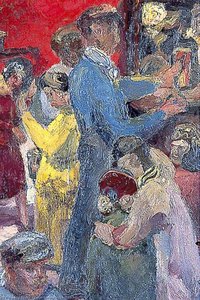
統計情報Peñiscola, Spain
 1933
1933 27.0 x 40.0 cm
 Charleston
 続きを読む
続きを読む
オンラインプレビューをはるかに凌ぐ、高解像度で鮮明なデジタル画像をご購入いただけます。
各ファイルは、社内の専門家が高度なツールと熟練した手作業によるレタッチを駆使し、細心の注意を払って仕上げています。すべての画像において、卓越した鮮明度、正確な色彩再現性、そして繊細なディテールをお約束いたします。
最終ファイルは、プロフェッショナルな編集・印刷環境ですぐにご利用いただけるよう最適化された状態で、72時間以内にメールにてお届けいたします。これは、一流のデザインスタジオ、出版社、ギャラリーから信頼されているものと同等の品質です。
デジタル画像
個人での鑑賞、印刷、クリエイティブなプロジェクトにご利用いただける高解像度ファイルをダウンロードできます。 ( プリント版に切り替え 手描きの複製画を注文する)
デジタル画像のご注文に付随する特典
プロフェッショナルなデジタル配信を、確かな品質で。
OriginalUniqueArt.com を選ぶことは、単に画像を手に入れることではありません。プロの手によって精密に仕上げられ、満足保証が付いた高品質なデジタルアートワークを受け取ることを意味します。ご注文いただいた際に自動的に付随する内容は、以下の通りです:

メールですぐにお届け
ご注文から72時間以内に、高解像度のデジタル画像ファイルをメールでお送りいたします。お手元に届き次第、すぐにご利用いただけます。

AI技術で最適化されたデジタルファイル
お客様の作品は、高度なAI技術と専門家による手作業を組み合わせてプロフェッショナルに最適化されており、細部のディテール、鮮明さ、そして正確な色再現性を最大限に引き出しています。

一生涯無料の再送サービス
ファイルを誤って削除したり、紛失してしまったりしましたか?ご安心ください。いつでも無料で再送いたします。

輸入手数料は、いつでも一切かかりません
関税や手数料、配送料を気にすることなく、お気に入りのアートワークをすぐにお楽しみいただけます。デジタルダウンロードは常に免税です。

正確な色彩の保証
プロ仕様のツールとカラーマネジメント技術を用いることで、デジタル画像が元の色を最大限に忠実に再現することを保証いたします。

100日間満足保証
ご購入いただいたデジタル画像にご満足いただけない場合は、100日以内であれば、理由を問わず修正または100%の返金対応をさせていただきます。

100% 返金保証
ご満足いただけない場合は、デジタルファイルを受け取ってから100日以内であれば、理由を問わず全額返金いたします。

まとめ買い割引
3枚購入で10%OFF、5枚購入で15%OFF、10枚以上のご購入で20%OFF。クリエイティブなプロジェクトやギャラリー、エージェンシーに最適です。
アーティスト・プロフィール
George Bergen: A Painter of English Shadows
George Bergen (1903–1984) wasn’t a name that dominated the art world during his lifetime, yet his quietly observant paintings offer a remarkably intimate glimpse into the social fabric and atmospheric details of early to mid-20th century England. Born in Minsk, Russia, and immigrating to Brooklyn, New York, with his family in 1909, Bergen’s artistic journey was shaped by exposure to diverse influences – from the rigorous training at Yale School of Fine Arts under George Bellows to a significant period spent immersed in the vibrant intellectual circles of the Bloomsbury Group. His work transcends simple representation; it's imbued with a melancholic beauty and a keen awareness of the everyday, capturing scenes of pubs, streets, and landscapes with a distinctive, almost understated emotional resonance.
Bergen’s early career was marked by a steady progression through various artistic avenues. He began his training in New York, absorbing the techniques of Bellows while simultaneously developing an interest in European modernism. A pivotal moment arrived in 1925 when he secured a Yale travelling scholarship, allowing him to spend a year studying in Europe – a period that profoundly shaped his aesthetic sensibilities. This exposure to continental art movements, particularly Post-Impressionism and early Cubism, informed his approach to composition and color. Returning to America, Bergen quickly established himself as a respected artist, exhibiting at prominent galleries like Goupil and Lefevre, and gaining recognition for his evocative depictions of urban life.
A defining characteristic of Bergen’s work is his fascination with the British pub. Paintings such as “East End Pub” (1931) are not merely snapshots of a social gathering; they're carefully constructed narratives that reveal the quiet dramas and unspoken connections within these quintessential English institutions. The use of muted tones, textured brushwork, and a deliberate lack of dramatic lighting contribute to an atmosphere of contemplative melancholy. Bergen’s ability to capture the essence of these spaces – the worn furniture, the flickering gaslight, the faces of the patrons – speaks volumes about the social and cultural life of his time. His paintings aren't celebratory; they are imbued with a subtle sense of loss or nostalgia for a disappearing way of life.
Beyond the pub scenes, Bergen’s oeuvre encompasses a range of subjects, including streetscapes, landscapes, and portraits. “A London Street” (1932) exemplifies his skill in rendering urban detail – the weathered facades of buildings, the bustling crowds, the interplay of light and shadow. His approach to portraiture is equally notable; he eschewed idealized representations, instead favoring a more realistic and psychologically astute portrayal of his subjects. Bergen’s connection with the Bloomsbury Group—a group of influential artists, writers, and intellectuals—is significant. He shared their interest in exploring the complexities of human experience and challenging conventional artistic norms. His work reflects this intellectual engagement, demonstrating a sensitivity to social issues and a willingness to experiment with form and technique.
The Bloomsbury Connection and Artistic Influences
Bergen’s association with the Bloomsbury Group profoundly influenced his artistic development. This influential circle of artists and intellectuals—including Vanessa Bell, Duncan Grant, and Virginia Woolf—championed experimentation, challenged established conventions, and explored themes of sexuality, social class, and personal identity. Bergen's friendship with these figures provided him with a stimulating intellectual environment and exposed him to new ideas and perspectives. His work began to reflect the group’s interest in psychological realism and their rejection of traditional artistic values.
The influence of European modernism is also evident in Bergen’s paintings. He was particularly drawn to the works of Post-Impressionists like Paul Gauguin and Vincent van Gogh, whose use of color and expressive brushwork paved the way for later developments in abstract art. Bergen's own approach to color is characterized by a subtle palette—often dominated by muted browns, grays, and greens—that creates a sense of atmosphere and mood. He employed broken color techniques, layering thin washes of paint to build up complex textures and visual effects.
Furthermore, Bergen’s exposure to the work of Cubist artists like Pablo Picasso and Georges Braque influenced his approach to composition. While he never fully embraced Cubism's radical fragmentation of form, he incorporated elements of this style—such as multiple viewpoints and flattened perspectives—into his paintings. This experimentation with perspective contributed to the sense of depth and spatial ambiguity that characterizes much of his work.
Technique and Style
Bergen’s artistic technique is characterized by a meticulous attention to detail and a masterful control of paint. He employed a layered approach, building up surfaces through multiple thin washes of color—a technique known as glazing. This method allowed him to create subtle gradations of tone and achieve remarkable luminosity. His brushwork is often loose and expressive, particularly in his depictions of landscapes and street scenes. Bergen’s use of light and shadow is particularly noteworthy; he skillfully manipulated these elements to create a sense of atmosphere and mood.
His paintings are not defined by bold colors or dramatic compositions. Instead, they rely on subtle nuances—a carefully placed brushstroke, a delicate shift in tone—to convey meaning and emotion. Bergen’s style can be described as quietly evocative, understated, and deeply perceptive. He possessed an extraordinary ability to capture the essence of his subjects—not through literal representation, but through a nuanced understanding of their psychological and emotional qualities.
Legacy and Significance
Despite not achieving widespread fame during his lifetime, George Bergen’s work has gained increasing recognition in recent decades. His paintings are now exhibited in public galleries across the United Kingdom and America, and they are valued for their quiet beauty, psychological depth, and historical significance. Bergen's contribution to British art lies in his ability to capture the everyday realities of life in early 20th-century England—the social rituals, the atmospheric details, and the unspoken emotions that shaped the lives of ordinary people.
His paintings offer a valuable window into a bygone era, providing insights into the cultural landscape of Britain during a period of profound social and political change. Bergen’s work continues to resonate with viewers today because it speaks to universal themes—loss, memory, and the search for meaning in a complex world. He remains an important figure in British art history, a painter who quietly observed and powerfully rendered the shadows and light of his time.
George Bergen
1903 - 1984
略歴
- Full Name: George Bergen
- Nationality: Russian-Jewish
- Date Of Birth: 1903
- Date Of Death: 1984
- Place Of Birth: Minsk, Russia
- Notable Artworks:
- The Policeman
- East End Pub
- Artistic Movement Or Style: Post-Impressionist
- Artists Who Influenced This Artist: ['George Bellows']
- Artists Or Movements Influenced By This Artist: ['Bloomsbury Group']