
 設置イメージを表示
 シェアする
シェアする シェアする
シェアする
 詳細を見る
詳細を見る ガイドを表示

 ダウンロード
 似ている作品
 X線調査
X線調査 スライドショーを表示
 Q&A
Q&A 統計情報
統計情報Glastonbury Abbey

- 124.0 x 146.0 cm

 詳細を表示
詳細を表示
ウェブ上のプレビューを遥かに凌駕する、印刷に最適なファイルをご提供します。当サイトで販売しているすべてのデジタル画像は、弊社のデータベース内にある高解像度のマスターデータ(通常、幅5,000〜15,000ピクセル)から作成されています。そのため、大判印刷や大胆なクロップ、細部まで緻密な再現も、安心してお楽しみいただけます。
当スタジオから送り出される画像は、すべて丁寧に加工されています。デジタルエキスパートが原画と照らし合わせて色調を精査し、必要に応じて補正を行った上で、プロ仕様のリタッチツールを用いて鮮明さと細部を向上させます。その際、アーティストの筆致やスタイルに忠実であることを常に追求しています。その結果、単なるスキャン画像にフィルターをかけたようなものではなく、まるで本物の絵画を見ているかのような仕上がりを実現しています。
仕上がりをご確認いただいてから完了となります。専門スタッフが、ご確認用の画像を72時間以内にメールでお送りいたします。もしご満足いただけない場合は、修正や改善のご要望を承るほか、品質が基準に満たない場合には返金も可能です。
出版社、デザインスタジオ、ギャラリー、そして印刷所から信頼される品質です。
デジタルアート
個人での鑑賞、印刷、クリエイティブなプロジェクトにご利用いただける高解像度ファイルをダウンロードできます。 ( プリント版に切り替え 手描き複製画を注文する)
デジタル画像のご注文に付随する特典
確かな品質による、プロフェッショナルなデジタル配信
OriginalUniqueArt.com を選ぶことは、単に画像を手に入れることではありません。プロの手によって精密に仕上げられ、満足保証が付いた高品質なデジタルアートワークを受け取ることを意味します。ご注文いただいた際に自動的に付随する内容は、以下の通りです:

メールですぐにお届け
ご注文から72時間以内に、高解像度のデジタル画像ファイルをメールでお送りいたします。お手元に届き次第、すぐにご利用いただけます。

AI技術で最適化されたデジタルファイル
お客様の作品は、高度なAI技術と専門家による手作業を組み合わせてプロフェッショナルに最適化されており、細部のディテール、鮮明さ、そして正確な色再現性を最大限に引き出しています。

生涯無料の再送サービス
ファイルを誤って削除したり、紛失してしまったりしましたか?ご安心ください。いつでも無料で再送いたします。

輸入手数料は、いつでも一切かかりません
関税や手数料、配送料を気にすることなく、お気に入りのアートワークをすぐにお楽しみいただけます。デジタルダウンロードは常に免税です。

正確な色彩の保証
プロ仕様のツールとカラーマネジメント技術を用いることで、デジタル画像が元の色を最大限に忠実に再現することを保証いたします。

100日間満足保証
ご購入いただいたデジタル画像にご満足いただけない場合は、100日以内であれば、理由を問わず修正または100%の返金対応をさせていただきます。

100% 返金保証
ご満足いただけない場合は、デジタルファイルを受け取ってから100日以内であれば、理由を問わず全額返金いたします。

まとめ買い割引
3枚購入で10%OFF、5枚購入で15%OFF、10枚以上のご購入で20%OFF。クリエイティブなプロジェクトやギャラリー、エージェンシーに最適です。
Artistic Significance
The scene captures the beauty of the old stone buildings as they stand in the midst of decay and disrepair. The sky above the abbey appears to be cloudy, adding an ominous atmosphere to the image. In the foreground, several people are walking around the ruins, likely admiring the historical site or exploring its remains. This adds a sense of life and interest to the otherwise solemn atmosphere of the abandoned abbey. Key Features of the painting include:- The use of oil on copper, which gives the piece a unique texture and depth.
- The attention to detail in the depiction of the abbey's architecture and the surrounding landscape.
- The sense of atmosphere and mood created by the cloudy sky and the presence of people in the scene.
Artist Background
George Arnald was a prolific artist known for his landscapes and historical scenes. His work can be found in various museums, including the Museum of Somerset, which features an impressive collection of artworks that reflect the rich cultural heritage of the region. For more information on the museum's collection, visit Discovering the Artworks of Museum of Somerset, United Kingdom. To learn more about George Arnald and his work, including Glastonbury Abbey, visit Painting by 'George Arnald' | George Arnald:Glastonbury Abbey on OriginalUniqueArt.com.For those interested in purchasing a handmade oil painting reproduction of Glastonbury Abbey, OriginalUniqueArt.com offers high-quality reproductions that capture the essence and beauty of the original piece.
Q&A
「Glastonbury Abbey」にはどのような色使いがなされていますか?
George Arnald作「Glastonbury Abbey」のカラーパレットはEarthyと表現されており、作品の色使いを簡潔に表しています。
George Arnald作「Glastonbury Abbey」のスライドショーはありますか?
スライドショーはこちら:George Arnald作「Glastonbury Abbey」のスライドショーページ。
George Arnald作「Glastonbury Abbey」の輝度はどの程度ですか?
George Arnald作「Glastonbury Abbey」 の輝度は Soft Shadow です。輝度とは、色がどれほど光を反射しているかを表す指標です。
作家略歴
The Poetic Vision of George Arnald
In the grand tapestry of British Romanticism, where the dramatic skies of Turner and the pastoral sincerity of Constable often command the spotlight, the name George Arnald (1763–1841) whispers of a more intimate, yet equally profound, connection to the landscape. A painter of remarkable sensitivity, Arnald possessed the rare ability to transform topographical accuracy into emotive storytelling. His journey from the humble beginnings of a domestic servant to an established figure within the Royal Academy is a testament to a raw, burgeoning talent that sought to capture not just the physical contours of the earth, but the very spirit of the places he depicted.
Though the precise details of his early years remain shrouded in the mists of history—with accounts placing his birth anywhere from Northamptonshire to Berkshire—his artistic evolution was shaped by the rigorous guidance of William Pether. Under Pether’s tutelage, Arnald mastered the art of the landscape and engraving, learning to balance meticulous observation with a poetic sensibility. This training allowed him to contribute significantly to the illustrated county histories of his era, providing topographical views that were as much about atmosphere as they were about geography.
A Legacy of Light and History
Arnald’s oeuvre is characterized by a remarkable versatility, ranging from the quiet, sun-drenched ruins of Scotland to the thunderous, salt-sprayed chaos of naval warfare. His work often reflects a deep engagement with the Romantic ideal—the belief that art should stir the soul through the sublime and the beautiful. One might find himself lost in the serene sunset of Ruins of Rosslyn Castle, where the decay of stone meets the eternal glow of twilight, or transported to the rugged Yorkshire countryside in his depiction of Loading a Timber Wagon in the Park of Cave Castle, where dramatic skies hint at the untamed power of nature.
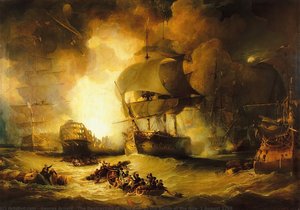
However, it was perhaps his departure from the purely pastoral that secured his place in the annals of maritime history. His most celebrated and monumental achievement, The Destruction of L'Orient at the Battle of the Nile, stands as a breathtaking masterwork of historical drama. Commissioned as part of a prestigious competition for the Greenwich Hospital, this painting captures the catastrophic moment of a naval titan’s demise. In this work, Arnald transcends mere documentation, utilizing light and shadow to evoke the terror and heroism inherent in Britain's maritime triumphs.
The Critic's Eye and Artistic Standing
Despite his prolific output—exhibiting an astounding 176 works at the Royal Academy throughout his career—Arnald’s ascent was marked by a certain bittersweet complexity. While he achieved the status of an Associate Member of the Royal Academy in 1810, he never reached the pinnacle of full fellowship. This lack of ultimate institutional acclaim famously drew the poignant commentary of the poet William Wordsworth. Wordsworth, reflecting on the Romantic necessity of intellectual depth, lamented that Arnald’s genius might have been even more profound had it been paired with a stronger literary foundation, suggesting that a true mastery of landscape requires a "tincture of the Poetic Spirit."
Yet, to judge Arnald solely through the lens of institutional rank is to miss the enduring magic of his brushwork. His significance lies in his ability to bridge the gap between the precise topographical record and the emotive power of the Romantic movement. Through his eyes, we see a Britain defined by both its historical struggles and its quiet, pastoral grace, ensuring that his contribution to the British artistic canon remains as vital and evocative as the landscapes he so lovingly rendered.
George Arnald
1763 - 1841
プロフィール概要
- Artistic Movement Or Style: Romantic Landscape
- Artists Or Movements Influenced By This Artist: ['Thomas Davidson']
- Artists Who Influenced This Artist: ['William Pether']
- Date Of Birth: 1763
- Date Of Death: 1841
- Full Name: George Arnald
- Nationality: British
- Notable Artworks: ['Battle of the Nile']
- Place Of Birth: Northamptonshire (Bedfordshire)