

 プレビュー
プレビュー
 シェアする
シェアする シェアする
シェアする
 詳細を見る
詳細を見る

 ダウンロード
 似ている作品
 X線調査
X線調査 スライドショー
 統計情報
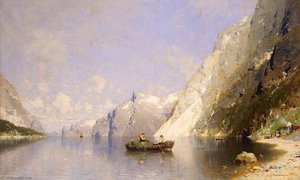
統計情報Untitled (AQVJ9F)
 1914
1914 87.0 x 635.0 cm
 詳細を見る
詳細を見る
手描き油彩複製画
当社のアーティストが、お客様のご希望のサイズと額縁に合わせて、キャンバスに手描きで制作する油彩画です。 ( プリント版に切り替え デジタル画像販売へ切り替え)




































作品のオリジナル比率に合わせた、当店の規定サイズからお選びください。

特定のフレームやスペースに合わせて、ご希望のサイズをご入力いただけます。選択されたサイズが元の画像の比率と異なる場合、アートワークをトリミングするか、手描きで要素を追加して絵画を拡張いたします。デジタルモックアップ を制作し、制作開始前にご確認(承認)をいただきます。
画面上のプレビューは、実際のトリミングや拡張を正確に反映しているものではありません。最終的な構図は、モックアップによってのみ正確にご確認いただけます。
カスタムサイズもご利用いただけますが、元の比率を維持するためには、あらかじめ用意されたリストからサイズを選択することをお勧めいたします。
ご注文後、OriginalUniqueArt.com チームより詳細な指示をお送りするとともに、仕上がりイメージ(モックアップ)をご提供いたします。


 ガラスオプションは、110cm未満のサイズでのみご利用いただけます。

Untitled (AQVJ9F)
複製技法
複製画のサイズ
-


合計金額
$ 300
アーティストの略歴
A Brush with the Nordic Soul: The Life and Art of Georg Anton Rasmussen
Georg Anton Rasmussen, born in 1842 and passing in 1914, remains a captivating figure within the landscape tradition of 19th-century German painting. Though not as widely celebrated as some of his contemporaries, Rasmussen’s evocative depictions of Norwegian fjords and coastal scenes possess a unique atmospheric quality that continues to resonate with art lovers today. His life, while relatively undocumented, appears deeply intertwined with the landscapes he so passionately portrayed – a dedication born perhaps from an early connection to the natural world. While biographical details are scarce, it is known that Rasmussen spent significant time in Norway, absorbing its dramatic beauty and translating it onto canvas with a distinctive palette knife technique. He wasn’t merely *recording* scenery; he was interpreting it through a lens of personal feeling, imbuing his works with a sense of quiet contemplation and the sublime power of nature.The Norwegian Influence: A Palette of Light and Shadow
Rasmussen's artistic journey was profoundly shaped by Norway’s breathtaking vistas. The country’s majestic fjords – deep inlets carved by glaciers, flanked by towering cliffs and cascading waterfalls – became his primary subject matter. Unlike the meticulous detail favored by some landscape artists, Rasmussen embraced a more impressionistic approach, prioritizing atmosphere and emotional impact over precise representation. His paintings are characterized by bold brushstrokes, often applied with a palette knife to create a textured surface that mimics the ruggedness of the Norwegian terrain. This technique lends his works a sense of immediacy and physicality; one can almost feel the chill of the Nordic air and hear the roar of the waves crashing against the shore. The light in Rasmussen’s paintings is particularly noteworthy – he masterfully captured the subtle nuances of the northern sky, from the soft glow of twilight to the dramatic contrasts of sunlight and shadow. He wasn't simply painting *what* he saw, but rather *how* it felt to be immersed within that environment.Technique and Style: Beyond Realism
Rasmussen’s distinctive style sets him apart from many of his contemporaries. While rooted in the realist tradition, his work transcends mere imitation of nature. The heavy impasto created by his palette knife technique is central to this effect. This wasn't a matter of simply applying paint; it was a deliberate attempt to capture the very *essence* of the landscape – its texture, its weight, its energy. The thick layers of pigment create a three-dimensional quality that draws the viewer into the scene. He often employed a limited color palette, focusing on blues, greens, grays, and browns to evoke the somber beauty of the Nordic environment. However, within this restrained range, he achieved remarkable depth and luminosity through subtle variations in tone and value. His paintings are not about vibrant spectacle; they’re about quiet power and enduring presence. This approach aligns him with a broader movement towards atmospheric realism that was gaining momentum in Europe during the late 19th century, though his focus on Norwegian landscapes remained uniquely personal.Legacy and Historical Context
Though Rasmussen did not achieve widespread fame during his lifetime, his work has experienced a resurgence of interest in recent years. His paintings offer a compelling glimpse into the artistic sensibilities of the 19th century – a period marked by both a fascination with realism and a growing desire to capture subjective experience. He stands as an important example of artists who sought to move beyond mere representation and explore the emotional power of landscape.- His work reflects the Romantic tradition’s emphasis on nature's sublime beauty.
- He contributed to the development of atmospheric realism in German painting.
- Rasmussen’s paintings provide valuable insights into the cultural and artistic exchange between Germany and Norway during the 19th century.
georg anton rasmussen
1842 - 1914