プリント版に切り替え
 続きを読む
続きを読む







































 いずれかの辺が105 cm(約41インチ)を超えるアートワークまたは複製画の場合、フレームは分解されたキットの状態でお届けいたします。この方法は、輸送中の破損を防ぎ、安全に配送するために採用しております。


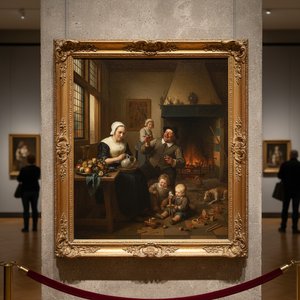
LA PELEUSE DE POMME: A Snapshot of Dutch Domestic Tranquility
Gabriel Metsu’s “La Peleuse de Pomme,” painted circa 1660, stands as a quintessential example of Dutch Golden Age genre painting—a movement dedicated to portraying scenes from everyday life with remarkable accuracy and subtle psychological depth. More than just a depiction of an apple peeling ritual, this artwork encapsulates the values of industriousness, domestic harmony, and quiet contemplation that defined the era’s artistic sensibilities.
- Composition & Perspective: The painting's central focus—a woman meticulously removing the skin from an apple—is framed within a deliberately flattened perspective. This stylistic choice eschews dramatic spatial illusion, prioritizing clarity of form and conveying a sense of immediacy, mirroring how artists aimed to capture reality as it unfolded.
- Color Palette & Light: Metsu employs a restrained color palette dominated by earthy hues – reds reflecting the apple’s flesh, greens hinting at foliage, browns grounding the scene in natural materials, and creams illuminating the woman's complexion. Soft, diffused light emanating from an unseen window casts gentle shadows, enhancing the realism of the composition and fostering an atmosphere of serene stillness.
- Technique & Texture: Metsu’s masterful brushwork contributes significantly to the artwork’s textural richness. Delicate strokes define the contours of the woman's clothing and face, while thicker impasto creates a palpable surface quality for the basket weave and apple skin—a testament to his meticulous attention to detail.
Historical Context & Artistic Influences
Painted during the height of the Dutch Golden Age (approximately 1640-1700), “La Peleuse de Pomme” reflects a broader artistic preoccupation with capturing the nuances of human experience within familiar surroundings. Metsu’s work draws inspiration from Nicolaes Maes, a fellow painter known for his similarly realistic depictions of domestic interiors and portraits. This stylistic convergence underscores the prevailing artistic conventions of the period—a commitment to portraying believable figures and environments against muted backgrounds.
Symbolism & Emotional Resonance
Beyond its visual realism, “La Peleuse de Pomme” carries symbolic weight. The apple itself represents abundance and nourishment – a tangible reminder of the fruits of labor and the comforts of home. Simultaneously, the woman’s focused activity embodies industriousness and self-sufficiency—values highly esteemed in Dutch society during this era. Ultimately, Metsu's painting evokes a feeling of quiet contentment and contemplative observation, inviting viewers to appreciate the beauty found within the commonplace.
Gabriel Metsu: A Master of Genre Painting
Gabriel Metsu (1629-1667) remains an enigmatic figure in Dutch art history. Despite producing relatively few paintings—only 14 survive—Metsu’s oeuvre demonstrates unparalleled skill in capturing psychological realism and conveying subtle emotional nuances. His dedication to meticulous observation and masterful technique cemented his place as one of the most influential artists of his time, ensuring “La Peleuse de Pomme” continues to resonate with audiences today.
よくあるご質問
「LA PELEUSE DE POMME」の複製画は、お部屋のどの場所に飾るのがおすすめですか?
「LA PELEUSE DE POMME」の複製画は、Living Roomに美しく調和します。
ガブリエル・メツ作「LA PELEUSE DE POMME」の色味の強さはどの程度ですか?
「LA PELEUSE DE POMME」の彩度はBalancedです。彩度とは、色の鮮やかさの度合いを表します。
ガブリエル・メツ作「LA PELEUSE DE POMME」には何が描かれていますか?
ガブリエル・メツ作「LA PELEUSE DE POMME」に描かれているもの:domestic scene, apple peeling, genre painting, still life composition, dutch art, quiet observation, fruit basket
More about this painting
 設置イメージを確認
 送る
送る シェア
シェア
 詳細情報
詳細情報 ガイドを表示

 画像をダウンロード
 似ている作品
 X線調査
X線調査 スライドショー
 Q&A
Q&A 統計情報
統計情報