 油彩画を購入
 Tigerのすべて


































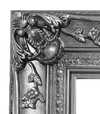


 いずれかの辺が105 cm(約41インチ)を超えるアートワークまたは複製画の場合、フレームは分解されたキットの状態でお届けいたします。この方法は、輸送中の破損を防ぎ、安全に配送するために採用しております。


Identification of the Artwork Tiger
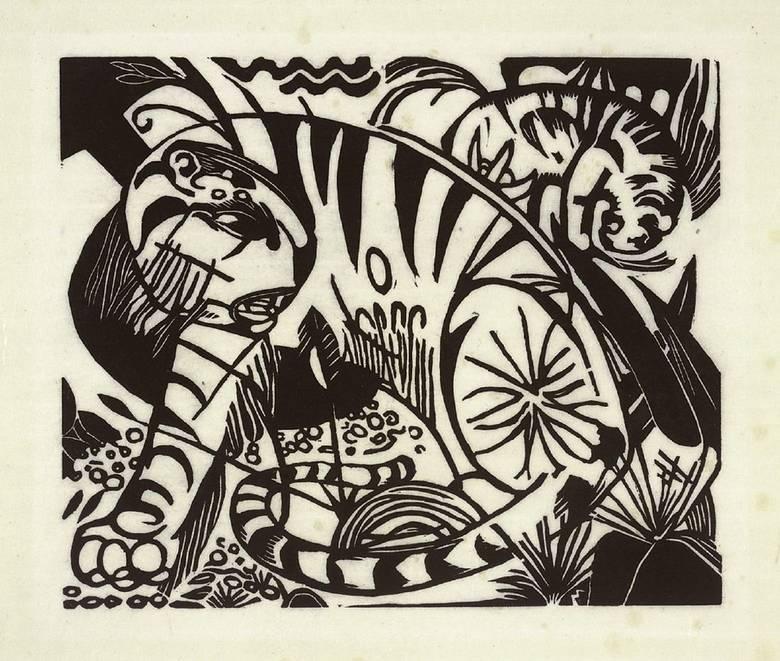
In 1912, Franz Marc produced Tiger, a woodcut print that captures a singular, piercing gaze. The work emerged from the heart of the German Expressionist movement. It exists as a stark, graphic presence. The medium of the woodcut allows for a rhythmic, muscular intensity that defines the subject's form.
The artist, Franz Marc, sought to move beyond the surface of the natural world. Through this print, he stripped away the unnecessary to find a core of vitality. The black ink meets the textured cream of the paper. It is a quiet collision of shadow and light. The tiger remains fixed in its silent, predatory grace.
Composition and Visual Elements
The tiger dominates the frame, a heavy presence moving through a dense forest landscape. It is rendered in striking black and white hues, stripped of the colorful camouflage of the wild. This monochromatic treatment focuses the eye on the animal's muscular form and its rhythmic movement through the thick foliage. Above the predator, a single bird takes flight, cutting a path through the air. In the distance, two figures remain positioned in the background, watching the scene unfold from the shadows of the trees.
A bicycle rests toward the right side of the image, its mechanical lines cutting a sharp, jarring silhouette against the organic shapes of the wilderness. This object introduces a quiet tension into the natural setting. The composition relies on these intersecting elements—the predator, the bird, the human figures, and the machine—to build a sense of layered existence. The forest provides a dark, textured stage for this encounter. A stillness settles over the woods.
Technique and Artistic Style
The artist employs the stark, graphic language of the woodblock medium to carve out a sense of presence. Sharp lines define the form, stripping away the softness of the natural world. Through deliberate hatching and cross-hatching, Marc builds up tonal variations that create a palpable sense of depth. These marks trace the musculature and the shadows of the forest, giving the subject a physical weight. The monochromatic palette intensifies the emotional impact, forcing a confrontation with the essence of the form through the tension of black ink against a textured background.
The composition aligns closely with the tenets of Cubism, yet it avoids total fragmentation. Instead of dissecting the subject into a chaotic mosaic, Marc utilizes simplified shapes. He relies on primarily rectangular blocks to convey volume and texture. This reduction of form creates a rhythmic, geometric structure that prioritizes feeling over precise representation. The animal becomes a vessel of energy, shaped by the intersection of light and shadow. A single bird cuts through the structured space above.
Thematic and Symbolic Interpretations
The tiger moves through the forest as a vessel of primal energy. Its presence carries the weight of instinct and courage, a muscular force cutting through the landscape. Above this heavy, terrestrial power, a bird takes flight. It represents a sudden upward pull, a symbol of freedom and the quiet aspiration of the spirit seeking to transcend the earth.
A bicycle rests within the scene, a sharp, mechanical intrusion into the stillness of the woods. This object marks the boundary where human presence enters the wild, a jarring note of modern life amidst the organic shadows. Yet, despite this friction, the work seeks a profound harmony between humanity and the natural world. The figures in the background watch from the periphery, existing in a state of quiet contemplation alongside the beast.
The composition balances these tensions through a rhythmic connection between the observer and the observed. It is a meditation on the interconnectedness of all living things, where the predator, the bird, and the human eye meet in a single, shared moment of existence. The wild remains, even when watched.
Related Works by Franz Marc
The animal forms in Marc's oeuvre often pulse with a specific, rhythmic energy. In 1911, he produced The Large Blue Horses, a work that established his preference for non-naturalistic color. This shift toward the spiritual essence of his subjects continued through 1912 with Animal legend, about 1912, and Tiger in Jungle, 1912. These pieces share a focus on the life force inherent in the wild, seeking to capture the internal essence of the creature rather than its surface appearance.
As his style moved toward greater abstraction, the shapes became more crystalline and structured. The year 1913 saw the creation of The Tower of Blue Horses, The Foxes, and The World-Cow. These works push the boundaries of form, using simplified, rhythmic shapes to reach for a more subjective reality. Each piece acts as a vessel for a specific, coded energy, moving away from the literal to find a deeper, cosmic harmony.
The movement of his brush and the logic of his palette remain constant. Whether through the faceted planes of his later compositions or the intense, symbolic use of color, the artist sought to map a spiritual hierarchy. The animal remains the central anchor, a quiet presence amidst the shifting geometry of the modern world.
Q&A
Tigerは手描きですか、それともプリントですか?
手描きによる制作:熟練した画家が、リネンキャンバスに油彩でTigerを模写します。
Tigerのサイズはどれを選べばよいですか?
原画のサイズは19 x 23 cmです。 サイズは29.1 x 34.4 cm (¥34881)から211.3 x 249.3 cm (¥342280)まで展開しております。こちらのページ内の表に、主な工程とそれぞれの価格を記載しています。
配送にはどのくらいの時間がかかりますか?
配送には4〜5週間を要し、世界中どこへでも速達便にて無料でお届けいたします。また、本ページではお急ぎの方向けの特急制作オプションもご用意しております。商品は、理由を問わず100日以内であれば全額返金での返品が可能です。
フランツ・マルクはTigerの制作にどのような画材(メディア)を使用しましたか?
Woodcut
 設置イメージを表示

 シェアする
 シェアする
 詳細を見る
 解説シート


 ダウンロード
 似ている作品
 X線調査
 スライドショーを表示
 Q&A

 統計情報