プリント版に切り替え
 詳細を表示
詳細を表示







































 いずれかの辺が105 cm(約41インチ)を超えるアートワークまたは複製画の場合、フレームは分解されたキットの状態でお届けいたします。この方法は、輸送中の破損を防ぎ、安全に配送するために採用しております。


A Glimpse into 17th-Century Courtly Life
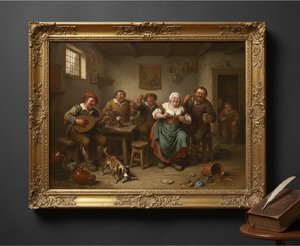
To stand before Frans van Mieris's 'Oyster Eaters' is to be instantly transported across the centuries, deep into the opulent drawing rooms of the Dutch Golden Age. This painting is far more than a mere depiction of a meal; it is a meticulously composed tableau vivant, capturing a moment charged with social grace and subtle indulgence. The scene unfolds with an air of studied elegance, centering on a richly dressed couple whose interaction suggests both intimacy and public display. Notice the man, resplendent in his elaborate red coat and powdered wig, standing beside the seated woman. Their attire speaks volumes of their status, hinting at the refined tastes and burgeoning merchant wealth that characterized Dutch society during the mid-17th century.
The Mastery of the Fijnschilder Technique
Van Mieris was celebrated as a master *fijnschilder*, or fine painter, a designation earned through an almost obsessive attention to minute detail. This technical prowess is what makes 'Oyster Eaters' so captivating. Observe the texture—the sheen on the silk of the garments, the delicate folds of fabric, and the subtle highlights catching the polished wood of the setting. His technique allows every element, from the man’s carefully curled mustache to the dog resting quietly in the corner, to feel tangible. It is a demonstration of painstaking draftsmanship, where the artist elevates everyday objects and human interaction into subjects worthy of high art.
Symbolism and Social Dynamics
The subject matter itself—the consumption of oysters—carries layers of symbolism. In 17th-century Dutch culture, such gatherings were often occasions for both pleasure and social maneuvering. The presence of multiple figures suggests a complex web of relationships at play; every glance, every gesture, contributes to the narrative tapestry. These paintings frequently served as visual records of class aspiration and sophisticated leisure. For the modern admirer, this piece offers a window into the rituals of courtship and conviviality, inviting contemplation on the performance inherent in high society.
Bringing History Home: Decorating with Art
For those who seek to infuse their own interiors with the gravitas and beauty of historical masterworks, a reproduction of 'Oyster Eaters' offers unparalleled depth. The rich palette—dominated by deep reds, sumptuous browns, and creamy whites—lends itself beautifully to both formal drawing rooms and richly appointed studies. Owning this piece is not merely decorating; it is curating an atmosphere steeped in history, suggesting the cultured taste of a bygone era while remaining vibrantly alive for contemporary appreciation.
Q&A
「Oyster Eaters」は、作者の母国に保管されていますか?
いいえ、作品は国外に保管されています。フランス・ファン・ミールリスはオランダで生まれ、その真作である「Oyster Eaters」はRussiaの美術館に収蔵されています。
美術史におけるフランス・ファン・ミールリス作「Oyster Eaters」の立ち位置とはどのようなものでしょうか。
フランス・ファン・ミールリス作「Oyster Eaters」の美術史的な分類は、Early Modern期におけるDutch Golden Ageです。
フランス・ファン・ミールリス作「Oyster Eaters」 の色彩に調和する空間はどこでしょうか?
フランス・ファン・ミールリス作「Oyster Eaters」のEarthyな色彩は、おすすめの空間であるLiving Roomに調和します。
この絵画の詳細を見る
 設置イメージを表示
 シェアする
シェアする シェアする
シェアする
 詳細を見る
詳細を見る ガイドを表示

 ダウンロード
 似ている作品
 X線調査
X線調査 スライドショーを表示
 Q&A
Q&A 統計情報
統計情報