
 プレビュー
プレビュー
 シェアする
シェアする シェアする
シェアする
 詳細を見る
詳細を見る

 ダウンロード
 似ている作品
 X線調査
X線調査 スライドショー
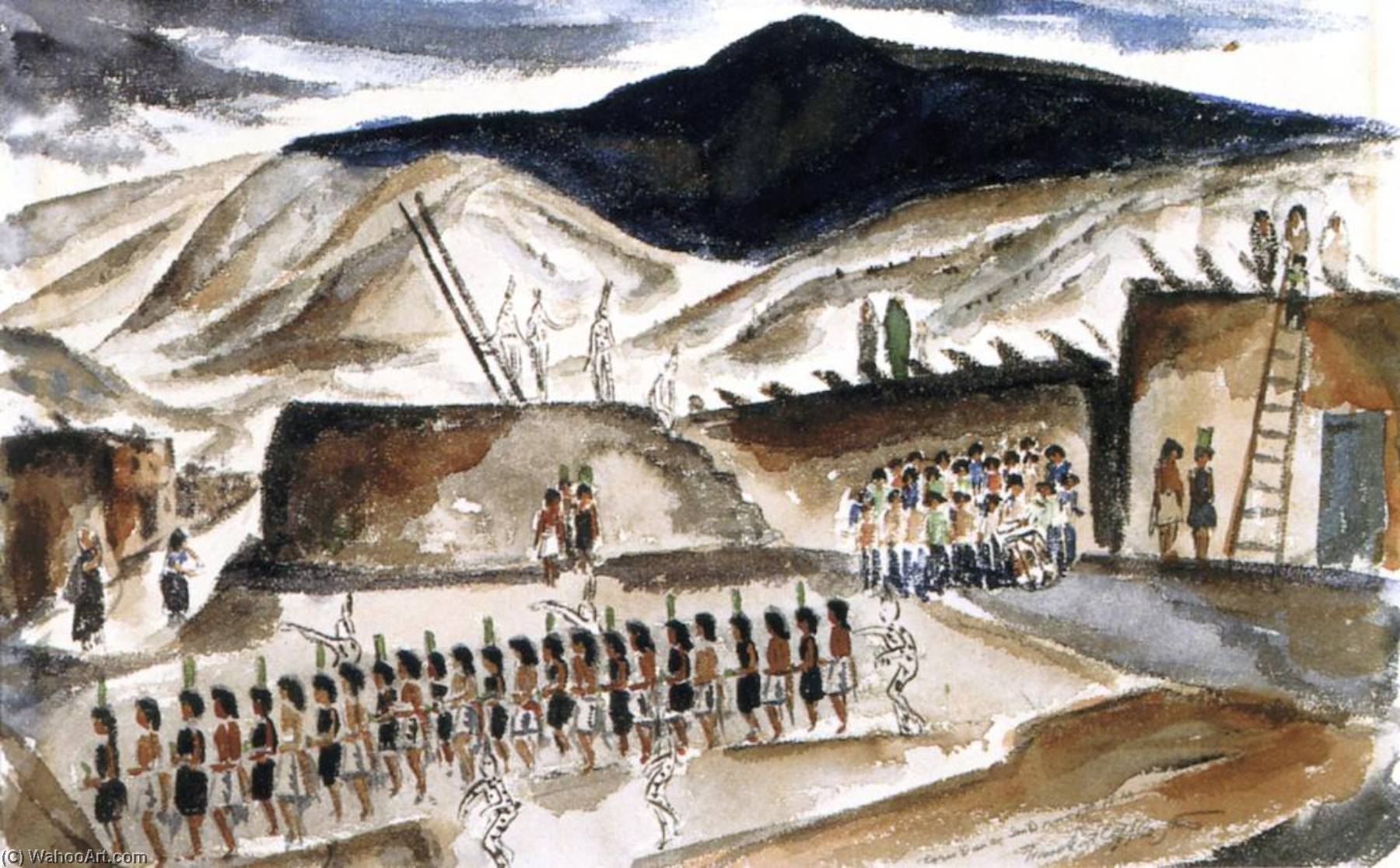
Green Corn Dance

 詳細を見る
詳細を見る
ジークレー/アートプリント
迅速な制作と多彩な仕上げオプションを備えた、ミュージアムクオリティのジークレーまたはキャンバスプリント。 ( 手描きの絵画を購入 画像を購入)




































作品のオリジナル比率に合わせた、当店の規定サイズからお選びください。

特定のフレームやスペースに合わせて、ご自身でサイズを指定することも可能です。選択されたサイズが元の画像の比率と一致しない場合、作品をトリミングするか、鏡面反射または単色での塗りつぶしによって画像を拡張いたします。制作を開始する前に、ご確認用のデジタルモックアップをお送りいたします。
画面上のプレビューには、実際のトリミングや拡張は反映されませんのでご注意ください。最終的な構図を正確に確認できるのは、モックアップのみとなります。
カスタムサイズも承っておりますが、元の比率を維持するためには、あらかじめ用意されたリストからサイズを選択することをお勧めいたします。


 ガラスオプションは、110cm未満のサイズでのみご利用いただけます。

Green Corn Dance
ジークレー/アートプリント
複製画のサイズ
-


合計金額
$ 80
アーティストの略歴
The Luminous Legacy of Frank Applegate
In the golden, sun-drenched history of the American Southwest, few figures capture the ephemeral beauty of the New Mexico landscape as poignantly as Frank Applegate. A true pioneer of Southwestern watercolor, Applegate possessed a rare ability to translate the profound spiritual energy of Native American ceremonies and the rugged, arid majesty of the desert into vibrant, breathing compositions. While his name may not always command the immediate recognition of the most famous titans of the era, his presence was foundational to the artistic identity of Santa Fe, helping to weave the cultural tapestry that would eventually draw the world's eyes to this high-desert sanctuary.
Born in 1881 in Atlanta, Illinois, Applegate’s journey toward becoming a master of light and atmosphere was paved with rigorous classical training. His academic pursuits took him from the University of Illinois to the prestigious Pennsylvania Academy of the Fine Arts, and eventually to the legendary Académie Julien in Paris. This diverse educational background provided him with a sophisticated command of European techniques, yet it was his eventual migration toward the Southwest that allowed his true artistic voice to emerge. Though he began his career honing skills in oil painting and even leading sculpture and ceramics departments in New Jersey, it was the fluid, translucent nature of watercolor that ultimately became his primary medium for capturing the fleeting, atmospheric shifts of the New Mexico sky.
A Visionary of the Southwest
Applegate’s arrival in the Santa Fe region marked a transformative period not only for his own work but for the local art community at large. He was deeply enamored with the traditional Pueblo and Hispanic cultures, finding endless inspiration in the rhythmic movements of the Hopi Antelope Dance and the Katchina ceremonies at Walpi. His approach to these subjects went far beyond mere documentation; he utilized Expressionist principles, employing layered washes and subtle tonal shifts to convey a sense of profound emotion and sacredness. In works such as "El Navajo" or his evocative depictions of Indian dances, one can feel the pulse of the earth and the spiritual weight of the traditions he so lovingly portrayed.
His artistic life was inextricably linked to the physical landscape of Santa Fe. In 1925, Applegate purchased the historic De la Peña House, a stunning example of Spanish Pueblo adobe architecture. This site became more than just a residence; it evolved into a creative hub where he guided a collective of artists known as Los Cinco Pintores. Through his leadership and his commitment to building a community of creators, he helped establish Santa Fe as an internationally acclaimed destination for fine art. His influence extended beyond the canvas into the very fabric of the region's cultural preservation, as evidenced by his role in founding the Spanish Colonial Arts Society alongside Mary Hunter Austin.
Artistic Mastery and Lasting Impact
The breadth of Applegate’s talent was truly remarkable, spanning a variety of disciplines that reflected his deep connection to the materials of the earth. Beyond his celebrated watercolors and oil paintings, he was an accomplished creator of ceramics and wood carvings, often drawing from the very traditions he studied. His ability to move between the delicate precision of a watercolor wash and the tactile strength of sculpture allowed him to engage with Southwestern art in its most holistic form.
Even as his life was cut short in 1931, the echoes of his contribution remained vibrant. His legacy is found in:
- The preservation of culture: Through his meticulous documentation of Native American ceremonies and his collection of Spanish Colonial works.
- The development of Santa Fe: By fostering a community of artists that transformed the city into a global art capital.
- Technical innovation: His mastery of watercolor layering to achieve luminous, atmospheric textures that defined a regional style.
- Literary contributions: His published works, such as Indian Stories from the Pueblos, which brought the narratives of the Southwest to a wider audience.
Today, when we look upon the sweeping landscapes and vibrant cultural portraits of the early 20th-century Southwest, we see the indelible mark of Frank Applegate. He remains a vital link in the history of American art, a man who looked at the desert not just as a landscape, but as a living, breathing spirit waiting to be captured in color.

frank applegate
1882 - 1931
基本情報
- Artistic Movement Or Style: Expressionist Watercolor
- Artists Or Movements Influenced By This Artist: ['Santa Fe Art']
- Artists Who Influenced This Artist: ['Los Cinco Pintores']
- Date Of Birth: 1882
- Date Of Death: 1931
- Full Name: Frank Applegate
- Nationality: American
- Notable Artworks:
- El Navajo
- Hopi Antelope Dance
- Place Of Birth: USA

