プリント版に切り替え
 続きを読む
続きを読む







































 いずれかの辺が105 cm(約41インチ)を超えるアートワークまたは複製画の場合、フレームは分解されたキットの状態でお届けいたします。この方法は、輸送中の破損を防ぎ、安全に配送するために採用しております。


The Enigmatic Embrace: Deconstructing "The Love Letter" by François Boucher
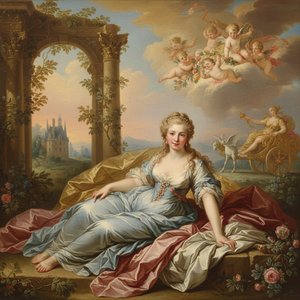
François Boucher’s “The Love Letter,” painted in 1750 for the discerning marquise de Pompadour, is more than a charming pastoral scene; it's a meticulously crafted embodiment of Rococo ideals – a delicate dance between sensuality, allegory, and aristocratic leisure. The painting captures a moment of quiet intimacy within a verdant forest setting, depicting two young women seated on the ground, lost in conversation amidst scattered sheep, creating an atmosphere of serene beauty and subtle intrigue. Boucher masterfully employs a palette of soft pastels – blush pinks, pale blues, and creamy greens – to evoke a sense of ethereal light and dreamlike tranquility. The figures themselves are rendered with exquisite detail, their clothing flowing and luxurious, hinting at the wealth and privilege of their world. The sheep, strategically placed throughout the composition, serve not merely as decorative elements but also as symbols of innocence and pastoral virtue, anchoring the scene within a traditional Arcadia – an idealized realm of shepherds and shepherdesses.
Rococo Refinement: Boucher’s Artistic Language
Boucher was a pivotal figure in establishing the Rococo style, characterized by its emphasis on ornamentation, grace, and playful eroticism. Unlike the grand narratives of his predecessors, Boucher frequently focused on intimate scenes of courtship and leisure, often populated with idealized figures and fantastical elements. “The Love Letter” exemplifies this approach perfectly. The composition is carefully balanced, utilizing a pyramidal structure to draw the eye towards the central figures. Boucher’s brushwork is remarkably smooth and fluid, creating an illusion of depth and movement. He expertly utilizes *sfumato*, a technique borrowed from Leonardo da Vinci, to soften edges and create a hazy atmosphere, contributing to the painting's overall sense of dreaminess. The meticulous rendering of fabrics – the satin gowns, the delicate lace collars – demonstrates Boucher’s exceptional skill in depicting textures and materials, adding layers of visual richness to the scene.
A Marquise’s Secret: Context and Patronage
The painting's creation was intrinsically linked to the patronage of Madame de Pompadour, Louis XV’s influential mistress. She was a passionate art collector and a significant force in shaping the artistic landscape of France during the 18th century. Boucher, as her favored artist, received considerable commissions from her, often tasked with creating decorative panels for her lavish residences, particularly at Bellevue. “The Love Letter” was originally intended to adorn an *chambre doré* (gilded room) within this estate, a space designed to evoke the beauty and tranquility of the countryside. The painting’s intimate setting and subtle eroticism were likely chosen to reflect Pompadour's own sophisticated tastes and her desire for a private sanctuary away from the pressures of court life. The inclusion of the messenger, holding a letter, immediately establishes a narrative of romantic correspondence and secret affections – themes that resonated deeply with the marquise’s personal life.
Symbolism and Emotional Resonance
Beyond its surface beauty, “The Love Letter” is rich in symbolic meaning. The two women represent an idealized vision of feminine companionship and mutual affection. Their relaxed posture and engaged gazes suggest a deep connection and shared understanding. The forest setting itself symbolizes fertility, abundance, and the restorative power of nature. The scattered sheep further reinforce this association with pastoral innocence and tranquility. However, there’s also a subtle undercurrent of melancholy – a hint that this idyllic scene is fleeting and ephemeral. Boucher masterfully captures a moment of suspended time, inviting viewers to contemplate the complexities of love, desire, and the passage of time. The painting's enduring appeal lies in its ability to evoke a sense of nostalgia for a bygone era—a world of refined elegance, secret passions, and timeless beauty.
This reproduction offers an exceptional opportunity to bring Boucher’s masterpiece into your home or office, capturing the essence of Rococo artistry with stunning detail and vibrant color. It's more than just a painting; it’s a portal to a world of refined pleasure and romantic intrigue.
よくあるご質問
「The Love Letter」は、空間にどのようなムードをもたらすでしょうか?
Romanticな雰囲気を持つ「The Love Letter」は、Hotel Lobbyに飾るのがおすすめです。
フランソワ・ブーシェ作「The Love Letter」は、明るい印象の作品ですか、それとも暗い印象の作品ですか?
「The Love Letter」の全体的な明るさはdeep_shadowで、輝度はDarkです。
フランソワ・ブーシェ作「The Love Letter」の構図を主導している色は何ですか?
「The Love Letter」の中で最も際立っている色はBlack (#100e0e)です。作品の主色(メインカラー)を知ることは、インテリアとのコーディネートを考える際に役立ちます。
More about this painting
 設置イメージを確認
 送る
送る シェア
シェア
 詳細情報
詳細情報 ガイドを表示

 画像をダウンロード
 似ている作品
 X線調査
X線調査 スライドショー
 Q&A
Q&A 統計情報
統計情報