
 プレビュー
プレビュー
 シェアする
シェアする シェアする
シェアする
 詳細を見る
詳細を見る

 ダウンロード
 似ている作品
 X線調査
X線調査 スライドショー
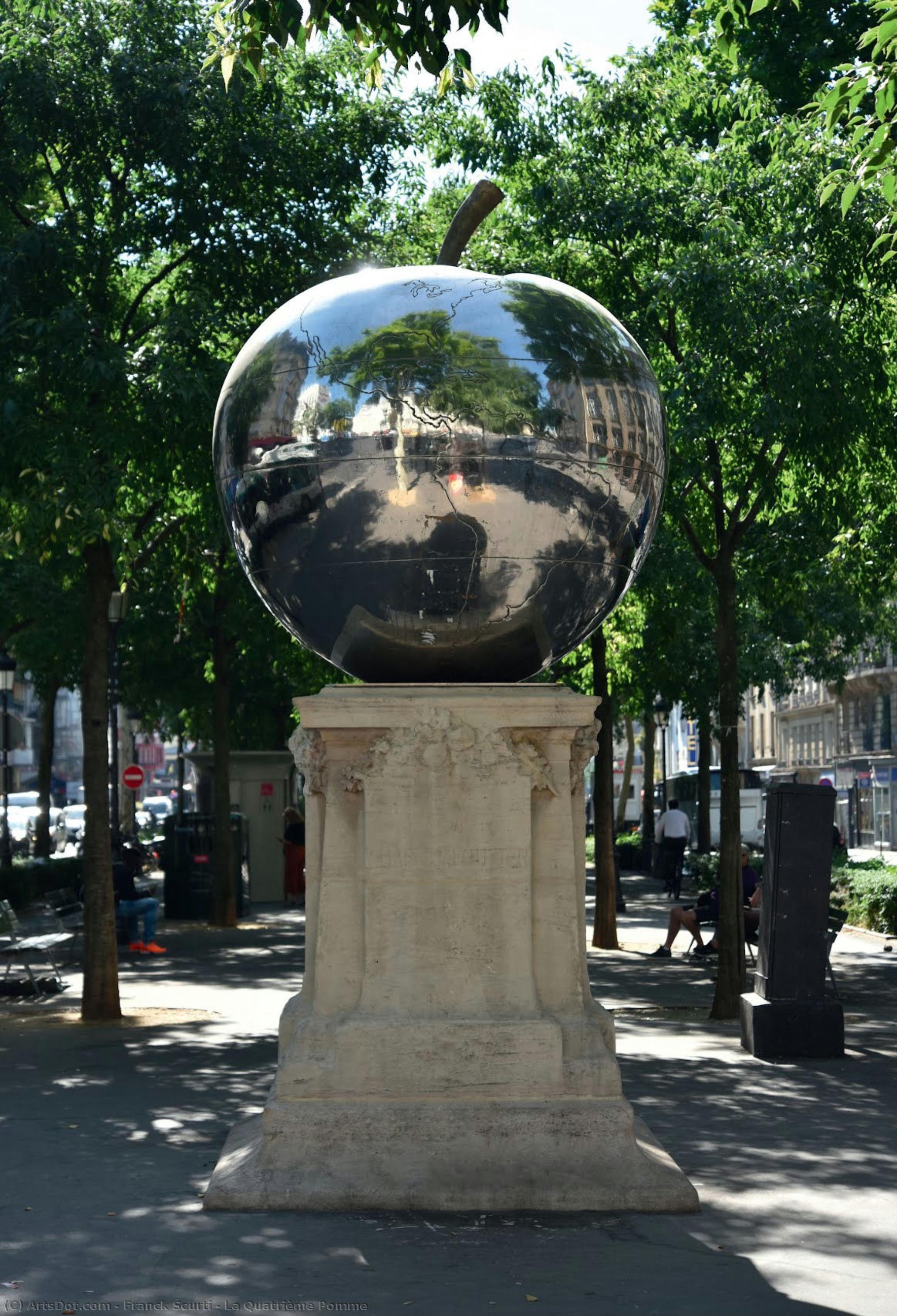
La Quatrième Pomme

 詳細を見る
詳細を見る
ジークレー/アートプリント
迅速な制作と多彩な仕上げオプションを備えた、ミュージアムクオリティのジークレーまたはキャンバスプリント。 ( 手描きの絵画を購入 画像を購入)




































作品のオリジナル比率に合わせた、当店の規定サイズからお選びください。

特定のフレームやスペースに合わせて、ご自身でサイズを指定することも可能です。選択されたサイズが元の画像の比率と一致しない場合、作品をトリミングするか、鏡面反射または単色での塗りつぶしによって画像を拡張いたします。制作を開始する前に、ご確認用のデジタルモックアップをお送りいたします。
画面上のプレビューには、実際のトリミングや拡張は反映されませんのでご注意ください。最終的な構図を正確に確認できるのは、モックアップのみとなります。
カスタムサイズも承っておりますが、元の比率を維持するためには、あらかじめ用意されたリストからサイズを選択することをお勧めいたします。


 ガラスオプションは、110cm未満のサイズでのみご利用いただけます。

La Quatrième Pomme
ジークレー/アートプリント
複製画のサイズ
-


合計金額
$ 80
アーティストの略歴
Franck Scurti: A Cartographer of the Everyday
Born in Lyon, France, in 1965, Franck Scurti’s artistic journey is a fascinating exploration of the familiar rendered strange – a deliberate disruption of our perception through meticulous observation and radical recontextualization. He isn't simply an artist; he’s a cartographer of the everyday, charting the hidden landscapes within our routines, news feeds, and the detritus of modern civilization. Scurti’s work resists easy categorization, oscillating between conceptual art, installation, sculpture, and video, creating a body of work that is both unsettlingly diverse and profoundly unified in its core concern: how we perceive and interact with the world around us.
Scurti's early career gained momentum in the 1990s, building upon the legacy of conceptual art and, crucially, Marcel Duchamp. This lineage is evident not just in his rejection of traditional artistic mediums – he frequently employs found objects, discarded materials, and even seemingly banal images – but also in his questioning of the very definition of ‘art.’ Like Duchamp, Scurti challenges viewers to actively engage with his work, prompting them to consider the inherent value judgments embedded within our visual culture. The Marcel Duchamp Prize awarded him in 2003 stands as a testament to this innovative and provocative approach.
The Language of Discomfort
Scurti’s artistic practice is characterized by a deliberate discomfort, a refusal to offer comfortable narratives or easily digestible aesthetics. His works often draw inspiration from international news, urban landscapes, and the seemingly random occurrences of daily life. He doesn't seek to create beautiful objects; instead, he meticulously assembles fragments – scribbles, customized vehicles, discarded items, and snippets of video footage – transforming them into complex systems that expose the underlying structures of our society. As Michel Rein noted, “His work is a self-placing into situation between reality and its representations, relating to aesthetical, historical or economical stakes, but also to things and events.”
This approach isn’t driven by nihilism, however. Scurti's work operates within a framework of improvisation, drawing upon the legacies of Dada and Fluxus – movements that embraced chance, absurdity, and a playful rejection of established norms. Yet, this spontaneity is tempered by a deep understanding of historical and cultural contexts. He acknowledges the influence of modernist grids and productivity rules, recognizing how these systems shape our lives while simultaneously offering opportunities for creative disruption. His work can be seen as a liberation from rigid structures, inviting viewers to embrace an aleatory perspective – one that values improvisation and recognizes the inherent potential within seemingly random events.
A Global Presence
Franck Scurti’s exhibitions have spanned continents, solidifying his position as a significant contemporary artist. His work has been showcased at prestigious institutions worldwide, including the Centre Pompidou (Paris), Fondation Zimei (Montesilvano), CCCOD (Tours), Musée d'art Contemporain (Moscow), Centre Pompidou Malaga, Museo Nacional Centro de Arte Reina Sofia (Madrid), Palais de Tokyo (Paris), CA2M - Centro de Arte Dos de Mayo (Madrid), SMAK - Stedelijk Museum voor Actuele Kunst (Gent), Power station of art (PSA) collection de la Fondation Cartier (Shanghai), MAMCO - Musée d’Art Moderne et Contemporain (Geneva), Queen Elizabeth Hall Riverside Terrace (London), Musée Picasso (Valauris), Magasin-CNAC (Grenoble), Vitrines Hermes (Tokyo), Centre National de la Photographie (Paris), MAC/VAL (Vitry-sur-Seine), BPS22 (Charleroi), IAC - Institut d’Art Contemporain (Villeurbanne), Kunsthaus Baselland (Muttenz), Bloomberg Space (London), MAN - Museo d’Arte Provincia di Nuoro, Museum of Contemporary Art (Bucharest). This extensive network reflects a global engagement with themes of urbanity, consumption, and the mediated experience of reality.
Collecting and Critical Acclaim
Scurti's work is held in significant collections across Europe and beyond, including the Centre Georges-Pompidou (Paris), FNAC - Fonds National d’Art Contemporain (Paris), Collection départementale d’art contemporain de la Seine-Saint-Denis, Collection Guerlain, Collection Agnes B, IAC - Institut d’Art Contemporain (Villeurbanne), MAC - Musée d’Art Contemporain (Marseilles), MAC/VAL (Vitry-sur-Seine), CNAP (Paris), BPS22 (Charleroi), FRAC (Alsace, Sélestat ; Nouvelle-Aquitaine MÉCA, Bordeaux ; Corse, Corte ; Artothèque Nouvelle-Aquitaine, Limoges ; Occitanie Montpellier ; Normandie, Caen ; Pays-de-la-Loire, Carquefou ; Poitou-Charentes, Angoulême). This recognition underscores the enduring relevance and critical appreciation of his work within the contemporary art world. His continued exploration of these themes ensures that Franck Scurti remains a vital voice in shaping our understanding of the 21st century.

franck scurti
1965 - , France
基本情報
- Artistic Movement Or Style: Conceptual Art, Duchamp's legacy
- Artists Or Movements Influenced By This Artist: ['Fluxus']
- Artists Who Influenced This Artist: ['Marcel Duchamp']
- Date Of Birth: 1965
- Full Name: Franck Scurti
- Nationality: French
- Notable Artworks: ['La Quatrième Pomme']
- Place Of Birth: Lyon, France

