

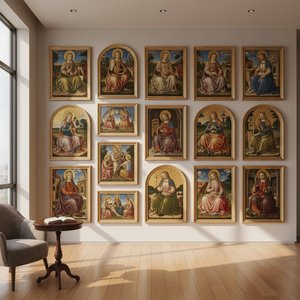
 設置イメージを確認
 送る
送る シェア
シェア
 詳細情報
詳細情報 ガイドを表示

 画像をダウンロード
 似ている作品
 X線調査
X線調査 スライドショー
 統計情報
統計情報The Annunciation
 Tempera On Panel
- Renaissance Architecture
 1445
1445- Renaissance
 70.0 x 78.0 cm
 アルテ・ピナコテーク
 続きを読む
続きを読む
手描き油彩複製画
当社のアーティストが、お客様のご希望のサイズと額縁に合わせて、キャンバスに手描きで制作する油彩画です。 ( プリント版に切り替え デジタル画像販売へ切り替え)




P118B ¥10

P118H ¥10

P118W ¥10

P438Z ¥10

P508JH ¥12

P508YH ¥12

P805H ¥10

P805Z ¥10

P919BZ ¥10

P919G ¥10

P919XJ ¥10

P959ZH ¥10

P968JZ ¥12

W106C ¥8

W218G ¥10

W218JH ¥8

W218Y ¥10

W307PJ ¥10

W316G ¥10

W316PJ ¥8

W316Y ¥10

W398PJ ¥8

W4111J ¥10

W500HY ¥15

W500JH ¥15

W692G ¥12

W849H ¥8

W940BG ¥15

W953PJ ¥8




作品のオリジナル比率に合わせた、当店の規定サイズからお選びください。

フレームや壁のスペースに合わせて、ご希望の幅と高さを入力してください。本作品は手描きのため、異なる比率のサイズをご希望の場合、絵画の周囲を少し広げて描くか、あるいは端を少しカットして調整することが可能です。お客様のご要望に合わせます。制作を開始する前に、仕上がりを確認するためのデジタルモックアップをお送りいたします。このページに表示されている画像は完成品の実物ではなく、あくまでモックアップによるイメージです。
ご注文後、OriginalUniqueArt.com チームより詳細な指示をお送りするとともに、仕上がりイメージ(モックアップ)をご提供いたします。


 ガラスオプションは、110cm未満のサイズでのみご利用いただけます。

The Annunciation
再現技法
複製画サイズ一覧
-


合計金額
¥ 47267
Fra Carnevale: The Enigmatic Architect of Urbino’s Renaissance
Fra Carnevale (c. 1420–25 – 1484) remains one of the most elusive figures in Quattrocento art history—a painter whose legacy is overshadowed by scarcity and controversy. Born around 1420 in Urbino, Duchy of Montefeltro, he entered the Dominican Order at a young age, marking the beginning of a life dedicated to piety and artistic endeavor.
Despite producing only nine confirmed works, Carnevale’s impact on Renaissance art—particularly its architectural dimension—continues to fascinate scholars and inspire admiration. He is cited by a number of names including Bartolomeo di Giovanni Corradini, Bartolomeo Coradini, and Fra’ Carnevale.
Early Life & Training: Records indicate Carnevale's formative years were spent in Urbino under the tutelage of Jacopo Veneto, a master known for his innovative use of perspective. This early influence would profoundly shape Carnevale’s artistic style and approach to architectural representation. Veneto’s groundbreaking explorations into linear perspective—a technique pioneered during this period—established Carnevale as a student deeply attuned to the burgeoning scientific advancements of the time.
Florence & Alberti’s Influence: Around 1445, Carnevale traveled to Florence where he encountered Filippo Alberti, a humanist architect and theorist who championed classical ideals. Alberti's writings on proportion and geometry profoundly impacted Carnevale’s artistic sensibilities, encouraging him to integrate architectural principles into his paintings—a distinctive feature that distinguishes his oeuvre from many of his contemporaries.
Style & Technique: Carnevale’s style is characterized by a serene stillness and meticulous attention to detail. His palette leans towards muted hues—primarily ochres, siennas, and umbers—creating an atmosphere of contemplative solemnity. He skillfully employs tempera on panel, layering thin glazes to achieve luminous effects that capture the subtle nuances of light and shadow. Notably, Carnevale’s architectural backgrounds are remarkably accurate, demonstrating a mastery of linear perspective that rivals that of Piero della Francesca and Luca Signorelli.
Historical Context & Symbolism: Carnevale's artistic output coincided with Urbino’s golden age under Federico III Montefeltro—a period marked by intellectual ferment and patronage of the arts. The artist’s works reflect the humanist ideals prevalent during this era, emphasizing human dignity and rational thought. Recurring motifs such as lilies—symbols of purity and divine grace—and scrolls—representing knowledge and wisdom—underscore Carnevale's spiritual convictions.
Emotional Impact: Viewing “The Annunciation” by Fra Carnevale evokes a profound sense of tranquility and reverence. The artist’s masterful depiction of Mary’s kneeling posture and Gabriel’s gesture conveys an unwavering faith and humility. Carnevale’s ability to capture the ethereal beauty of religious iconography speaks to the enduring power of art to inspire contemplation and elevate the human spirit.
Legacy: Despite producing only nine confirmed works, Fra Carnevale's influence extends far beyond his surviving paintings. He is credited with shaping the architectural vision of Bramante—the architect tasked with designing St. Peter’s Basilica—and Raphael—whose frescoes adorn Vatican City. Carnevale’s dedication to both painting and architecture solidified his position as a pivotal figure in Renaissance artistic innovation.
よくあるご質問
フラ・カルネヴァレ作「The Annunciation」は、Renaissance Architectureにおいてどのような情緒を表現していますか?
Renaissance Architectureのムーブメントにおいて、「The Annunciation」はCalmなトーンで描かれています。
フラ・カルネヴァレ作「The Annunciation」は、縦長、横長、それとも正方形の構図ですか?
「The Annunciation」の形式はSquareです。これは、複製画を飾る場所を検討する際に役立ちます。
フラ・カルネヴァレ作「The Annunciation」の複製画は、どのような用途に適していますか?
フラ・カルネヴァレ作「The Annunciation」の複製画は、Accentに最適です。作品の主題、情緒、そして色彩に基づいたおすすめの活用方法です。
アーティストについて
ウルビーノ・ルネサンスの謎めいた建築家
クアトロチェント(15世紀)の影に潜む回廊において、フラ・カルネヴァレほど、見る者の心を捉えて離さない魅惑的な人物は他にいないでしょう。畏敬と謎を伴って語り継がれるその名は、修道士としての称号で歴史に刻まれたバルトロメオ・ディ・ジョヴァンニ・コラディーニのものです。イタリア・ルネサンスにおける最も捉えどころのない巨匠の一人である彼は、1420年頃にウルビーノで生まれました。その生涯は、精神的な献身と深遠な芸術的革新という二つの糸で織りなされた、繊細なタペストリーのようでした。ドミニコ会の一員として、カルネヴァレは修道院の瞑想的な静寂と、勃興しつつあった人文主義の知的な厳格さが交差する、比類なき場所に身を置いていました。今日、彼の筆によるものと断定できる作品はわずか九点に留まりますが、現存するその一つひとつが、神聖なるものと物理的世界の数学的な精密さを調和させようとした、彼の精神を覗き見る窓となっているのです。
カルネヴァレの芸術的軌跡は、当時の偉大な芸術的試練場によって形作られました。ウルビーノでの形成期、ジャコポ・ヴェネトの指導を受けたことで、彼は遠近法に対する初期の情熱を植え付けられました。この技術はやがて、彼の成熟した様式の代名なる特徴となります。しかし、彼の創造的精神に真の火を灯したのは、1445年頃のフィレンツェへの旅でした。活気あふれるフィレンツェの空気に浸りながら、彼は影響力のあるアントニオ・アルベルティに学び、そしてフィリッポ・リッピの権威ある工房へと足を踏み入れました。この徒弟修行は彼にとって変革的な経験となりました。リッピから、カルネヴァレは色彩に対する卓越した支配力と、構図への繊細なアプローチを継承したのです。微妙な色調の変化と感情的な深みを通じて、人物に生命を吹き込む術を、彼はこの時期に習得しました。
空間と聖なる物語の習熟
フラ・カルネヴァレの作品を同時代の画家たちから際立たせているのは、複雑な建築的背景と聖なる物語を統合させる、比類なき能力です。彼は単に背景を描いたのではありません。彼は「世界」を構築したのです。彼のキャンバスには、しばしば堂々たる古典主義的な構造物が描かれています。それらは、ウルビーノの公爵宮殿の壮麗さや、レオン・バッティスタ・アルベルティの理論書を反映しており、当時の人文主義的な理想を映し出しています。聖母の誕生といった作品においては、中世的な細部描写とルネサンス的な空間論理が見事な結婚を果たしているのが見て取れます。これらのパネルに実現された建築的な奥行きは、幾何学への深い理解を示唆しており、奇跡的な出来事が、手で触れられ、測定可能な現実の中にしっかりと根を下ろしているかのような舞台を作り出しています。
彼の技術的なレパートリーは、その影響を受けた源泉と同じく多岐にわたり、テンペラ画の光り輝く透明感から、油彩画の豊かな質感に至るまで広がっています。聖ペテロのような作品では、光と影を駆使して荘厳さと神聖な存在感を呼び起こし、一方で寓意的な場面においては、古典的な設定の中に裸体を描くという大胆な試みを見せ、再発見されたグレコ・ローマンの理想に対する当時の熱狂を反映しています。ドミニコ会の修道士としての敬虔な義務と、フェデリコ・モンテフェルトロのようなパトロンが求める洗練された審美的要求の間を自在に行き来するこの能力こそが、彼に、信心深くもありながら知的な刺激に満ちた芸術を生み出すことを可能にしたのです。
遺産と歴史的共鳴
現存する作品の少なさゆえに、学者の間で特定の作品の真贋論争が巻き起こることも少なくありませんが、フラ・カルネヴァレの歴史的重要性を過小評価することはできません。彼は、15世紀初頭の実験的な試みと、ブラマンテやラファエロといった巨匠たちが到達した盛期ルネサンスの完成度を結ぶ、極めて重要な架け橋としての役割を果たしました。建築的遠近法への執着と古典的モチーフの統合は、次世代のイタリア人芸術家たちにとっての基礎的な設計図となりました。カルネヴァレを研究することは、中世の精神的な強烈さが、ルネなサンスの構造化された人間中心のビジョンへと融合し始めた、まさにその瞬間を目撃することに他ならないのです。
今日、この謎めいた修道士の遺志は、現存する稀少で貴重な、彼のヴィジョンの断片を通じて生き続けています。彼は「建築的画家」の力の証として、そこに立ち続けています。聖人の顔の中に神性を見出すだけでなく、彼らが居住する空間そのものの比率の中にも神性を見出した芸術家として。彼の生涯は、歴史的な不確実性に包まれているものの、今なお畏敬の念を呼び起こし続けています。最も捉えどころのない人物であっても、美術史の魂に消えることのない足跡を残すことができるのだということを、私たちに思い出させてくれるのです。

フラ・カルネヴァレ
1420 - 1484 , イタリア
アーティスト情報
- Artistic Movement Or Style: クアトロチェント
- Artists Or Movements Influenced By This Artist:
- フィリッポ・リッピ
- ピエロ・デラ・フランチェスカ
- Artists Who Influenced This Artist:
- アントニオ・アルベルティ
- ドミニコ・ヴェネツィアーノ
- Date Of Birth: 紀元1420年頃
- Date Of Death: 1484年
- Full Name: バルトロメオ・ディ・ジョヴァンニ・コラディーニ
- Nationality: イタリア人
- Notable Artworks:
- 受胎告知
- 男性の肖像
- Place Of Birth: ウルビーノ, イタリア
関連記事
Illuminating Surfaces: A Comprehensive Exploration of Tempera on Panel Painting Techniques & Historical Significance
Explore the rich history & techniques of tempera painting! Discover Renaissance masters like Botticelli & Fra Angelico, conservation insights, and the enduring legacy of this captivating art form. Learn more now!
Tempera's Timeless Legacy: 10 Masterpieces That Revolutionized Art | OriginalUniqueArt
Journey through 10 legendary tempera on panel masterpieces by Giotto, Duccio & Botticelli. Explore the history, symbolism & enduring beauty of these iconic artworks. Find museum-quality reproductions for your home at OriginalUniqueArt.com.
Illuminating History: A Comprehensive Exploration of Tempera Painting Techniques & Artistic Legacy
Explore the rich history & techniques of tempera painting! Discover Renaissance masters like Botticelli & Fra Angelico, conservation insights, and the enduring legacy of this captivating art form.
Tempera Art Guide: The Bold, Fast-Drying Secret to High-Impact Color
Unlock the secret to high-impact color with our expert guide to tempera art. Discover how this fast-drying, luminous medium delivers unmatched vibrancy and depth for bold, modern interiors. Master the alchemy of pigments and elevate your collection with professional insights.
フラ・アンジェリコの傑作25選:ルネサンス美術の神髄と至高の装飾 | OriginalUniqueArt
フラ・アンジェリコの傑作25選。ルネサンス美術の神髄を紐解き、天使のような静謐な色彩と宗教画の世界へ誘います。壁画やフレスコ画の技法、修道院に息づく祈りの絵…OriginalUniqueArtで至高のアートプリントをお手軽に。コレクションを探索する。

