
 送る
送る シェア
シェア
 詳細情報
詳細情報 ガイドを表示

 画像をダウンロード
 似ている作品
 スライドショー
 統計情報
統計情報Ara


 続きを読む
続きを読む
ジークレー/アートプリント
スピーディーな制作と多彩な仕上げオプションが魅力の、ミュージアムクオリティなジークレー・キャンバスプリント。 ( 手描きの複製画を注文する デジタル画像販売へ切り替え)




































作品のオリジナル比率に合わせた、当店の規定サイズからお選びください。

額縁や壁のスペースに合わせて、ご希望の幅と高さを入力してください。プリントはカットすることは可能ですが、元の画像より大きくすることはできないため、異なる比率のサイズを選択された場合は、画像の一部が欠けることになります。印刷を開始する前に、内容を確認していただくためのデジタルモックアップをお送りいたします。このページに表示されている画像は、実際のカット後の状態を示すものではありません。実際の仕上がりはモックアップにてご確認ください。


 ガラスオプションは、110cm未満のサイズでのみご利用いただけます。

Ara
ジークレー/アートプリント
複製画サイズ一覧
-


合計金額
¥ 12596
The Sky of Salamanca: An Unfolding Narrative
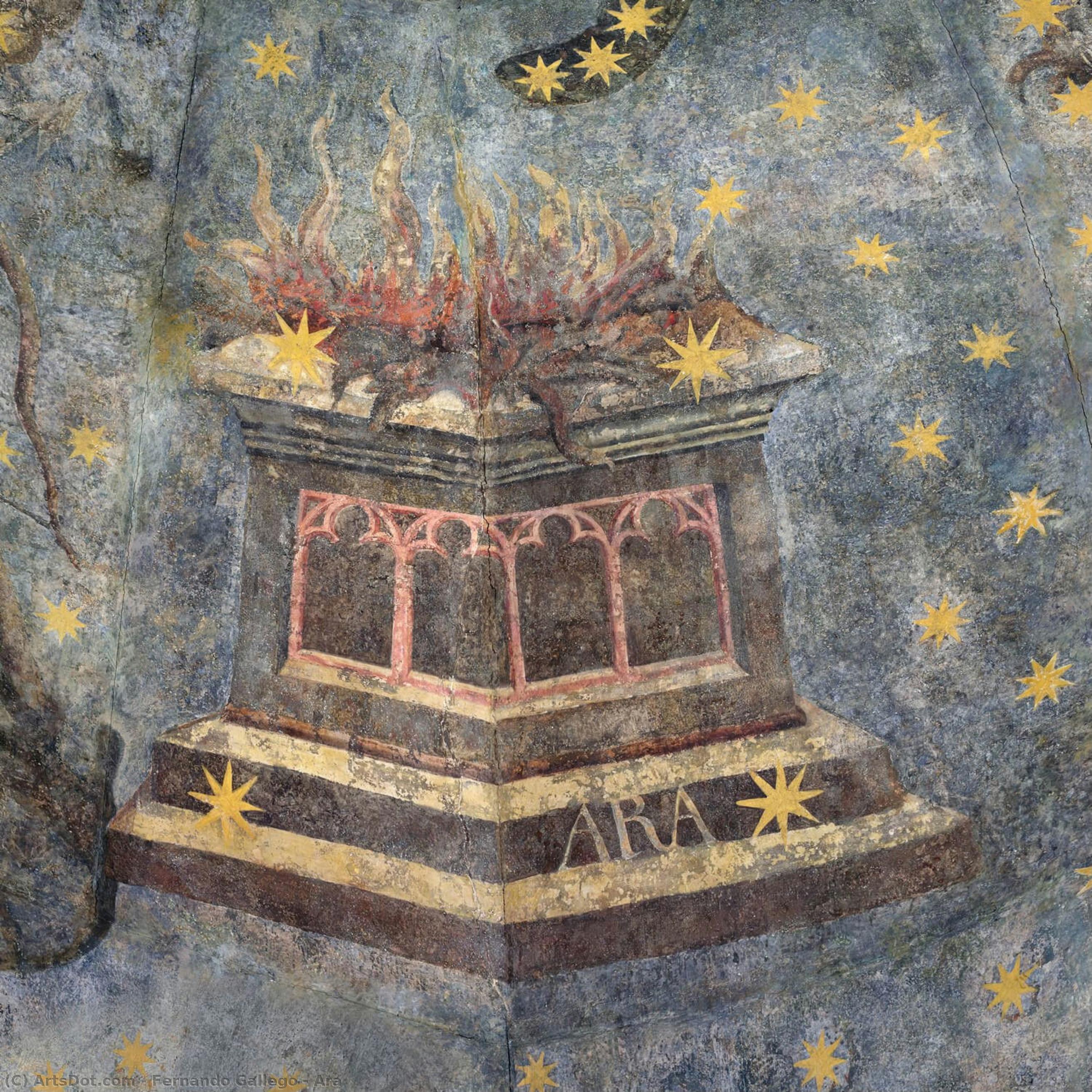
Fernando Gallego’s “Ara,” a fragment rescued from the vast ceiling fresco adorning the Salón de los Pasos Nobles in the University of Salamanca, is more than just a decorative panel; it's a meticulously crafted window into the spiritual and artistic landscape of late 15th-century Spain. The image depicts a dramatic scene – a stone structure, likely a tomb or shrine, dramatically illuminated by an array of golden stars and engulfed in stylized flames. The composition is intensely focused, drawing the eye to the central architectural element and its immediate surroundings, creating a powerful sense of both earthly solidity and celestial grandeur. Gallego’s masterful use of color—muted earth tones punctuated by vibrant reds and golds—evokes the solemnity of Byzantine iconography while subtly incorporating elements of the burgeoning Renaissance realism that was beginning to influence Spanish art.
The fresco's technique is undeniably *fresco*, a method involving applying pigments directly onto wet plaster. This creates an astonishingly durable surface, capable of withstanding centuries of exposure and preserving the delicate details of Gallego’s handiwork. The texture of the wall itself—rough and uneven, bearing the marks of time and weathering—adds a remarkable sense of depth and authenticity to the scene, grounding the fantastical elements in a tangible reality.
Symbolism Woven into Stone
The flames dominating the composition are not merely decorative; they are potent symbols of purification, resurrection, and divine presence. Their stylized forms—angular and dynamic—suggest a fiery energy that transcends the earthly realm, hinting at an afterlife or a connection to the heavens. The golden stars surrounding the structure reinforce this celestial theme, creating a visual dialogue between the mortal world and the cosmos. The architectural element itself, though partially obscured, appears to be a tomb or shrine, further emphasizing the themes of death, rebirth, and eternal life—a common motif in Byzantine art and a reflection of the prevailing religious beliefs of the time.
Beyond these primary symbols, subtle details contribute to the overall narrative. The geometric shapes that define the structure’s edges and decorative elements speak to the influence of Flemish painting, known for its precise lines and meticulous attention to detail. The limited perspective—a deliberate choice by Gallego—creates a sense of intimacy and draws the viewer into the scene, inviting contemplation on the mysteries of faith and mortality.
Fernando Gallego: A Master Bridging Traditions
Born around 1440 in Salamanca and tragically dying sometime before 1507, Fernando Gallego’s life spanned a pivotal era of artistic transition. He was a Castilian painter who skillfully blended the traditions of Northern European realism—particularly Flemish painting—with the established iconography and stylistic conventions of Spanish art. His legacy isn't defined by grand, solitary masterpieces but rather by a prolific output of meticulously crafted religious panels, altarpieces, and retablos that offer invaluable insights into the visual culture of his time. Gallego’s work demonstrates a remarkable ability to synthesize diverse influences, creating a unique artistic voice that is both deeply rooted in Spanish tradition and informed by the innovations of the Renaissance.
Gallego's skill as a painter is evident in his masterful use of color, composition, and technique. He was known for his detailed renderings of religious figures, often imbuing them with a sense of emotional depth and realism that was uncommon at the time. His work reflects a deep understanding of both artistic principles and religious symbolism, making it a valuable resource for art historians and collectors alike.
よくあるご質問
「Ara」は何を描いた作品ですか?
「Ara」の主題はreligious symbolism, ancient imagery, flame motif, celestial art, medieval design, architectural detail, symbolic representationです。
「Ara」のガイドはどこにありますか?
「Ara」のガイドは、作品のガイドページです。このページは印刷可能なファクトシートとなっており、作品のキャプション、クレジット、および詳細情報(作家名、制作年、技法、原寸大、所蔵)をまとめてご確認いただけます。
「Ara」の技法は何ですか?
フェルナンド・ガジェゴ作「Ara」の技法はFrescoです。複製画は、この技法の質感や風合いを再現することを目指しています。
アーティストについて
フェルナンド・ガジェゴ:イベリア=フランドル様式の巨匠
フェルナンド・ガジェゴという名は、しばしば謎に包まれながらも、スペイン美術史において深く響き渡る存在です。彼は15世紀後半から16世紀初頭にかけて活躍したカスティーリャの画家でした。1440年頃サラマンカで生まれ、悲劇的な最期を1507年以前に迎えた彼の生涯は、北ヨーロッパの写実主義と勃興しつつあるイタリア・ルネサンスの理想が交錯する、芸術的に極めて重要な過渡期を体現していました。ガジェゴの遺産は、壮大で孤高な傑作群によって定義されるというよりも、むしろ、彼が生きた時代の視覚文化に貴重な洞察を与える、緻密に作り上げられた宗教的なパネル、特に祭壇画やレタブロ(衝立)といった作品群の豊富な制作活動によって語られています。確固たる伝記的詳細は乏しいものの、その作品を所蔵記録や帰属研究から辿ることは、フランドル絵画、とりわけロヒール・ファン・デル・ウェイデンらの作品に深く影響を受けながらも、スペイン固有の芸術的伝統にしっかりと根ざした芸術家の、説得力のある肖像を描き出しています。初期の生活と芸術的訓練 ― 不確実性の影
フェルナンド・ガジェゴの芸術的訓練の正確な起源は未だ謎に包まれており、この点は長年美術史家を魅了し続けてきました。サラマンカやそれ以外の場所の工房との関連が推測されるものの、具体的な証拠は驚くほど乏しいのが実情です。彼はおそらく、当時豊かな宗教的庇護を受けていた地域であるカスティーリャとエストレマドゥーラという活気ある芸術環境でキャリアをスタートさせたのでしょう。有力な説では、フランドル絵画との強い繋がりが示唆されています。特にロヒール・ファン・デル・ウェイデンの作品に見られるような、形態の自然主義的な扱い方や技術的な熟練度が特徴です。この様式は、緻密なディテール、深い感情的な共鳴、そして光と影の洗練された使用によって特徴づけられます。初期ネーデルラント絵画が持つ鮮やかなイリュージョニズムと複雑な図像学は、ガジェゴの構図や人物描写のアプローチに深遠な影響を与えたと考えられています。彼が実際にフランドルで研鑽を積んだ可能性も指摘されていますが、これは未だ確認されていません。興味深いことに、彼に帰属される作品の中には、彼の工房助手であったとされるフランシスコ・ガジェゴの作品と様式的な類似性を示すものが多く見られ、この関係性はガジェゴの芸術的発展を理解する上でさらなる複雑な層を加えています。開花したキャリア:祭壇画とレタブロ
ガジェゴのキャリアは、より大きな祭壇画、すなわちレタブロの一部として組み込まれることを意図した小さなパネルの制作に大きく捧げられました。これらの献身的な作品群は、15世紀のスペインにおける宗教生活の中心であり、教会や礼拝堂において崇敬と視覚的物語の焦点となっていました。ガジェゴの技量は、単なる技術的な熟練度――絵具の滑らかな塗布、ドレーパリーの正確な描写、人間の姿の写実的な表現によって証明されています――に留まりません。それ以上に、これらの場面に触れることのできるドラマと感情的な強烈さを吹き込む能力こそが彼の真骨頂でした。彼は頻繁に聖書の物語、聖人の生涯、キリスト教の歴史のエピソードを描き出し、しばしば写実性と象徴的表現との間に注意深く計算された均衡をもたらしました。特に注目すべき例がシウダー・ロドリゴのレタブロであり、これはマイスター・バルトロメと共同で手がけられた記念碑的な作品であり、ガジェゴの細部への徹底したこだわりと、単一のパネル内に複数の物語を統合する能力を示しています。このプロジェクトの規模は、当時の宗教芸術がいかに重要であったかを物語っており、カスティーリャにおける指導的芸術家としてのガジェゴの地位を際立たせています。特筆すべき作品と芸術技法
ガジェゴが残した作品群の中には、その芸術的価値と歴史的重要性において傑出しているものが数多くあります。ゲティ美術館に所蔵されている「カトリック王家の聖母子」は、色彩、光、構図を巧みに用いて、聖母マリアと幼子キリストの深く感動的な描写を生み出した彼の名人芸を体現しています。「アラ」(サラマンカの空)と呼ばれるサラマンカ大学を飾る広大な天井フレスコ画は、並外れた偉業であり、ガジェゴの野心と技術力を示す記念碑的作品です。天文学的な光景や星座を描いたこのフレスコ画は、複雑な科学的概念を視覚的に魅力的なイメージへと翻訳する彼の能力を示しています。ガジェゴは主にパネルに油絵具を用いて制作していましたが、初期の作品ではテンペラも利用していました。細部への徹底したこだわりと、遠近法や空間的関係性についての深い理解が組み合わさることで、彼の絵画には驚くほど写実的で生命力あふれる質感が生まれています。彼は自らの場面に描かれる人物たち一人ひとりを丹念に個性を与えることで知られ、それによって劇的な魅力を高めると同時に、自身の技術的な腕前をも示していたのです。遺産と歴史的重要性
フェルナンド・ガジェゴのスペイン美術に対する影響は、彼の生涯を取り巻する記録が限られているにもかかわらず、極めて重要です。彼は、15世紀のスペインを形作った初期フランドルの影響と、やがて芸術界を席巻することになる勃興期のルネサンス様式との間に架け橋となる決定的な存在です。彼の作品は、当時の宗教的信仰、社会習慣、そして芸術的実践について貴重な洞察を与えてくれます。より著名な同時代人たちに影を潜めがちですが、スペイン絵画の発展に対するガジェゴの貢献は否定できません。彼のレタブロやパネルを引き続き研究することは、15世紀スペインの信仰の世界への窓を提供し、宗教的な図像学、芸術技法、そしてこれらの力強い芸術作品を依頼し鑑賞した人々の生活に関する膨大な情報をもたらしてくれるのです。彼の遺産は、その絵画が持つ美しさ、そして感情的な響きを通して永続しており、視覚的な物語性が何世紀にもわたって観客と繋がる不朽の力を私たちに思い出させてくれるのです。
フェルナンド・ガジェゴ
1440 - 1507 , スペイン
アーティスト情報
- Artistic Movement Or Style: イベリア・フランドル様式
- Artists Who Influenced This Artist: ['ロヒール・ファン・デル・ウェイデン']
- Date Of Birth: 1440年頃、サラマンカ
- Date Of Death: 1507年、サラマンカ
- Full Name: フェルナンド・ガジェゴ
- Nationality: カスティーリャ人
- Notable Artworks:
- サラマンカの空
- シウダーロドリゴのレタブロ
- ピエタ(ゲティ美術館)
- Place Of Birth: スペイン、サラマンカ
関連記事

The Enduring Legacy of Fresco Painting: Techniques, History & Contemporary Relevance
Explore the rich history & enduring artistry of fresco painting – from Giotto to Michelangelo! Discover techniques, conservation efforts, & modern applications. Learn how OriginalUniqueArt brings this timeless art form to your home.
Art That Lives With You: The Emotional Power of a Custom Interior Fresco
Discover the emotional power & timeless beauty of custom interior frescoes. Explore history, design tips & expert guidance from – creating lasting legacies.

The Enduring Legacy of Fresco: Technique, History & Artistic Expression Across Cultures
Explore the rich history & enduring legacy of fresco painting! Discover ancient techniques, Giotto's masterpieces, and modern applications. Expert insights for art lovers & professionals.

家族の遺産を壁画で彩る:伝統技法が紡ぐ、時を超越する美と記憶
古代から現代までの壁画の歴史と技法を解説。日本の壁画文化やカスタムオーダーによる家族の遺産表現、保存・修復技術まで網羅。専門家が時を超越する美と記憶を紡ぐ芸術的価値をご案内します。

The Enduring Legacy of Fresco: Technique, History & Artistic Expression
Explore the rich history & enduring artistry of fresco painting. Discover techniques from Giotto to Michelangelo, conservation efforts, & modern applications. Learn how OriginalUniqueArt brings this timeless art form to your home.