プリント版に切り替え
 続きを読む
続きを読む







































 いずれかの辺が105 cm(約41インチ)を超えるアートワークまたは複製画の場合、フレームは分解されたキットの状態でお届けいたします。この方法は、輸送中の破損を防ぎ、安全に配送するために採用しております。


A Study in Modern Man: Unveiling “Untitled (4330)” by Fernand Léger
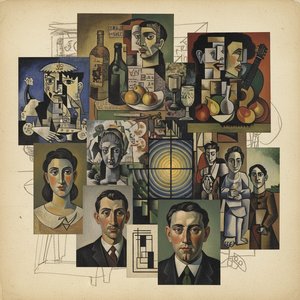
This compelling Cubist composition, designated "Untitled (4330)," offers a captivating glimpse into the artistic vision of Fernand Léger, a pivotal figure who bridged the gap between abstraction and representation. Executed with Léger’s signature approach – often termed “Tubism” in its earlier iterations – the artwork presents three men engaged in an ambiguous tableau, their forms fractured and reassembled according to principles of geometric reduction and dynamic perspective. The scene is imbued with a palpable sense of modernity, reflecting Léger's fascination with the burgeoning industrial age and its impact on human form and experience. The figures, rendered in bold, primary colors punctuated by earthy tones, embody a deliberate rejection of traditional academic realism, instead embracing a fragmented yet powerfully expressive approach to depicting the world around him. The artist’s meticulous attention to detail – evident in the textures of the suits, the scattered books, and the carefully positioned objects – elevates this work beyond mere abstraction, grounding it in a recognizable reality filtered through a distinctly modern lens.Cubist Techniques and the Representation of Form
Léger’s artistic process was deeply rooted in his exploration of geometric forms, particularly cylinders and cones, which he saw as fundamental building blocks of the machine age. “Untitled (4330)” exemplifies this approach through its deliberate dissection of the human figure into interlocking planes. The men are not depicted as unified wholes but rather as collections of fragmented shapes, each contributing to a dynamic composition that conveys movement and energy. This technique, characteristic of Cubism’s early phase, seeks to capture multiple viewpoints simultaneously, challenging the viewer's perception of space and form. Note the careful layering of color and texture – the smooth surfaces juxtaposed with rougher areas – further enhancing the sense of depth and dimensionality within this seemingly flattened representation. The artist’s use of bold outlines and sharp angles reinforces the mechanical aesthetic that defines much of Léger’s oeuvre, reflecting his fascination with industrial design and urban landscapes.Symbolism and Context: A Portrait of Modern Life
The inclusion of specific objects – a hat, a trombone, books – adds layers of symbolic meaning to the composition. The men's attire, formal suits, suggests a sense of professionalism or perhaps even social status within an increasingly industrialized society. The scattered books hint at intellectual pursuits and the dissemination of knowledge, themes central to Léger’s broader engagement with modernity. The trombone, a recurring motif in Léger’s work, can be interpreted as representing both musical expression and the rhythmic pulse of industrial machinery. Created during a period of rapid technological advancement and social change, “Untitled (4330)” serves as a visual commentary on the evolving role of humanity within a world dominated by machines. Léger's intention was to create art that resonated with the experiences of ordinary people in this new era, making it accessible and relatable through his simplified forms and bold colors.Emotional Impact and Artistic Legacy
Despite its fragmented aesthetic, “Untitled (4330)” possesses a surprising emotional resonance. The figures’ postures – seemingly engaged in conversation or contemplation – evoke a sense of human connection amidst the mechanical landscape. Léger's work is not simply about depicting objects; it’s about capturing the *spirit* of modernity—its dynamism, its potential for both progress and alienation. As a key figure in the development of Cubism, Léger’s influence extended beyond the purely formal realm, impacting subsequent generations of artists who sought to explore new ways of representing reality. This artwork stands as a testament to his innovative approach and enduring legacy within the history of modern art. A hand-painted reproduction offers an exceptional opportunity to bring this powerful image into your space, allowing you to contemplate its complexities and appreciate Léger’s unique artistic vision.よくあるご質問
「untitled (4330)」にはどのような雰囲気がありますか?
フェルナンド・レジェ作「untitled (4330)」は、その情緒においてModernと表現されます。この分類は、作品を空間やシーンに合わせる際の手助けとなります。
「untitled (4330)」はどの時代に制作されたものですか?
フェルナンド・レジェ作「untitled (4330)」はModern時代の作品です。この時代背景が、本作の歴史的な文脈を形作っています。
「untitled (4330)」の油彩複製画を注文することはできますか?
フェルナンド・レジェ作「untitled (4330)」の手描き複製画は、こちらの手描き油彩複製画ページからご注文いただけます:リネンキャンバスに手描きされた油彩複製画(受注制作)
More about this painting
 設置イメージを確認
 送る
送る シェア
シェア
 詳細情報
詳細情報 ガイドを表示

 画像をダウンロード
 似ている作品
 X線調査
X線調査 スライドショー
 Q&A
Q&A 統計情報
統計情報