油彩画を購入
 Transport forcesの詳細







































 いずれかの辺が105 cm(約41インチ)を超えるアートワークまたは複製画の場合、フレームは分解されたキットの状態でお届けいたします。この方法は、輸送中の破損を防ぎ、安全に配送するために採用しております。


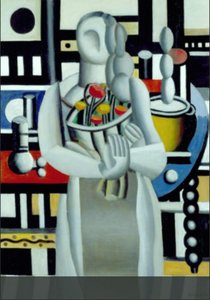
A Monument to Modernity Embodied in Paint
Fernand Léger's "Transport Forces," completed in 1937, stands as a cornerstone of Purism – an artistic movement that vehemently rejected Impressionism’s fleeting effects and embraced instead the bold geometries and vibrant hues characteristic of industrial landscapes. Measuring an impressive 50.9 x 870 cm, this monumental canvas resides at the Musée National Fernand Léger in Biot, France, offering visitors a visceral encounter with Léger's singular vision of the burgeoning twentieth century.
The Genesis of Geometric Abstraction
Born Joseph Fernand Henri Léger in Argentan, Normandy, in 1881, Léger’s artistic journey began amidst rural surroundings but swiftly propelled him into the pulsating heart of Parisian avant-garde. Influenced by Cubism's fragmentation and Picasso’s exploration of form, Léger pushed beyond mere representation, striving to distill the essence of mechanized existence onto canvas. Unlike many artists of his time who sought refuge in abstraction as a reaction against realism, Léger actively embraced it – perceiving it as the most truthful method for conveying the dynamism and transformative power of industrial progress.
A Celebration of Technological Harmony
“Transport Forces” isn’t simply a depiction of trains; it's an elaborate allegory for humanity’s relationship with technology. Léger meticulously crafted a composition dominated by angular forms – locomotives, bridges, signal towers – rendered in a palette of striking reds, yellows, and blues that echo the fiery glow of incandescent lamps. These colors aren’t merely decorative; they symbolize energy and illumination, mirroring the optimistic spirit of the era.
Purist Principles: Form Above All Else
The painting exemplifies Purism's core tenets: a rejection of illusionistic depth and color blending in favor of simplified shapes and bold hues. Léger’s meticulous brushstrokes emphasize texture, creating a palpable sense of materiality – the rough surface of steel juxtaposed with the smooth expanse of painted planes. This technique underscores his belief that art should serve as a conduit for conveying fundamental truths about the world around us.
Symbolism and Emotional Resonance
"Transport Forces" transcends its literal subject matter, resonating with deeper themes of progress, transformation, and humanity’s engagement with the machine age. Léger's deliberate use of color – particularly the radiant reds – conveys a feeling of optimism and vitality, reflecting the fervent belief in technological advancement that characterized 1930s France. Ultimately, this artwork invites contemplation on how art can capture not only what we see but also what we feel—a testament to Léger’s enduring legacy as one of the most influential figures in modern art.
Q&A
Transport forcesは手描きですか、それともプリントですか?
手描きによる制作:熟練した画家が、リネンキャンバスに油彩でTransport forcesを模写します。
Transport forcesのサイズはどれを選べばよいですか?
原画のサイズは50 x 100 cmです。 サイズは22.5 x 44.4 cm (¥31676)から126.3 x 248.7 cm (¥192275)まで展開しております。こちらのページ内の表に、主な工程とそれぞれの価格を記載しています。
配送にはどのくらいの時間がかかりますか?
配送には4〜5週間を要し、世界中どこでも速達便にて無料でお届けいたします。また、本ページではお急ぎの方向けの特急制作オプションもご用意しております。商品は、理由を問わず100日以内であれば全額返金での返品が可能です。
フェルナン・レジェはTransport forcesの制作にどのような画材(メディア)を使用しましたか?
Acrylic On Canvas
 設置イメージを表示

 シェアする
 シェアする
 詳細を見る
 解説シート


 ダウンロード
 似ている作品
 X線調査
 スライドショーを表示
 Q&A

 統計情報