

 設置イメージを確認
 送る
送る シェア
シェア
 詳細情報
詳細情報 ガイドを表示

 画像をダウンロード
 似ている作品
 X線調査
X線調査 スライドショー
 統計情報
統計情報The flower that walks


 続きを読む
続きを読む
ジークレー/アートプリント
スピーディーな制作と多彩な仕上げオプションが魅力の、ミュージアムクオリティなジークレー・キャンバスプリント。 ( 手描きの複製画を注文する デジタル画像販売へ切り替え)




P118B ¥10

P118H ¥10

P118W ¥10

P438Z ¥10

P508JH ¥12

P508YH ¥12

P805H ¥10

P805Z ¥10

P919BZ ¥10

P919G ¥10

P919XJ ¥10

P959ZH ¥10

P968JZ ¥12

W106C ¥8

W218G ¥10

W218JH ¥8

W218Y ¥10

W307PJ ¥10

W316G ¥10

W316PJ ¥8

W316Y ¥10

W398PJ ¥8

W4111J ¥10

W500HY ¥15

W500JH ¥15

W692G ¥12

W849H ¥8

W940BG ¥15

W953PJ ¥8




作品のオリジナル比率に合わせた、当店の規定サイズからお選びください。

額縁や壁のスペースに合わせて、ご希望の幅と高さを入力してください。プリントはカットすることは可能ですが、元の画像より大きくすることはできないため、異なる比率のサイズを選択された場合は、画像の一部が欠けることになります。印刷を開始する前に、内容を確認していただくためのデジタルモックアップをお送りいたします。このページに表示されている画像は、実際のカット後の状態を示すものではありません。実際の仕上がりはモックアップにてご確認ください。


 ガラスオプションは、110cm未満のサイズでのみご利用いただけます。

The flower that walks
ジークレー/アートプリント
複製画サイズ一覧
-


合計金額
¥ 12591
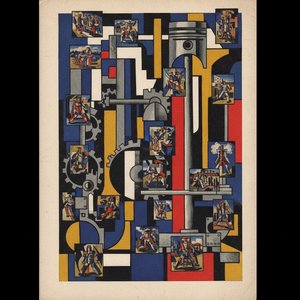
Fernand Léger’s “The Flower That Walks”: A Modernist Dance of Form and Color
Fernand Léger's "The Flower That Walks," painted in 1953, isn’t merely a depiction of a flower; it’s an embodiment of the burgeoning modernist spirit grappling with the dynamism of the machine age. This vibrant canvas, brimming with bold geometric shapes and a playful energy, captures a pivotal moment in Léger's artistic evolution – his conscious effort to integrate the visual language of industry and technology into a distinctly personal aesthetic. Initially trained as an architect, Léger’s path shifted dramatically towards painting after arriving in Paris, drawn by the revolutionary currents swirling through the city’s avant-garde circles. Unlike many of his contemporaries who sought refuge in abstraction as a purely intellectual exercise, Léger embraced it as a means to represent the very essence of modern life – its rhythms, its structures, and its inherent movement.
The painting immediately commands attention with its audacious color palette: a joyous explosion of red, white, green, yellow, and orange. These aren’t delicate pastels; they're assertive, almost industrial hues, reminiscent of factory machinery and the vibrant signage that dominated the urban landscape of 1950s Paris. Léger deliberately avoided subtle gradations, favoring sharp contrasts and simplified forms. This stylistic choice reflects his fascination with the mechanics of the world around him – the precise angles of gears, the repetitive patterns of assembly lines, and the bold, unyielding structures of modern buildings. The central blue circle acts as a grounding element, a visual anchor amidst the swirling energy of the flower’s form.
Cubism and the “Tubist” Aesthetic
“The Flower That Walks” is deeply rooted in the principles of Cubism, a movement that Léger championed alongside Pablo Picasso and Georges Braque. However, Léger pushed beyond the purely analytical deconstruction of traditional forms characteristic of early Cubism. Instead, he sought to synthesize fragmented perspectives into a new, unified visual experience – a concept he termed “Tubism.” This approach involved reducing objects to their essential geometric components, often depicting them as if viewed from multiple angles simultaneously. The flower itself is rendered through this lens: its petals are not smoothly curved but rather broken down into angular planes, suggesting both the organic and the mechanical.
Léger’s interest in machinery profoundly influenced his artistic vision. He saw a beauty in the precision and efficiency of industrial design, and he sought to capture that same sense of order and dynamism in his paintings. The flower's stylized form, with its simplified shapes and bold colors, echoes the aesthetic of early 20th-century automobiles and airplanes – symbols of technological progress and modernity. The suggestion of movement is particularly striking; the flower appears to be actively “walking,” a deliberate gesture that imbues the painting with a sense of life and vitality.
Symbolism and the Human Form
While Léger’s work is often associated with industrial imagery, it's crucial to recognize the underlying human element. The "flower" isn't simply an abstract form; it subtly evokes the human figure, particularly the torso and limbs. The petals can be interpreted as arms reaching out, while the central circle represents a head or chest. This deliberate ambiguity invites viewers to project their own interpretations onto the painting, fostering a sense of personal connection.
Furthermore, the flower’s “walking” action carries symbolic weight. It suggests a journey, a progression, and perhaps even a striving for something beyond the confines of its immediate surroundings. Léger himself described his work as an attempt to capture "the spirit of the machine age," but also to express a sense of optimism about the future – a belief that technology could be harnessed to create a more beautiful and fulfilling world. “The Flower That Walks” is, therefore, not just a depiction of a flower; it’s a visual manifesto for a new era.
A Reproduction Worth Admiring
OriginalUniqueArt offers meticulously crafted hand-painted reproductions of Fernand Léger's "The Flower That Walks," allowing you to bring this iconic modernist masterpiece into your home or office. Our skilled artists replicate the painting’s vibrant colors, bold forms, and dynamic energy with exceptional attention to detail. Whether you are an art collector, interior designer, or simply someone who appreciates beautiful artwork, a OriginalUniqueArt reproduction of “The Flower That Walks” is a stunning addition to any space – a testament to Léger's genius and a celebration of the spirit of modernism.
よくあるご質問
Cubismにおいて、「The flower that walks」はどの程度人気がありますか?
Cubism運動において、「The flower that walks」はRecognizedの知名度を誇ります。
Cubismの作品「The flower that walks」は、どのような感情を伝えていますか?
「The flower that walks」のCubism様式には、Playfulな感情が添えられています。
フェルナンド・レジェ作「The flower that walks」は、どの部屋に飾るのがおすすめですか?
「The flower that walks」の複製画は、Living Roomに美しく調和します。
アーティストについて
レジェ、フォルムに鍛えられた生涯:機械時代の世界
フェルナン・レジェは、1881年にノルマンディー地方アルタンでジョゼフ・フェルナン・アンリ・レジェとして生まれ、近代美術の進化における重要な人物として立ちます。彼の人生は、故郷の農村地帯からパリのアバンギャルドの中心へと移り変わる旅であり、揺るぎない芸術的ビジョンと機械時代を捉えようとする飽くなき探求の証です。多くの同時代人が抽象化を表現からの後退として受け入れたのとは異なり、レジェはむしろ現代性—そのダイナミズム、機械的な形態、そしてその本質—を新しい視覚言語に統合しようと試みました。それは力強く抽象的でありながら、観察可能な世界に深く根ざしたものでした。彼の初期の人生は農業労働の肉体性に浸っており、彼が情熱的に描いた工業化された未来との対比となりました。当初は建築家を目指していましたが、1900年にパリに到着後、絵画への道へと転じ、設計技師として働きながら芸術的スキルを磨きました。この時期は伝統的な美術教育で特徴付けられていましたが、ポール・セザンヌの画期的な作品に出会うまでは真の変化が起こりませんでした。「チューブ主義」の誕生と『黄金分割』
セザンの回顧展は1907年に触媒となり、レジェを従来の表現から解放し、より幾何学的で構造的なアプローチへと駆り立てました。彼は形態を分解し、その背後にある構造を分析し、新たなボリュームの強調とともにキャンバス上で再構築しました。この探求はすぐにキュビスムの領域へと彼を導きましたが、レジェはピカソやブラックのスタイルを単に複製するだけでは満足しませんでした。代わりに、彼は独自の独特な表現—遊び心のある批評家たちが「チューブ主義」と呼んだ彼の個人的なキュビスムの一形態—を発展させました。円筒形の形態、平坦化された平面、大胆な色彩コントラストによって特徴付けられるチューブ主義は、それが広く芸術的な関心の対象になるずっと前から機械美を祝いました。それは新興の工業世界を観察し、その機能的な形状と機械的なリズムの中に美を見出すことから生まれた芸術でした。この時期には、ジャン・メツィンガー、アンリ・ル・フォコニエ、フランシス・ピカビア、マルセル・デュシャンなどのアーティストとの連携を通じて、レジェは積極的にアバンギャルドシーンに参加しました。彼らの集団的な探求は芸術的表現の境界線を押し広げ、抽象芸術における将来の開発のための基盤を築きました。戦争、機械化、そして新たな美学
第一次世界大戦の勃発は、レジェの人生と作品に大きな影響を与えました。1914年から1916年にかけての前線での従軍は、彼を近代戦争の容赦ない現実—砲撃、空中戦闘、そして機械化された紛争の人間性を奪う効果—にさらしました。この経験は幻滅や現代性の拒絶につながるのではなく、むしろ彼の機械への魅力を強めました。彼の奉仕中に作成されたスケッチは、破壊の道具である軍事技術の鮮やかな美しさを記録し、芸術的熟考の対象へと変えました。市民生活に戻った後、レジェの美的感覚はさらに進化しました。彼の絵画はより合理化され機械的な感性を示し始め、工業世界のダイナミズムと効率を祝いました。『パイプを持った兵士』(1916年)はそのシフトを例示しており、機械的精度を喚起する簡略化された形態と大胆な色彩を示しています。これは単なる美的選択ではなく、哲学的な声明—壊滅的な紛争の後でさえ、進歩と再生の可能性に対する現代性の肯定でした。遺産と持続的な影響
戦後の数年間、レジェは芸術と産業の交差点を探求し続け、抽象と具象をユニークな形で融合させた作品を生み出しました。『アニメーションされた風景』シリーズ(1921年)では、人物や動物が合理化された構成にシームレスに統合され、有機形態と無機形態の境界線を曖昧にしています。彼はまた彫刻や映画実験にも取り組み、伝統的な絵画の枠を超えた芸術的実践を拡大しました。レジェの影響は、その後の世代のアーティストに否定できません。彼の形態の大胆な簡略化、工業イメージの採用、そして大衆文化のお祝いは、ポップアートの出現を先取りしました。ロイ・リキテンシュタインやアンディ・ウォーホルなどの芸術家は、レジェの先駆的な仕事への明確な負債を負っています。彼は抽象芸術と具象表現の間のギャップを埋め、知的厳格性と視覚的魅力の両方を持つ作品を作成することが可能であることを示しました。今日、フェルナン・レジェの絵画は世界中の主要美術館に収蔵されており、フランスのミュゼ・ダン・エ・ヒストワールや、彼の作品専用の国立フェルナン・レジェ美術館などがあります。彼は20世紀美術における先駆者であり続けています—壊滅的な紛争の後でさえ、機械時代の中に美を見出し、比類のない大胆さと独創性をもってキャンバスにそのエネルギーを翻訳した先見の明のある人物です。彼の遺産は単なる画家としてのものだけでなく、現代主義の預言者としてのものです。今日まで観客に共鳴し続ける真の先駆者です。
フェルナンド・レジェ
1881 - 1955 , フランス
アーティスト情報
- フルネーム: フェルナンド・レジェ
- 主な作品:
- The Sitted Woman
- Machine Element
- The Great Parade
- The City
- 出生地: Argentan, フランス
- 国籍: フランス
- 影響を与えたアーティスト: ['ポップアート']
- 影響を受けたアーティスト: ['ポール・セザンヌ']
- 死亡年月日: 1955年8月17日
- 生年月日: 1881年2月4日
- 芸術運動またはスタイル: キュビスム、チューブイズム
関連記事

Bronze Age to Modern Masters: 10 Sculptures That Redefined Art | OriginalUniqueArt
Journey through art history with 10 legendary bronze sculptures – from Michelangelo's David to Rodin’s Thinker. Explore the stories, techniques & timeless beauty of these masterpieces. Find museum-quality reproductions & elevate your home decor on OriginalUniqueArt.com.

The Enduring Form: Sculpture Across History, Technique & Emotional Resonance
Explore the rich history of sculpture with OriginalUniqueArt. Discover key techniques, influential artists & investment potential for discerning collectors. Expert insights into valuing and collecting timeless masterpieces.
フェルナン・レジェ傑作25選:機械美と色彩の革新 | OriginalUniqueArt
フェルナン・レジェの傑作25選。機械美と色彩が織りなすキュビズムの世界を紐解きます。OriginalUniqueArtで、フランス絵画の巨匠レジェの作品を高精細プリントで。インテリアアートやギフトにも最適です。全コレクションはこちら: OriginalUniqueArt.com

Bronze Sculptures That Defined Art History | OriginalUniqueArt
Journey through art history with our Top 10 bronze sculptures! Explore masterpieces by Rodin, Michelangelo & more. Discover stories behind iconic statues and find museum-quality reproductions for your home decor at OriginalUniqueArt.com.

The Enduring Form: Exploring Themes & Techniques in Sculpture Across Historical Periods
Explore the rich history of sculpture from ancient masterpieces to contemporary innovations. Discover key techniques, influential artists & investment potential for discerning art collectors.


