油彩画を購入
 The dance1の詳細







































 いずれかの辺が105 cm(約41インチ)を超えるアートワークまたは複製画の場合、フレームは分解されたキットの状態でお届けいたします。この方法は、輸送中の破損を防ぎ、安全に配送するために採用しております。


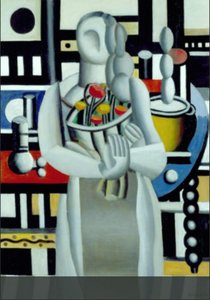
A Celebration of Modernity: Fernand Léger’s “The Dance”
Fernand Léger's "The Dance" is a captivating example of his distinctive style, often referred to as ‘Tubism,’ a unique offshoot of Cubism. This painting presents two nude female figures engaged in what appears to be a choreographed movement or pose, rendered with the artist’s signature emphasis on cylindrical forms and simplified shapes. The composition isn't about realistic representation; instead, Léger prioritizes the *structure* of form and color, creating a dynamic interplay between figure and ground.Stylistic Innovation & Technique
Léger moved beyond traditional perspective, breaking down the human form into geometric components. This approach isn’t cold or clinical, however. The figures retain a sense of vitality through their poses and the bold application of color. Notice how Léger uses blocks of color to define musculature and create volume – a departure from the subtle shading of earlier artistic movements. The painting's surface is likely built up with layers of paint, contributing to its textural richness, though specific details about the technique used in this particular work are currently unknown. The inclusion of potted plants adds an unexpected element, grounding the abstract figures within a domestic or studio setting.Historical Context & Artistic Development
Born in 1881, Fernand Léger witnessed and actively participated in the radical artistic shifts of the early 20th century. Initially influenced by Impressionism – as seen in works like “My Mother’s Garden” (1905) – he quickly embraced Cubism, developing his own distinct vocabulary. Léger's work reflects a fascination with modernity, machinery, and the energy of urban life. He sought to create an art that was accessible and relevant to the industrial age, moving away from purely representational forms. His association with the Puteaux Group further cemented his position as a leading figure in avant-garde painting.Symbolism & Interpretation
While not overtly symbolic, “The Dance” can be interpreted as an exploration of the human form within a modern context. The simplified figures suggest a move away from traditional notions of beauty and towards a celebration of strength and dynamism. The potted plants might represent a connection to nature amidst the increasing industrialization of society, or simply serve as compositional elements that add depth and visual interest. The act of dancing itself can be seen as symbolic of freedom, joy, and the vitality of life.Emotional Impact & Aesthetic Appeal
“The Dance” evokes a sense of energy and movement despite its static nature. The bold colors and geometric forms create a visually stimulating experience. It’s an artwork that invites contemplation – not necessarily about narrative content, but about the fundamental elements of form, color, and composition. Its aesthetic appeal lies in its balance between abstraction and figuration, making it suitable for both modern and contemporary interiors. The painting's vibrant energy would be a striking focal point in a living space or office environment, offering a sophisticated touch of artistic innovation.Q&A
The dance1は手描きですか、それともプリントですか?
手描きによる制作:熟練した画家が、リネンキャンバスに油彩でThe dance1を模写します。
The dance1のサイズはどれを選べばよいですか?
サイズは39.0 x 25.7 cm (¥31676)から248.5 x 163.7 cm (¥240740)まで展開しております。こちらのページ内の表に、主な工程とそれぞれの価格を記載しています。
配送にはどのくらいの時間がかかりますか?
配送には4〜5週間を要し、世界中どこでも速達便にて無料でお届けいたします。また、本ページではお急ぎの方向けの特急制作オプションもご用意しております。商品は、理由を問わず100日以内であれば全額返金での返品が可能です。
フェルナン・レジェはThe dance1の制作にどのような画材(メディア)を使用しましたか?
Acrylic On Canvas
 設置イメージを表示

 シェアする
 シェアする
 詳細を見る
 解説シート


 ダウンロード
 似ている作品
 X線調査
 スライドショーを表示
 Q&A

 統計情報