油彩画を購入
 The danceの詳細







































 いずれかの辺が105 cm(約41インチ)を超えるアートワークまたは複製画の場合、フレームは分解されたキットの状態でお届けいたします。この方法は、輸送中の破損を防ぎ、安全に配送するために採用しております。


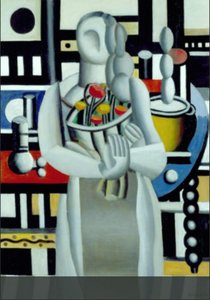
A Rhythmic Convergence of Form and Motion
Fernand Léger’s 1932 masterpiece, The Dance, serves as a breathtaking window into the heart of the modern era. At first glance, the viewer is swept up in a whirlwind of activity, where figures are caught in various states of repose and exuberant movement. It is not merely a depiction of a gathering; it is a carefully orchestrated symphony of geometric shapes. Léger, often celebrated as a Geometric Surrealist, eschews traditional anatomical precision in favor of cylinders, cubes, and bold lines. This reduction of the human form into architectural elements creates a mesmerizing rhythm that mirrors the very pulse of life itself. The composition vibrates with an energy that feels both primal and profoundly modern, inviting the observer to lose themselves in the swirling patterns of the dancers.The Tactile Brilliance of Faceted Painting
Beyond the striking composition lies a technical mastery that demands close inspection. Léger utilized a technique known as faceted painting, applying thick, deliberate layers of pigment to create a surface that possesses its own physical presence. The palette is unapologetically bold, dominated by primary reds, yellows, and blues that clash and harmonize with startling intensity. These vibrant hues are set against cooler, more muted backgrounds, creating a sense of depth despite the intentional flattening of perspective. For the collector or interior designer, this texture offers a captivating sensory experience; when captured in a high-quality reproduction, the interplay of light across these simulated thick strokes brings a dynamic, sculptural quality to any wall, making it a centerpiece of modern decor.Echoes of the Machine Age
To understand The Dance is to understand the tension of the early twentieth century. Amidst the swirling figures, Léger integrates objects that speak to the burgeoning industrial landscape—clocks, sports equipment, and mechanical shapes that suggest a world increasingly defined by technology. This juxtaposition of organic human movement with rigid, man-made objects reflects the artist's fascination with the Machine Age. There is a profound symbolism in how the figures seem both part of and distinct from their mechanical surroundings, capturing the era's struggle to find humanity within an increasingly automated reality. It is this complex emotional layer—the balance between chaos and order, nature and industry—that gives the painting its enduring power, making it an essential piece for those who appreciate art that challenges the intellect while stirring the soul.Q&A
The danceは手描きですか、それともプリントですか?
手描きによる制作:熟練した画家が、リネンキャンバスに油彩でThe danceを模写します。
The danceのサイズはどれを選べばよいですか?
サイズは34.8 x 28.7 cm (¥31676)から242.0 x 199.7 cm (¥280652)まで展開しております。こちらのページ内の表に、主な工程とそれぞれの価格を記載しています。
配送にはどのくらいの時間がかかりますか?
配送には4〜5週間を要し、世界中どこでも速達便にて無料でお届けいたします。また、本ページではお急ぎの方向けの特急制作オプションもご用意しております。商品は、理由を問わず100日以内であれば全額返金での返品が可能です。
フェルナン・レジェはThe danceの制作にどのような画材(メディア)を使用しましたか?
Oil On Canvas
 設置イメージを表示

 シェアする
 シェアする
 詳細を見る
 解説シート


 ダウンロード
 似ている作品
 X線調査
 スライドショーを表示
 Q&A

 統計情報